


Espresso troubleshooting starts with what you taste and see in the cup. Sour, bitter, burnt, watery or uneven espresso can usually be traced back to a few key variables: grind size, coffee dose, tamping, brew ratio, water, machine settings or cleaning.
The best approach is to change one variable at a time. Start with the clearest clue—flavor, shot speed, crema or machine alert—then make a small adjustment and taste again. This helps you understand what changed and keeps you from overcorrecting.
Use this guide to match common espresso problems to likely causes, quick fixes and everyday habits that support richer, smoother shots.
Espresso troubleshooting guide
Espresso troubleshooting guide
What are some common espresso mistakes?
Common espresso mistakes include grinding too coarse or too fine, using inconsistent doses, tamping unevenly, skipping machine cleaning, using stale beans or changing too many variables at once.
Espresso is sensitive because a small amount of water is pushed through a compact puck of finely ground coffee. That means tiny changes in grind, dose, distribution, tamping, temperature or timing can shift the final flavor. A shot that tasted balanced yesterday may run faster today if the beans have aged, the grinder setting moved slightly or the basket was filled differently.
Start by checking the basics:
Grind size: A grind that is too coarse can let water pass through too quickly, creating sour, weak or watery espresso. A grind that is too fine can slow the flow and create bitter, harsh or dry flavors.
Coffee dose: Too little coffee in the basket can make the shot taste thin, while too much can restrict flow or create uneven extraction.
Puck prep: Uneven distribution, clumps or a tilted tamp can cause channeling, where water finds weak spots in the coffee bed instead of flowing evenly through the puck.
Bean freshness: Older beans can lose aroma, sweetness and crema. Very fresh beans may also behave differently from beans that have had a little time to rest after roasting.
Water quality: Water that tastes flat, overly mineral, metallic or stale can show up in the cup and may also contribute to buildup inside the machine.
Cleaning routine: Coffee oils, old grounds, milk residue and mineral deposits can affect flavor, flow and machine performance over time.

Taste and flow clues that point to the problem
Flavor, shot speed and appearance can help you narrow down what is happening before you change settings. Start with the most obvious clue: does the espresso taste sour, bitter, watery, salty or flat? Then look at how it behaved during extraction.
A fast, pale shot often points toward under-extraction, while a very slow, dark or dripping shot can point toward over-extraction or too much resistance in the puck. Uneven spurts, spraying or sudden blonding can suggest channeling, which happens when water finds a weak path through the espresso puck instead of flowing evenly through all the grounds. Crema can offer clues, too, but it should be read alongside flavor instead of treated as the only sign of quality.

What does a balanced espresso shot look like?
A balanced espresso shot begins as a dark, concentrated stream, then settles into a steady, even flow with a caramel-brown color and a consistency often compared to warm honey. In the cup, the espresso may have an even layer of golden-brown crema, though its color and thickness can vary based on the beans, roast level and freshness. It should taste rich, smooth and full-bodied, with sweetness, acidity and bitterness working together rather than one flavor dominating.
Espresso flavor troubleshooting
Use this chart as a starting point, then adjust one variable at a time. Small changes are usually more useful than resetting everything at once.
Taste Issue | Likely Cause | Primary Fix | Secondary Fixes |
Sour / Sharp | Under-extraction | Grind Finer to slow down the water flow. | Increase water temperature, verify the dose or pull a slightly longer shot (larger yield). |
Bitter / Burnt | Over-extraction | Grind Coarser to speed up the water flow. | Lower water temperature or stop the shot a few seconds earlier. |
Weak / Watery | Insufficient extraction or old beans | Increase Dose of coffee grounds. | Use fresh beans (7–21 days post-roast) and ensure a firm, even tamp. |
Salty / Metallic | Extreme under-extraction | Check Ratio and ensure water is hot enough. | Clean your equipment to remove old, rancid oils. |
Inconsistent | Channeling (uneven flow) or under-extraction | Improve Puck Prep using a Weiss Distribution Technique (WDT) tool to break up clumps and spread the grounds evenly before tamping level. | Avoid knocking or jarring the portafilter after tamping. |
Espresso tastes sour or sharp
Sour espresso often points to under-extraction, meaning the water did not pull enough sweetness and depth from the coffee. Try a finer grind, steadier dose or slightly longer shot.
Some coffees naturally taste bright, fruity or citrusy, especially lighter roasts. That kind of acidity should feel lively and balanced, not puckering, thin or sharply sour. If the shot tastes like underripe fruit, lemon peel or watered-down coffee, the extraction likely needs more time, contact or heat.
Start with the grind. A slightly finer setting gives water more surface area to work with and can slow the shot enough to bring out more body and sweetness. If you need a refresher on grind texture, explore this guide to how to grind coffee beans.
Try troubleshooting in this order:
Grind slightly finer: Make one small adjustment, then pull another shot. A finer grind can help slow fast-flowing espresso and support fuller extraction.
Check the dose: Use the same amount of ground coffee each time so you are not changing dose and grind at once.
Watch the shot time and yield: Espresso generally extracts in about 25–30 seconds, or slightly longer with pre-infusion. If the shot reaches the recommended yield too quickly, it may taste sharp, thin or hollow.
Review water temperature: If your machine allows brew temperature adjustments, water that is too cool can contribute to sour or underdeveloped flavor.
Consider the beans: Light roasts, older beans and decaf may need a finer grind, while dark roasts and very fresh beans may need a coarser grind.
Espresso tastes bitter, burnt, harsh or dry
Bitter, harsh or burnt espresso can result from over-extraction, a grind that is too fine, an overly long yield, a high brew temperature, a darker roast or beans that are past their freshest. Try grinding coarser, stopping the shot sooner, lowering the temperature or using fresher beans.
Bitterness is not the same as strength. A strong espresso can taste concentrated, rich and bittersweet without feeling harsh. An over-extracted shot often tastes dry, ashy, smoky, hollow or lingering in an unpleasant way. It may also leave a rough finish on the tongue.
Dark roasts can extract more quickly and may taste heavy or burnt if the grind is too fine or the shot runs too long. Lighter roasts, on the other hand, often need more extraction to taste balanced. This is why roast level should guide how you adjust.
Try these fixes one at a time:
Grind slightly coarser: This reduces resistance in the puck and can help the shot flow more freely.
Stop the shot earlier: A shorter yield can reduce harshness if the final portion of the shot tastes dry or bitter.
Check brew temperature: If your machine allows adjustments, water that is too hot may intensify bitter or burnt notes.
Use fresher beans: Stale coffee can taste flat, woody or overly bitter, even when the shot time looks normal.
Clean the brew path: Old coffee oils can create rancid, bitter flavors that linger across multiple shots.
Espresso tastes weak or watery
Weak or watery espresso usually means the shot lacks enough extracted coffee flavor. Check the dose and brew ratio first, then adjust grind and puck prep.
Watery espresso often lacks body, sweetness and crema. It may look pale, run quickly or taste more like diluted coffee than concentrated espresso. In many cases, the issue is under-extraction, an inconsistent dose or a brew ratio that produces too much liquid for the amount of coffee in the basket.
Start by making the recipe repeatable:
Weigh the dose: Use the same amount of ground coffee for each shot so you can compare results clearly.
Measure the yield: Track how much espresso ends up in the cup. If the yield is too large, the shot may taste thin or washed out.
Grind finer if the shot runs fast: A finer grind can slow flow and create more resistance through the puck.
Improve distribution: Level the grounds before tamping so water moves through the coffee bed more evenly.
Refresh the beans: Older beans can produce flatter flavor and thinner crema, even when the machine is working properly.
Espresso tastes salty or metallic
Salty or metallic espresso can come from extreme under-extraction, water quality issues or buildup in the machine. Check ratio, water source, grind and cleaning.
A salty shot may taste sharp, hollow or almost savory. Metallic notes may come from water, mineral buildup or old residue affecting flavor clarity. Before changing several settings, taste the water you are using. If the water tastes off on its own, it will likely affect the espresso, too.
Use this troubleshooting path:
Check extraction first: If the shot ran very quickly, grind slightly finer and make sure the dose is consistent.
Review the brew ratio: A shot that stops too early may not have enough sweetness or body to balance salty or sharp notes.
Evaluate the water: Use fresh water that tastes clean and neutral. Follow your machine’s guidance for water filter use if applicable.
Clean the portafilter and basket: Coffee oils and residue can cling to small openings and affect the taste of future shots.
Descale when needed: Mineral buildup can affect both flavor and flow, especially in areas with harder water.
Shot runs too fast, too slow or unevenly
Fast, slow or uneven espresso shots often point to grind size, dose, basket fill or puck prep. Watch the flow, then adjust one variable at a time.
A balanced espresso shot should flow with steady resistance. If it gushes out, drips slowly, sprays from the portafilter or starts dark and quickly turns pale, the puck may not be offering the right level of resistance.
Use the visual cues below to decide what to check next:
Fast flow: If espresso rushes out quickly and looks pale, the grind may be too coarse, the dose may be too low or the puck may be loosely packed.
Slow drips or no flow: If the shot barely moves, the grind may be too fine, the basket may be overfilled or the tamp may be restricting water too much.
Uneven streams: If coffee comes out more heavily on one side, the puck may be unevenly distributed or tamped at an angle.
Spraying or spurting: This can indicate channeling, where water finds a weak path through the coffee bed.
Early blonding: If the stream turns pale too quickly, the grind may be too coarse for the dose, causing the shot to extract too quickly or unevenly.
For a step-by-step refresher on preparing and pulling espresso, explore this guide to how to use an espresso machine.
Crema is thin, pale or disappears quickly
Thin or pale crema can come from older beans, roast level, grind size, dose or pressure. Crema is useful, but taste should guide your final adjustments.
Crema is the light, foamy layer that forms on top of espresso. It can make a shot look rich and inviting, but it does not guarantee balanced flavor on its own. A shot with beautiful crema can still taste bitter or sour, while a lighter crema may still taste pleasant depending on the beans.
Consider these factors:
Bean freshness: Freshly roasted coffee usually produces more crema than stale beans. Older coffee may look flatter and taste less aromatic.
Roast level: Darker roasts often create more visible crema, while lighter roasts may produce a thinner layer.
Grind size: A shot that runs too fast may create pale crema that fades quickly. A small move finer may improve extraction.
Dose and basket fill: Too little coffee in the basket can reduce body and make the shot look thin.
Machine pressure and prep: Consistent puck prep supports even flow, which can improve both crema and flavor.
Shop KitchenAid® coffee grinders
KitchenAid® coffee grinders are designed to help you create a consistent grind for different brew methods, from espresso to drip coffee and cold brew. Explore KitchenAid® coffee grinders to find options that support the taste, texture and routine you want from your coffee.

How to make better espresso
To make great espresso, start with a consistent grind, dose and brew ratio. Then refine puck prep, bean freshness, water quality and machine care one step at a time.
Once your process is repeatable, troubleshooting gets much easier. Think of espresso as a simple workflow: grind, dose, distribute, tamp, brew, taste and adjust. If the shot tastes off, go back to the most likely step instead of changing the whole recipe.

Start with grind size and grinder setup
Grind size is often the first espresso adjustment because it directly affects water flow. Use a consistent burr grinder and make small changes as beans age.
Espresso needs a fine, even grind so water can move through the puck with steady resistance. A burr grinder is generally preferred for espresso because it crushes beans between abrasive surfaces, creating a more consistent particle size than a blade grinder.
Learn more about grinder styles in this guide to types of coffee grinders.
A few grinder habits can make espresso more consistent:
Make small changes: Move the grind setting one step, or even a half step when possible, at a time. Large jumps can take the shot from sour to bitter without helping you find the balanced point.
Purge after adjustments: A small amount of coffee from the previous setting may remain in the grinder. Clearing it helps you evaluate the new grind more accurately.
Expect settings to shift: Beans change as they age. The same setting may run differently a few days later, especially after opening a new bag.
Match grind to flavor and flow: If the shot is fast and sour, go finer. If it is slow and bitter, go coarser.
For more grinder setup tips, explore this guide to how to use a coffee grinder.

Check dose, brew ratio and shot time together
Dose, brew ratio and shot time work together. Track how much coffee goes in, how much espresso comes out and how the shot tastes.
Dose is the amount of ground coffee in the basket. Yield is the amount of espresso in the cup. Brew ratio compares those two measurements. Shot time helps you understand how quickly water moved through the puck. These numbers do not matter more than flavor, but they give you a repeatable starting point.
Use this simple framework:
Keep the dose steady: Choose a dose that fits your basket and use it consistently for testing.
Measure the yield: If espresso tastes weak or watery, the yield may be too high. If it tastes overly intense or sour, the yield may be too low or the extraction may be incomplete.
Watch the time: A very fast shot often needs finer grind or better puck prep. A very slow shot may need a coarser grind or less resistance.
Change grind before dose in most cases: Once the basket is properly filled, grind size is usually the cleaner adjustment for flow.
Change dose when basket fill is off: If the puck is too shallow, too crowded or pressing against the shower screen, adjust the dose before chasing grind settings.

Improve distribution and tamping
Uneven distribution and tamping can cause channeling, spurting and mixed flavors. Focus on a level, repeatable puck instead of chasing exact tamp pressure.
Good puck prep gives water a more even path through the coffee. Channeling happens when water moves through cracks, loose spots or uneven areas in the coffee bed instead of extracting evenly across the puck. That can leave part of the coffee under-extracted and another part over-extracted, creating a shot that tastes sour and bitter at the same time.
Build a repeatable puck prep routine:
Distribute before tamping: Gently level the grounds in the basket so coffee is not piled to one side.
Break up clumps if needed: Clumpy grounds can create uneven density and encourage channeling.
Tamp level: A tilted tamp creates uneven resistance, which can lead to one-sided flow.
Use steady pressure: Consistency matters more than pressing harder each time.
Check basket fill: Too much coffee can restrict water flow, while too little can make the puck unstable.

Use fresh beans and the right water
Fresh beans and clean-tasting water shape espresso flavor from the start. Store beans well, match the grind to roast level and keep water fresh.
Coffee beans continue to change after roasting and after a bag is opened. Freshly roasted beans can taste vibrant and aromatic, while older beans may taste flat, woody or dull. Roast level matters, too. Light roasts often need more extraction to taste balanced, while dark roasts can become bitter or smoky if over-extracted.
Water deserves the same attention. Since espresso is mostly water, poor-tasting water can make even carefully prepared shots taste off. Water with heavy mineral content can also contribute to buildup inside the machine.
Use these habits to support better espresso flavor:
Store beans properly: Keep coffee in an airtight container away from heat, moisture and direct sunlight to help preserve flavor and aroma.
Buy beans in manageable amounts: Smaller quantities can help you use coffee closer to its peak freshness.
Adjust for roast level: Light roasts may benefit from finer grinding or longer extraction, while darker roasts may require a coarser grind to avoid bitterness.
Use fresh, clean-tasting water: If the water does not taste good on its own, it can affect the flavor of your espresso.
Monitor mineral buildup: Follow your machine’s maintenance recommendations and descale when needed, especially if you use harder water.

Machine alerts and upkeep that affect espresso quality
Machine status, buildup and skipped care steps can affect flavor, flow and day-to-day reliability. If your espresso suddenly tastes different and your recipe has not changed, check the machine before making major adjustments.
Alerts, warning lights and cleaning prompts are there to guide routine care. They may not always explain a flavor issue directly, but they can point to the area that needs attention.

What machine alerts and warning lights may be telling you
Machine alerts often point to water, beans, drip tray, cleaning or descaling needs. Check your model’s display or manual before continuing to brew.
A water reservoir alert may mean the tank is empty or not seated correctly. A bean hopper alert may point to low beans or a feeding issue. A drip tray alert may mean the tray is full or not positioned properly.
Common alert categories include:
Water reservoir: Refill the tank with fresh water and make sure it is seated correctly.
Bean hopper: Add beans if needed and check that they are feeding properly into the grinder on machines with built-in grinding.
Drip tray or grounds container: Empty and reinstall removable parts so the machine can continue operating as intended.
Cleaning reminder: Follow the cleaning prompt to remove oils, grounds or residue that can affect flavor.
Descaling prompt: Run the recommended descaling cycle when mineral buildup may be affecting flow, temperature or performance.

How cleaning buildup can change taste and flow
Buildup can make espresso taste bitter, stale, metallic or flat. Coffee oils, old grounds, milk residue and minerals affect flavor in different ways.
Cleaning is not just about appearance. Espresso machines handle fine grounds, hot water, pressure and milk, so residue can collect in multiple places. Over time, that buildup can interfere with flavor, slow the flow or make daily brewing less consistent.
Different buildup issues can create different symptoms:
Coffee oils: Oils left behind in the brew path, basket or portafilter can turn stale and create bitter or rancid flavors.
Old grounds: Fine coffee particles can cling to baskets, screens or grinder areas and affect future shots.
Milk residue: Steam wands and milk systems need regular cleaning because dried milk can affect flavor, texture and hygiene.
Mineral buildup: Hard water minerals can collect inside the machine, affecting flow, heat transfer and performance.
For more detailed care guidance, explore this guide to how to clean and descale an espresso machine.
When machine type changes the troubleshooting path
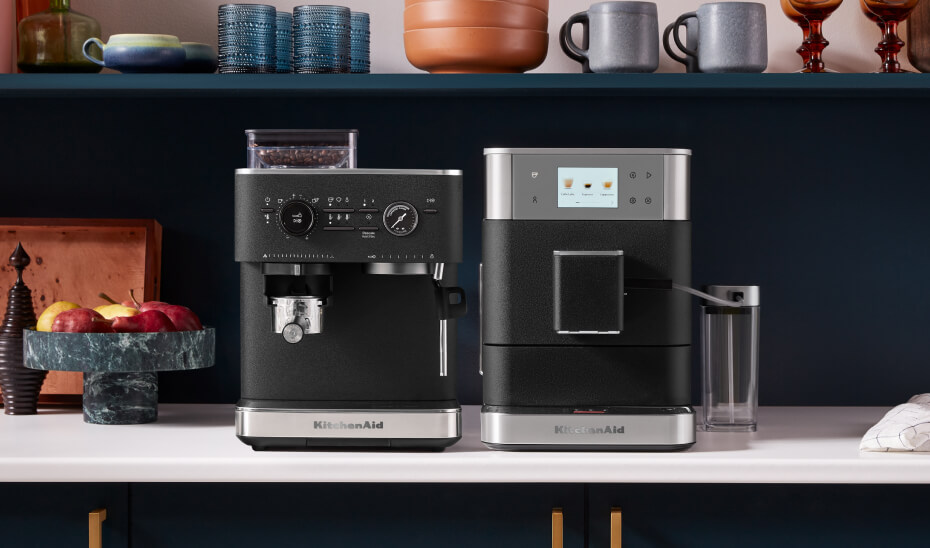
Manual, semi-automatic and automatic espresso machines troubleshoot differently because each one gives you a different level of control over grinding, dosing and brewing.
The right fix depends on which steps your machine controls and which steps you control. A manual or semi-automatic setup often gives you more room to adjust grind, dose, tamp and timing. An automatic or fully automatic machine may handle more of the process for you, so troubleshooting may focus more on grinder settings, drink customization, cleaning cycles and machine prompts.
If you use a KitchenAid® fully automatic espresso machine, reference the KitchenAid® Fully Automatic Espresso Machine Tips guide for espresso troubleshooting guidance.
Use your machine type as a guide:
Manual machines: The user controls more of the process, so puck prep, pressure, timing and technique play a larger role.
Semi-automatic machines: Grind, dose, tamp and shot timing are often the main variables to refine.
Fully automatic machines: Built-in grinding, dosing and drink settings simplify espresso preparation, so troubleshooting often focuses on grinder settings, drink strength, water, cleaning and descaling.
For more detail, explore this comparison of types of espresso machines.

Espresso troubleshooting FAQs
These frequently asked questions can help clarify common espresso issues and reinforce the troubleshooting steps covered throughout this guide.
How do I know if espresso is over-extracted or under-extracted?
Under-extracted espresso often tastes sour, sharp, salty, thin or watery and may run too quickly. Over-extracted espresso often tastes bitter, burnt, dry or harsh and may run too slowly. If the shot tastes both sour and bitter, uneven puck prep or channeling may be the issue.
Why does my espresso taste sour even when the shot time looks right?
Shot time is only one clue. Sour espresso can still happen if the grind is too coarse, the dose is inconsistent, the water is too cool, the beans are very light roasted or the puck extracts unevenly. Taste the shot, check the flow and make one small adjustment at a time.
Why does my espresso taste bitter but still look weak?
A shot can taste bitter and weak when extraction is uneven. Channeling may over-extract part of the puck while leaving the rest under-extracted, creating a cup that tastes harsh but lacks body. Improve distribution and tamping before making major grind changes.
Should I adjust grind size or dose first?
If your basket is filled correctly and the dose is consistent, adjust grind size first. Grind has a direct effect on flow and extraction. Adjust the dose when the basket is underfilled, overfilled or when the puck does not sit properly in the portafilter.
How often should I clean my espresso machine?
Cleaning needs vary by machine type and use frequency, so follow your model’s care instructions. In general, wipe the steam wand after milk drinks, rinse removable parts regularly, clean coffee residue from the portafilter and basket, and descale when prompted or recommended.