









 New Code Sent!

What is the right range hood height above a stove?
Determining the ideal range hood height involves factors such as the type of range hood, the type of cooktop and your kitchen’s layout. If you have an electric cooktop, range hoods should typically be 20-24 inches above the heat source. For gas cooktops, your range hood should be around 24-30 inches above the stove.
Range hoods are a great way to complement your cooktop or range and can help clear the air while you cook. To optimize venting performance, it’s important to find the right hood for your cooking habits as well as your stovetop’s fuel type and dimensions. Read this guide to help you determine a range hood height that works well with your kitchen layout, plus discover ventilation options that are integrated directly into the stovetop.

Range hood height quick guide
Though range hood height clearance requirements can vary by model, you can generally expect venting guidelines for gas, electric or induction ranges to be somewhat consistent across fuel types. See the chart below for typical height clearance guidelines by fuel type.
| Cooktop Type | Gas | Electric | Induction | Downdraft |
|---|---|---|---|---|
| Range Hood Height Clearance | 24-30 inches | 20-24 inches | 18-22 inches | Installed directly into cooktop surface, no height clearance requirement |
*The information above offers general guidance only. Specific requirements depend on your cooktop’s type, kitchen’s layout and manufacturer instructions. Check your user manuals to be sure of your exact models’ requirements.

Height of range hood above gas stove
Because gas cooktops produce an open flame and generally, a higher ambient heat output, it’s typically recommended that the range hood be installed 24-30 inches above the stove. For proper ventilation above your gas cooktop or range, consult your owner’s manual and install your range hood at the recommended height.
Installing your range hood at the proper height helps circulate the air and remove grease and odors most effectively.

Range hood height above electric stove
With an electric range or cooktop, there is typically less ambient heat, so a range hood can be installed a bit lower than those above gas cooktops. If you have an electric cooktop, your range hood should be installed 20-24 inches above the heat source. However, your selected model, cabinet layout and installation instructions may dictate differently. Be sure to consult your owner’s manual and install your range hood at the recommended height for your model and type of cooktop.
How high should a vent hood be above an induction cooktop
If you have an induction cooktop, your range hood should be installed 18-22 inches above the heat source. Although cooking on an induction cooktop typically releases less heat into the environment than other cooktops or ranges, ventilation is still beneficial as cooking still releases grease, odors and smoke into the air.
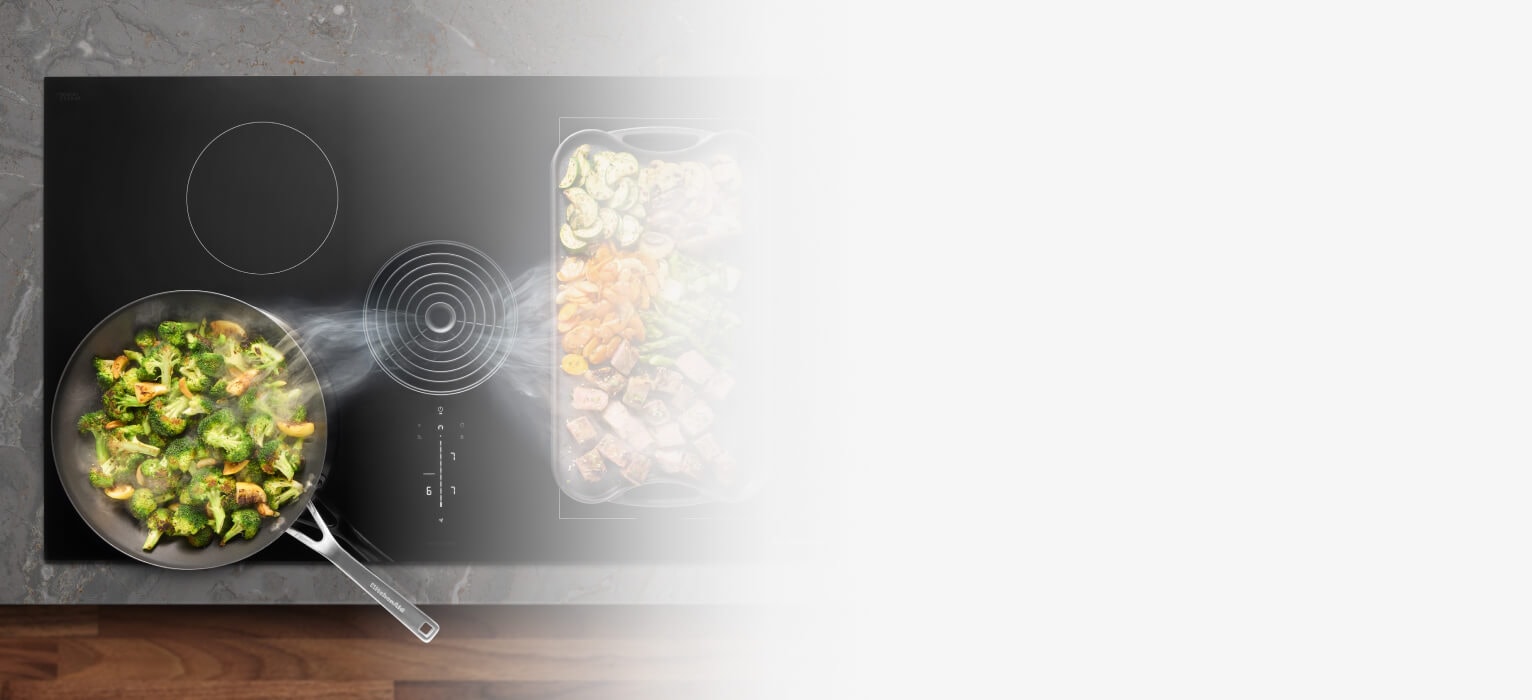
KitchenAid® Induction Downdraft Cooktops
Powerful extraction to help clear the air
Get downdraft ventilation that can adjust automatically to remove odors, steam and smoke 5x faster than steam can rise

Do downdraft cooktops need a range hood?
A downdraft range or cooktop integrates the ventilation system directly into the cooking surface—like this induction downdraft cooktop from KitchenAid brand—eliminating the need for an overhead vent. A retractable unit—sometimes called a downdraft range hood—is another form of downdraft ventilation that rises from near the cooking surface when in use. These models can typically be installed separately from the cooktop.
Understanding the maintenance requirements for your specific type of range hood can enhance your kitchen's air quality and cooking experience.


Range hood height FAQs
Finding the right range hood height can help you optimize venting while you cook. Learn more about how to properly place your range hood with the answers to common questions below.
The distance from your range hood to the cooktop’s surface can affect how well the hood captures smoke, steam, grease and odors before they spread. The most important factors in determining your range hood height are the type of cooktop you have, the recommendations from the product manufacturer, and the type of range hood you have and its CFM (cubic feet per minute) capabilities. If the range hood has a high CFM capability, it may be able to be installed higher up, and vice versa. But always defer to the specific instructions in your owner’s manual.
Range hood width and depth don’t directly determine installation height, but they may influence airflow coverage. Height requirements are usually driven by cooktop type and safety clearances, while width/depth considerations help ensure that the range hood effectively captures smoke across burners. A wider cooktop or range would likely need a wider range hood.
While mounting height is typically determined by the cooktop type, rather than the range hood type, you may find that island hood installation instructions recommend slightly higher mounting guidelines than other types of range hoods. Generally, you can expect to mount an island range hood at least 24 inches from an electric cooktop and a minimum of 27 inches from a gas cooktop, with no more than 36 inches from either. But check the owner’s manual of your specific model to be sure.
Every model is different, but you can expect to need about 12 to 13 inches of clearance between your stovetop and an over-the-range microwave. Installation instructions can vary from model to model, so reference your owner’s manual for specific height clearance requirements.
Ceiling height can affect how you install your range hood, but not because height clearance recommendations change. Standard clearance to the cooktop stays the same—typically no more than 36 inches above the cooktop—but taller ceilings may require chimney extensions or different hood styles to reach venting without impacting performance.
For some range hoods, your ceiling’s height is irrelevant to installation. Instead, these hoods install beneath upper cabinetry or on the wall, then duct air through the wall or floor—or recirculate air—instead of venting through the ceiling.
Yes, range hoods can be installed too low to perform properly while still keeping an appropriate distance from high heat. If your range hood is properly installed at the correct height, it can ventilate your kitchen space optimally and provide proper air circulation. If it is installed too low, the heat from the stovetop can damage the range hood and it can be difficult to utilize your kitchen space for cooking.
If you’re in need of a range hood but are limited by space constraints, consider a solution like a low profile over-the-range microwave with venting capabilities. Models like this KitchenAid® low profile microwave offer a Dual Fan Ventilation System utilizing powerful 600 CFM motor class venting in one small, sleek appliance less than 11 inches tall.
No matter which type of range you have, there should be no more than 36 inches between the cooktop’s surface and the start of the range hood. Installing a range hood too high above a stovetop will decrease ventilation capabilities, making it harder for your range hood to capture smoke, grease or odors rising from the cooktop.
If you suspect your range hood should be mounted higher above your stovetop, reference your owner’s manual for maximum mounting height recommendations.


Your subscription was successful
Thank you for signing up. Keep an eye on your inbox for our next newsletter.
Stay Connected – Join the List
Enjoy articles like this? Get helpful guides and appliance care tips sent straight to your inbox.

