









 New Code Sent!

7 parts of a refrigerator and their functions
Refrigerators are intricate appliances composed of several essential parts that work together to help keep your food fresh and cool. Understanding these components can help you investigate potential issues and maintain your refrigerator. Read on to explore the various parts of a refrigerator and how they function.


What are the parts of a refrigerator?
Refrigerators consist of several key components, each serving a specific function. Learning more about these components can help you understand how a refrigerator works and how to investigate potential issues.

1. Compressor
The compressor, similar to an engine, initiates the cooling process by pumping the refrigerant, or cooling agent, through the refrigerator. Increasing both pressure and temperature, it propels the coolant along the refrigeration cycle. Positioned at the bottom or back of the refrigerator, the compressor acts as the system's central component, circulating refrigerant throughout.

2. Condenser coils
The condenser coils in your refrigerator transform vapor refrigerant into liquid under increased pressure by the compressor, releasing heat that is then pushed into the outside air. Positioned at the back or bottom of the refrigerator, these coils enable the refrigerant to cool and transition to a liquid state.

3. Evaporator coils
The evaporator coils, usually located within the freezer compartment, extract heat from inside the refrigerator, causing the refrigerant to evaporate and cool the interior. As the refrigerant circulates through these coils, it absorbs heat from the surrounding air—primarily from the food compartment side—and releases cool air into the refrigerator when the door is opened.

4. Expansion device
Also known as the expansion valve or capillary tube, this component regulates the flow of refrigerant into the evaporator. The expansion device is usually positioned between the condenser and the evaporator.

5. Thermistor
This sensor monitors the temperature inside the refrigerator and signals the compressor to start or stop cooling as needed. The thermistor is generally located near the evaporator coils or in the refrigerator control panel.

6. Door gasket
Often called the door seal, a door gasket is the rubber strip that lines your refrigerator and freezer doors. Its job is to keep the cold air in, which helps maintain the right temperature and humidity levels inside, helping your refrigerator run the way it should.

7. Fans
Refrigerators rely on two fans for cooling: the condenser fan and the evaporator fan. The condenser fan, usually found at the back of the fridge, keeps the condenser coils cool and helps prevent the compressor from overheating. The evaporator fan, on the other hand, pulls air across the evaporator coils to remove heat and circulate cool air throughout the refrigerator and freezer compartments.
Shop KitchenAid®French door refrigerators
KitchenAid® French door refrigerators help keep your ingredients fresh and easy to find. Select KitchenAid® models feature a Wood-Look Sliding Storage Tray that keeps serving platters and ingredients easily accessible. The tray removes fully for easy cleaning. You can also customize your refrigerator’s exterior to enhance your kitchen’s overall aesthetic. Select KitchenAid® French door refrigerators are designed to be personalized with a curated palette of exterior finishes and mixed metal hardware. Pick from lush Juniper, warm Black Ore and classic Stainless Steel finishes, all with matching handles. Personalize your hardware with optional handle accessory kits in Brass, Bronze, Black Ore and Stainless Steel.


What is the coldest part of a refrigerator?
Typically, the coldest area in a refrigerator is found in the lower portions of the unit. Cold air naturally settles downward while warmer air rises. However, this can also depend on the refrigerator’s design.
For example, this KitchenAid® 4-door refrigerator features a Flexible Temperature Zone that allows you to turn your right-hand freezer into a fridge at the touch of a button. When it comes to temperature range, no one is wider, with 15 different temperature options and 4 specialty presets. Adjust the zone from -5°F deep freeze to 37°F for fresh produce and up to 41°F for cellar temps for wine and specialty beverages.


What is the bottom part of a refrigerator called?
The compressor is located at the bottom of the refrigerator and is crucial for cooling the appliance. However, the specific name for this section can vary depending on the manufacturer and model.

What refrigerator is right for you?
Refrigerator features to consider
In addition to the essential components, modern refrigerators often come with additional features for convenience and improved cooling results. Some of these features may include:
Ice Makers: Automatic ice makers offer a continuous stream of ice cubes, eliminating the hassle of manual filling. Some models produce premium, smaller ice cubes for enhanced beverage chilling. Or, you may find models like this KitchenAid® French door refrigerator with convenient features like Fast Ice, which increases ice production by up to 30% for 24 hours or until the ice bin reaches full capacity,1 so you're well-prepared when hosting guests.
Crisper Drawers: Adjustable humidity levels in some crisper drawers allow you to customize storage conditions for different produce, maintaining optimal freshness by providing high humidity for items like romaine lettuce and a more arid environment for fruits like figs and apricots. Refrigerators like this KitchenAid® side-by-side model help take the guesswork out of adjusting settings with the FreshChill™ Temperature-Controlled Full-Width Pantry Drawer that makes it easy to customize storage temperatures for different types of ingredients, helping to maintain freshness. Simply touch and select temperature presets for wine, deli, drinks and meat.
Water Filters: Built-in water filters help deliver clean, crisp water and ice, while convenient presets and customizable settings on select refrigerator models allow for effortless and accurate dispensing of measured amounts, eliminating the need for measuring cups and providing tailored options for commonly used quantities.
Shelving and Storage: You can help keep your refrigerator organized and clean with shelving and storage you can customize to suit your needs. For instance, select KitchenAid® refrigerators come with Adjustable Spill Resistant Shelves that are easy to clean and help prevent messes from spilling over into other parts of the refrigerator. Additionally, select KitchenAid® refrigerators offer a Pull Out Tray that fits platters and casserole dishes without stacking.
Temperature Management System: Every model is different, but many refrigerators feature temperature management systems designed to help keep temperatures regulated so food stays fresh for longer. For instance, the Preserva® Food Care System on select KitchenAid® refrigerators features two independent cooling systems that provide a dedicated refrigeration unit to help keep food fresh longer, and a separate system for frozen food. The FreshFlow™ Air Filter helps minimize odors while the FreshFlow™ Produce Preserver helps delay over-ripening.
1. Compared to normal ice production.
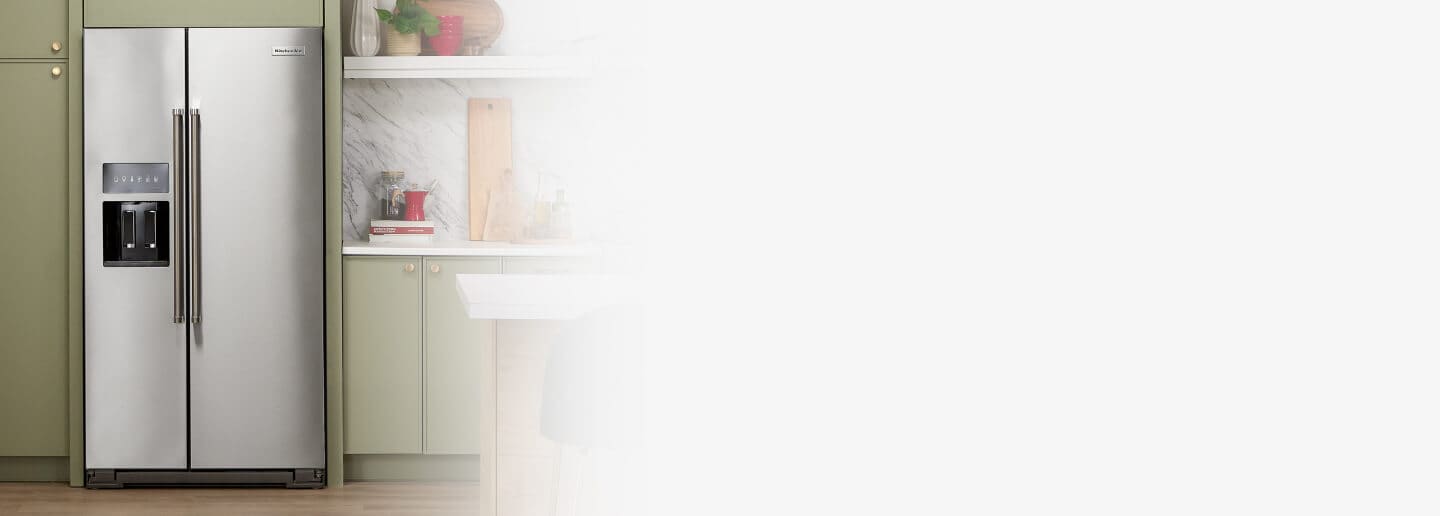
KITCHENAID® REFRIGERATORS
Refrigerators that inspire your creativity
Shop built-in, freestanding and specialty KitchenAid® refrigerators with versatile features and high-end details crafted for your kitchen
Where can you find refrigerator replacement parts?
Find replacement parts for your refrigerator on manufacturer websites or from authorized dealers. To ensure a proper fit and performance, use genuine KitchenAid® refrigerator replacement parts. You can find a wide range of refrigerator parts and accessories on the KitchenAid brand website.
Explore KitchenAid® refrigerators
Unlock your culinary creativity with KitchenAid® refrigerators, designed to help preserve the quality and taste of your ingredients through innovative food storage solutions. From crisp salads to hearty main courses, the sleek and intuitive refrigerator designs cater to your kitchen needs, allowing you to explore endless culinary possibilities with confidence and ease. And, to express more of yourself through your kitchen, consider personalizing your refrigerator with a KitchenAid® Hardware Accessory Kit that lets you match your refrigerator handles to the overall aesthetic.

Destination: Design
Follow the path to inspiration
Join two creative storytellers as they travel to a unique destination, and watch as KitchenAid brand transforms their inspiration into stunning designs


Your subscription was successful
Thank you for signing up. Keep an eye on your inbox for our next newsletter.
Stay Connected – Join the List
Enjoy articles like this? Get helpful guides and appliance care tips sent straight to your inbox.

