


Fresh pasta can change the whole feel of dinner. Silky sheets for lasagna, tidy ribbons for fettuccine or pressed shapes ready to catch sauce. Each type of pasta maker handles dough a little differently, so the right fit depends on how often you make pasta, how much space you have and which shapes you want to put on the table.
Use this guide to compare manual rollers, electric machines and stand mixer attachments, then explore types of pasta noodles to match your tool to the dish.
Types of pasta makers for home cooking
Types of pasta makers for home cooking

Different types of pasta makers
Home pasta makers typically fall into three groups: manual rollers, electric machines and stand mixer attachments. Each one shapes dough in its own way, from rolling sheets for lasagna and fettuccine to pressing hollow or ridged shapes. The right pick comes down to how hands-on you want to be at the counter and which appliances you already cook with.
1. Manual pasta makers
Manual pasta makers use a hand crank to feed dough through rollers, thinning each pass through adjustable thickness settings until the sheet looks just right. The rhythm is hands-on. You turn, feed and watch the dough get silkier with every pass, and that close control over each setting is the whole appeal. Most models clamp to the counter, so plan for a sturdy edge during use and a drawer or shelf where the machine can live between sessions.
Because the process is fully manual, making multiple batches or switching between thickness settings can take more time and effort than powered machines or stand mixer attachments. If you want a more streamlined pasta-making routine, a motorized roller or pasta attachment may offer a smoother way to move from dough to sheets, ribbons or shaped pasta.
2. Electric pasta makers
Electric pasta makers split into two distinct styles: motorized rollers and fully automatic extruders. Motorized rollers do the same work as a manual machine, flattening sheets and cutting ribbons without the crank. That makes back-to-back batches noticeably less tiring on pasta night.
Extruders take a different path. They push a stiffer, lower-hydration dough through shaped dies to form rigatoni, macaroni, fusilli or bucatini in one continuous motion. Dough recipe matters here, since rolled-pasta dough is typically too soft for an extruder. Plan to mix a firmer dough when you're shaping with dies.

3. Stand mixer pasta attachments
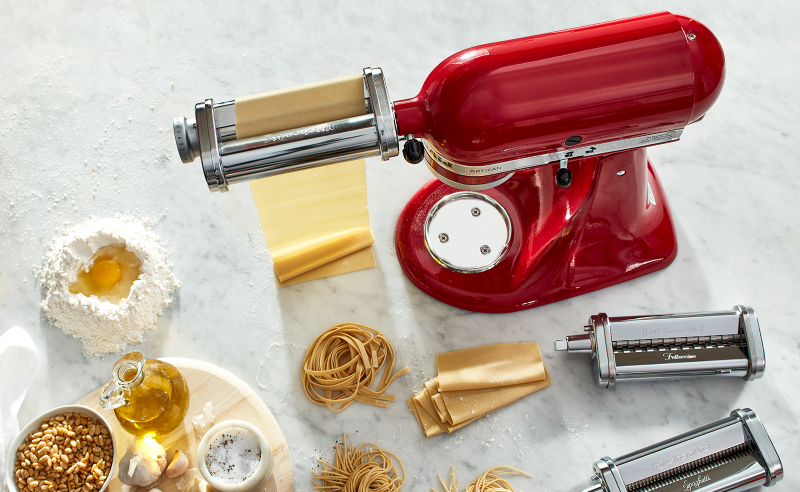
Stand mixer pasta attachments are sold separately and connect to the front power hub on a KitchenAid® stand mixer, so the same appliance that mixes the dough can also roll, cut or press it. That gives you one powered system for the full pasta-night workflow, from mixing and kneading to sheeting, cutting and plating, rather than juggling a dough hook and a separate pasta machine.
Three KitchenAid® attachments cover most home setups:
Pasta Roller flattens dough through adjustable thickness settings, feeding wider to thinner in stages to build smooth, even sheets. Use the sheets for lasagna, feed them into the cutter set for ribbons or fill and seal them for ravioli.
Pasta Cutter Set slices rolled sheets into long noodles in a single pass, with one cutter shaped for fettuccine and another for spaghetti.
Gourmet Pasta Press pushes a firmer, lower-hydration dough through interchangeable plates to shape spaghetti, rigatoni, macaroni, fusilli and bucatini in one continuous motion. The grooves and hollow tubes catch sauce in every bite.
For a guided starting point, explore how to make homemade pasta.
Shop KitchenAid® stand mixer pasta attachments
KitchenAid® stand mixer pasta attachments help you move from dough to dinner with rolling, cutting and pressing tools that work with the appliance you already use for mixing. Explore the collection and find attachment options for sheets, noodles and shaped pasta.

Pasta rollers vs. pasta presses
Picking a pasta maker often comes down to choosing a shaping method. Pasta rollers and cutters flatten dough into sheets and slice them into ribbons for fettuccine, spaghetti, lasagna and ravioli. Pasta presses and extruders push firmer dough through shaped dies to form rigatoni, macaroni, fusilli and other ridged or hollow shapes.
Pasta rollers and cutters | Pasta presses and extruders | |
|---|---|---|
How it works | Flattens dough into sheets through adjustable thickness settings, then cuts the sheets into ribbons | Pushes dough through shaped dies in one continuous motion |
Best for shapes | Sheets, lasagna, fettuccine, spaghetti, ravioli, tortellini | Rigatoni, macaroni, fusilli, bucatini |
Dough type | Softer, higher-hydration dough that rolls smoothly without tearing | Firmer, lower-hydration dough that holds its shape through the die |
Sauce match | Cream and butter sauces, baked pasta dishes, light tosses | Chunky and meaty sauces that catch in grooves and hollow tubes |
KitchenAid® attachment options | Pasta Roller + Pasta Cutter Set |
How to choose the right pasta maker
Start by matching the machine to how you cook, whether that's weeknight pasta, weekend projects or frequent batch prep. The right fit also depends on your storage space and the shapes you reach for most, from flat sheets and ribbons to pressed tubes and spirals.
Choose based on the pasta shapes you want to make
Pick your shapes first. Rollers and cutters are ideal for sheets, lasagna, fettuccine and spaghetti, while presses and extruders shape dough into hollow or ridged pasta that holds sauce in a different way. Starting with the shapes you want to make is often the simplest way to narrow the main types of pasta makers without overthinking features.
For a lighter spring or summer dinner, pasta primavera can work with both: silky fettuccine or spaghetti from a roller and cutter, or short pressed shapes like fusilli or macaroni that catch vegetables and sauce in every bite. For a fall-inspired dish like fresh beetroot tortellini with butternut squash and sage, rolled sheets give you the flexibility to fill, fold and seal each piece. In winter, pressed shapes like rigatoni or fusilli can stand up to heartier sauces, from slow-simmered ragù to creamy mushroom sauce.
Choose based on batch size and frequency of use
Think about how often pasta lands on the menu and how much dough you want to handle at once. If pasta night is occasional, a manual roller can fit the routine, but larger batches and regular pasta-making tend to favor electric machines or stand mixer attachments. With a powered setup, the motor handles the repetitive rolling, cutting or pressing while you stay focused on shaping, filling and saucing.
Bowl capacity matters, too, since pasta dough needs to be mixed before it can be rolled, cut or pressed. KitchenAid® stand mixers offer a range of bowl capacities, from 3.5- to 5-quart tilt-head models to 5.5-, 7- and 8-quart bowl-lift models, giving you flexibility for small batches, family meals or make-ahead prep.
Choose based on ease of use, cleaning and storage
Choose a pasta maker you’ll want to use more than once. Setup time, cleanup habits and storage space can all shape whether a manual machine, electric model or stand mixer attachment feels practical for your cooking style.
Manual machines often need to be clamped to a sturdy surface, while standalone electric machines require dedicated counter or cabinet space. A compact attachment setup can be easier to store, especially if you already keep a stand mixer on the counter or nearby. With compatible attachments, your KitchenAid® stand mixer can support the full pasta-making process, from mixing and kneading dough to rolling sheets, cutting noodles or pressing shaped pasta.
Cleanup is another important part of the decision. Some parts may need hand-washing or brushing once dried dough is removed, while others may be dishwasher safe depending on the attachment, bowl or accessory. Before cleaning, check which KitchenAid® attachments and bowls are dishwasher safe so you can follow the right care instructions for each piece.

Pasta maker FAQs
Learn more about pasta makers to help you find the right machine for your kitchen.
Can all pasta makers make spaghetti and fettuccine?
No. Many roller-style pasta makers can cut spaghetti or fettuccine, but not every model includes both cutters or any cutters at all. Some machines focus on sheet pasta only, while extruders are designed for shapes like bucatini, rigatoni or macaroni instead of flat noodles.
Can one pasta maker make both sheet pasta and extruded shapes?
Usually not. Most pasta makers are built for one method. Rollers flatten dough into sheets, while extruders press dough through dies to create shaped pasta. Some home setups can handle both with separate tools or attachments, giving you more room to switch styles as you cook.
Do electric pasta makers still require manual feeding and cutting?
Sometimes. Some electric pasta makers automate mixing, kneading and extrusion, while others simply motorize the rollers and still need you to feed dough and swap cutters by hand. The amount of hands-on work depends on the machine's design and which pasta shapes you want to make.