


 New Code Sent!

Why is my refrigerator freezing food on the lowest setting?
Your refrigerator temperature should generally sit around 37°F, though a range of 33-40°F (0-4°C) is widely accepted as a food-safe threshold. When you use your refrigerator to store all of your favorite fresh ingredients, it can be frustrating to find frost on your food when you open the door.
If your refrigerator is freezing food, there are several possible causes to consider. For example, the cold air vents may need to be cleared, the freezer could be set too cold or the refrigerator door seal may be damaged. Or, another issue could be that a sensor, damper or control board has failed—especially if food freezes even on the warmest setting.
Ultimately, refrigerator temperatures that fall below 33°F can freeze foods, while those that rise above 40°F may contribute to food spoiling. Use this guide to explore possible solutions for a refrigerator that is getting too cold and discover tips to prevent the issue in the future.

Possible fixes for a refrigerator that is freezing food
Refrigerators work to keep your food at a cool—but not freezing—temperature. Overly frosty temperatures in your refrigerator can be due to a few possible causes, including blocked air vents, incorrect temperature settings, leaky door seals, issues with your built-in ice maker and more.
If your refrigerator begins to freeze your fresh produce and meats, there are a few possible steps you can try before calling in the professionals. Explore some potential solutions for a refrigerator that’s too cold below.
1. Unblock the air vent
The air vents inside your refrigerator help circulate cold air throughout the interior to maintain proper cooling temperatures. If you overpack your appliance, you may have blocked the air vent. This can restrict the airflow and lead to freezing temperatures inside the refrigerator storage area.
Organize the contents of your refrigerator and make sure your items are evenly distributed throughout the storage area and are not crowding the air vents.
2. Fix temperature settings
Proper internal temperatures for a refrigerator range between 33-40ºF, though around 37ºF is ideal. If you notice your refrigerated food is frozen, you may need to reset the temperature settings on your appliance, following the instructions provided in the owner’s manual.
3. Check the gasket seals
Your refrigerator door is wrapped with rubber gasket seals that help lock in cold air and maintain the refrigerator’s internal temperature. If the seal is damaged or broken, it can lead to temperature issues inside the appliance. Inspect the gasket seals for cracks, tears or any other visible sign of wear. If damage is found, the seals may need to be replaced.
4. Adjust built-in ice maker settings
If your refrigerator has a built-in ice maker, it could be the culprit behind the freezing temperatures. Ice makers that are powered on but disconnected from the water supply may continue trying to make ice, which can release too much cold air inside your refrigerator and alter the internal temperature. You can resolve this issue by either connecting your ice maker to a water line or by switching the power setting to the “off” position.
5. Clean the condenser coils
Proper refrigerator cleaning and maintenance includes keeping the condenser coils clear of dirt and dust. These coils can typically be found on the bottom or back of your refrigerator and they may force your refrigerator compressor to work harder to maintain temperatures if they are not kept clear of debris.
6. Test the temperature sensor
Your refrigerator’s temperature sensor gauges the interior temperature and sends a signal to the cooling system to raise or lower temperatures to keep the refrigerator working. If the sensor is broken, it can lead to poor temperature regulation inside your appliance.
Test the sensor by placing a glass of water inside your refrigerator, then use a thermometer to check the temperature of the water after it has been refrigerated for 24 hours. If the water is cooler than your refrigerator’s temperature settings, you may need to replace the sensor.
7. Check the control panel
If you have checked out the above solutions and still find that your refrigerator temperature is too low, your control panel may be in showroom or demo mode. If the control panel is the cause, you may be able to resolve the issue by resetting your refrigerator. Unplug the appliance and wait 5-10 minutes before plugging it back in, then set the temperature to 37ºF and test to see if the control panel is responding. If the panel is still not working properly, you may need the help of a professional.
8. Turn off rapid cooling feature
Some refrigerators offer a rapid cooling setting that helps with periods of high refrigerator use, full grocery loads or temporarily warm room temperatures. Reference your owner’s manual to learn how to turn off a rapid cooling feature.
9. Check the air damper
The air damper in your refrigerator regulates the fresh food compartment temperature by managing the amount of air that enters that compartment from the freezer. Check to make sure that the temperature is set to 37ºF.
On some models, you’ll need to remove the upper air duct in the freezer before you can access the air damper so it may be worth recruiting the help of a service technician.
| Possible cause | Possible fix |
|---|---|
Overpacked refrigerator | Organize the contents of your refrigerator so the items are evenly distributed and not crowding the air vents |
Temperature settings are not properly set | Adjust the internal temperature to about 37ºF |
Damaged or broken gasket seals | Inspect the gaskets for damage to determine if the seals need to be replaced |
Ice maker disconnected | Connect your ice maker to a water line or switch the power setting to the “off” position if not using |
Dirty condenser coils | Clean condenser coils typically found on the bottom or back of your refrigerator |
Faulty temperature sensors | Use a food thermometer to check if refrigerated beverages are the same temperature the fridge thermostat indicates. If they're not, replace or repair sensors. |
Showroom or Demo mode | Reset your refrigerator |
Rapid cooling activated | Reference your owner’s manual for model-specific information about turning rapid cooling off |
Faulty air damper | Make sure the temperature is set to 37ºF. The air damper can be complicated to inspect, so it is recommended to call a professional if you suspect it’s faulty. |


Does the freezer cool the refrigerator?
The vents inside select combination refrigerator freezers allow the cold air to escape from the freezer into the refrigeration area. If you have your freezer temperature set too low, it may lead to frosty temperatures in the refrigerator.

Tips to prevent food from freezing in the refrigerator
You rely on your kitchen appliances to perform at their best so you can focus on starting your next culinary adventure. Use the following tips to help prevent your refrigerator from getting too cold so you can focus on creating.
Keep the refrigerator between 33°F and 40°F, ideally around 37°F. Settings below 33°F can freeze food.
Keep your fresh ingredients organized and evenly distributed inside the refrigerator to promote proper airflow.
Consider the placement of your ingredients as temperatures can vary slightly in different locations inside the refrigerator. For example, door bins are typically warmer than the back of the refrigerator, and the deli and crisper drawers usually experience less temperature fluctuation.

What should I do if my refrigerator is still freezing?
If you’ve tried everything listed and still can't find a resolution, you may need to schedule a repair service with a licensed professional to help you determine if you need to repair or replace your refrigerator. If you opt to replace or upgrade your refrigerator, explore the refrigerator buying guide from KitchenAid brand to find the right match for you.
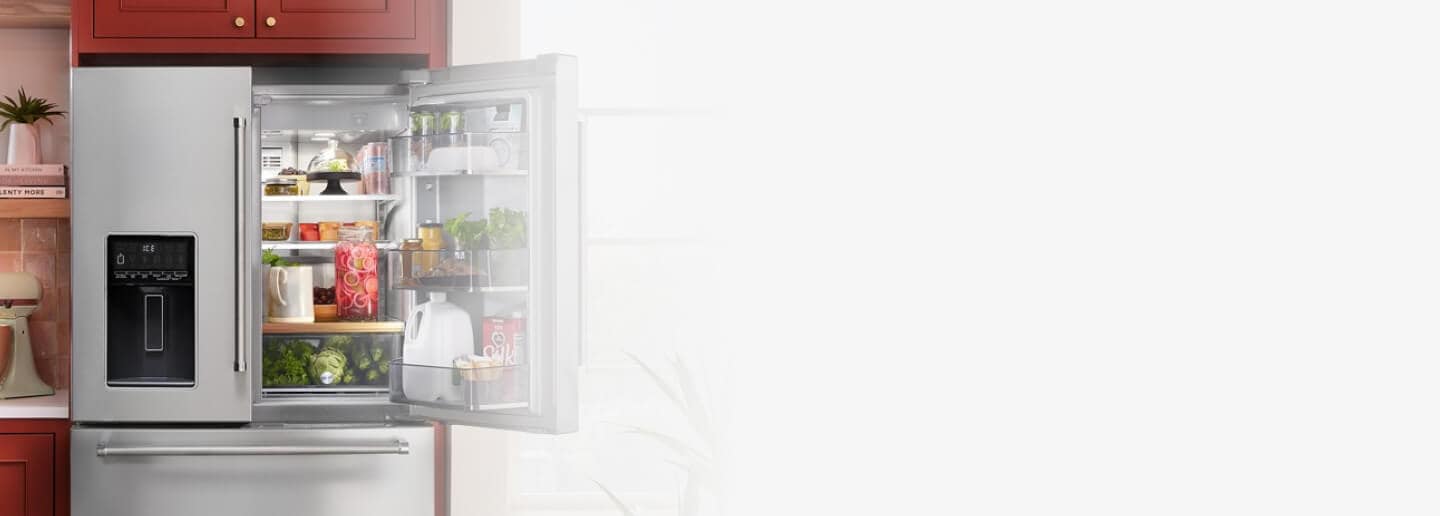
MULTI-DOOR REFRIGERATOR
Plenty of room for fresh and frozen fruits
Keep your favorite fresh and frozen foods organized just the way you like with this multi-door French door refrigerator
1. What temperature should my refrigerator be set to so food doesn't freeze?
To keep your refrigerator in the sweet spot, set it to 37°F. While anything between 33-40°F is acceptable, allowing the temperature to go lower than that can freeze your fresh veggies and groceries. Going higher than 40°F can run the risk of your food spoiling.
2. Why is food freezing in the back of my refrigerator?
From an overpacked refrigerator to faulty sensors, there can be plenty of reasons why you’re starting to notice food that’s colder than expected in the back of your freezer. Your groceries may be too close to the back air vents or the temperature simply could be set too low.
Since the temperatures can fluctuate in your refrigerator, try placing more temperature-sentitive groceries further away from the cold air vents that are in the back of the refrigerator. Door bins and crisper drawers are other locations that tend to be slightly warmer than the back of the refrigerator.
3. Why is my refrigerator freezing food even on the warmest setting?
Food freezing in your refrigerator, even when you set it to the warmest temperature, can be caused by a variety of issues. One possibility is that your control panel is faulty.
Reset your refrigerator control panel by unplugging it for five to ten minutes, then plugging it back in and setting the temperature to about 37ºF. Test to see if the control panel responds. If the same issue persists, you may need professional assistance.
You can schedule service for a KitchenAid brand refrigerator through the KitchenAid® Service & Support Owner’s Center.
4. Can a freezer set too cold make my refrigerator freeze food?
Yes. Some refrigerators that have combination freezers can allow the cold air to travel from the freezer into the refrigerator compartment. If your freezer temperatures are set lower than needed, it could lead to colder temperatures in the refrigerator.
5. Is frozen refrigerator food OK to eat?
Some foods that were frozen in the back of your refrigerator and thawed out again may not maintain their texture or flavor. Inspect your groceries to determine the quality after thawing. Food that sits out for more than two hours in temperatures above 40ºF should be thrown out.
6. How long does it take for a refrigerator to adjust after changing the temperature?
When adjusting the temperature of your refrigerator, it is recommended to allow at least 24 hours for the temperature to fully change. After that period of time, you can check again to see if it has reached the desired temperature.
7. When should I call a technician for a refrigerator that keeps freezing food?
Simple fixes like unblocking an air vent or switching off a rapid cooling setting can be doable without a professional, while more complex issues like faulty temperature sensors or a broken control board may warrant a visit from a professional. Never attempt a repair that makes you uncomfortable.
Visit KitchenAid® Product Help and review your product manuals to help determine if you need professional assistance.
Ready for an upgrade? Shop KitchenAid® Built-In, Side-by-Side and French Door refrigerators to find a refrigerator that’s right for you.


Your subscription was successful
Thank you for signing up. Keep an eye on your inbox for our next newsletter.
Stay Connected – Join the List
Enjoy articles like this? Get helpful guides and appliance care tips sent straight to your inbox.

