









 New Code Sent!

Convection oven vs. microwave: Which is better?
Both convection ovens and microwaves are staples among kitchen appliances, but knowing when to use each can help you make the most of meal prep. Use this guide to learn more about convection oven vs. microwave cooking, uncover each appliance’s distinctive qualities and discover which kitchen companion best complements the types of dishes you’re creating—whether reheating, roasting, baking, crisping or defrosting. Plus, learn more about convection microwaves and how they compare to convection ovens and conventional microwaves.


What is the difference between a microwave and a convection oven?
The key differences between a microwave and a convection oven are their heating methods, cooking capabilities, capacity and preheating options. A convection oven is a large appliance that uses a fan to circulate heated air around food and helps create browned, crispy foods.
A standard microwave uses electromagnetic waves to heat food with fast cooking times and no preheating, but may not provide crispy results. Microwaves have a smaller cooking capacity but offer convenient functions like defrosting and reheating.
What are the advantages of convection ovens and microwaves?
There are various advantages of convection ovens and microwaves, which may include sizes, speed of cooking, method of cooking, effects on food, pricing and more. Read the bullet points below for more details about each.

Convection ovens
Convection ovens offer advantages for those who often cook multiple dishes at once and seek browning, caramelized roasting and crispy results.
They can be ideal for larger families or when cooking for crowds due to their larger cooking capacity.
Convection ovens can be helpful for a variety of cooking methods, including roasting, baking, grilling and toasting, with select models even allowing for dehydrating and air frying.
When reheating food, a convection oven allows you to get a crispy exterior while keeping the interior moist.
- Convection ovens typically range from $500 to $2,500+, with price varying based on size, capacity, features and more.

Microwaves
Conversely, microwaves are convenient for quick heating, defrosting and smaller portions, making them suitable for smaller families or individuals.
Microwaves offer a variety of sizes for different spaces and cooking needs, typically ranging from 0.5 cubic feet to 2.2 cubic feet.
Microwaves let you cook foods at a quick rate with lower-wattage models generally starting at 600 watts and high-wattage models going up to 1,700 watts.
Microwaves use microwave radiation to excite water molecules in food, causing them to vibrate and heat up, cooking the food. Select microwaves may also offer features like Air Fry or broil.
When microwaving certain foods, the texture and flavor may be impacted. Overheating or unevenly heating certain foods may cause them to become tough or dry, while other foods may lose their browning or crispiness when microwaved. Follow the proper heating guidelines and use the correct containers to help avoid these effects.
- Compact microwaves may start as low as $50, while standard sizes may range from $100-$500, though some models do vary. Different features, sizes and model types can all affect the pricing of a microwave.
Each appliance has its strengths, catering to different cooking needs and preferences. Which one you choose to use depends on the type of cooking experience you hope to create.
When should you use a convection oven vs. a microwave?
In general, use a microwave when you need speed and to reheat, defrost, melt or soften your ingredients. Use a convection oven when you need to crisp, brown or slow cook your dish.
Convection ovens
- A convection oven is ideal for cooking foods across multiple racks, roasting meats, vegetables and fruits or creating crispy chicken wings and a golden, crusty finish on certain baked goods.
Convection ovens excel at preparing moist inside, crispy outside dishes like honey and herb glazed rack of lamb, loaded potato slices and flaky biscuits. You can also use it to bake delicate pastries and achieve a golden crust on artisan bread.
If you’re making something that cooks covered, such as a foil-covered casserole, you can use a convection oven to help cook your dish quickly.
- A convection oven is great for cooking larger amounts of food in one go, instead of smaller amounts as you would in a microwave.
Microwaves
- Microwaves can be perfect for quick reheating, defrosting and cooking foods that require moist heat like rice or pasta dishes, soups and steamed recipes.
Microwaves with more advanced features can help you whip up a delectable single-serve soufflé, steam a colorful assortment of vibrant vegetables for a refreshing salad, create a fluffy and flavorful quinoa pilaf, or infuse your favorite fruits for a homemade apple compote. The microwaveʼs versatility allows you to experiment and explore new techniques with ease.
Use your microwave for small servings such a quick snack or a single portion. Microwaves can be helpful for quick recipes like steamed fish or delectable desserts like mug cakes.
- Your microwave can help you defrost certain frozen foods safely and quickly. Read this guide to learn more about defrosting in the microwave.
Shop KitchenAid® convection ovens
Select KitchenAid® convection wall ovens offer versatile cooking modes, guided cooking and smart technology to help you make more than meals. Select KitchenAid® wall ovens offer Live Look-In, which lets you check on food in the oven at any time with an Intelligent Cooking Camera that displays on your oven touchscreen or connected mobile device1. Plus, KitchenAid Brand’s Most Precise Even-Heat™ True Convection is designed with a new cooking algorithm and a unique bow-tie design with a heating element and fan. This design circulates hot air throughout the entire oven, providing optimal temperatures for delicious baked goods, juicy roasts and flavorful vegetables.
1. Wi-Fi & App required. Features subject to change. For details and privacy info, visit KitchenAid.com/connect (U.S.) or KitchenAid.ca/connect (Canada).


What are the differences between a convection oven vs. convection microwave?
A convection oven is predominantly designed for baking, roasting and broiling; providing consistent heating and even cooking across multiple racks. A convection microwave integrates the features of a microwave and a convection oven, letting you reheat and defrost while also baking, roasting and grilling foods.
Convection microwaves use an additional heating element and fan to circulate heat throughout the microwave’s cavity. Traditional microwaves, on the other hand, cook food using electromagnetic waves. Due to the extra heating element in convection microwaves, you can often bake, broil or roast small portions of certain foods.
The versatility of convection cooking extends beyond traditional full-size convection ovens and ranges and can be found in compact options like KitchenAid® countertop ovens and select microwaves. These smaller appliances offer the convenience of convection cooking in a more compact footprint, making them ideal for those seeking space-saving solutions without compromising on cooking capabilities.
Shop KitchenAid® convection microwaves
KitchenAid® microwaves with convection cooking modes can convect cook everything from small-batch bakes to a whole roast chicken. Get features like Air Fry Mode on select KitchenAid® convection microwaves, which replaces a countertop air fryer for all of the crisping with none of the clutter.
Convection oven vs. microwave vs. convection microwaves
| Features | Convection ovens | Convection microwaves | Microwaves |
|---|---|---|---|
| Heating method | Uses a fan to circulate heated air around dishes | Uses an additional heating element and fan to circulate heat throughout the cavity | Cooks food using electromagnetic waves |
| Texture | Produces a crispy exterior while keeping the interior of food moist | Can bake, broil and roast small dishes, similar to a convection oven | Defrosts and reheats without crispy results |
| Capacity | Ranges from 2.3 to 6.4 cubic feet* | Compact sizes typically start at 0.5 cubic feet, while larger sizes can go up to 2.2 cubic feet* | Compact sizes typically start at 0.5 cubic feet, while larger sizes can go up to 2.2 cubic feet* |
| Preheating | Requires preheating before cooking | Requires preheating when in convection mode | No preheating required |
| Cookware compatibility | Oven-safe cookware: heat-proof glass, glass ceramic, Pyrex and metal baking pans, etc. | Can handle metals like aluminum foil and baking sheets (only when the microwave is in convection mode) | Most glass and ceramic dishware, or other microwave-safe dishware |
| Ideal uses | Useful for various cooking methods, including roasting, baking, grilling and toasting | Bake, broil or roast small dishes | Mostly for defrosting, melting and reheating |
*These numbers are rough estimates. Some models may vary.
What is a convection oven microwave combo?
A convection oven microwave combo offers a convenient solution by integrating a single convection wall oven with a microwave on top. This design allows for a clutter-free countertop and creates extra space for other kitchen elements like a decorative hood or extra cabinets.
Convection oven microwave combos are helpful for cooking multiple items at the same time, such as baking entrees in the oven while reheating vegetables in the microwave. This can help support both oven-style cooking and quick microwave tasks all in one appliance.
Shop KitchenAid® wall oven microwave combos
With a KitchenAid® combination wall oven, you can streamline your cooking tasks and seamlessly transition between the convection oven and the microwave oven. This versatility provides flexibility and convenience, enhancing your cooking experience and optimizing the use of your kitchen space. Shop KitchenAid® combination wall ovens with Assisted Cooking Modes, available on select models, which suggest cook times and temperatures on an easy-to-navigate touch screen so you can explore new recipes with confidence.
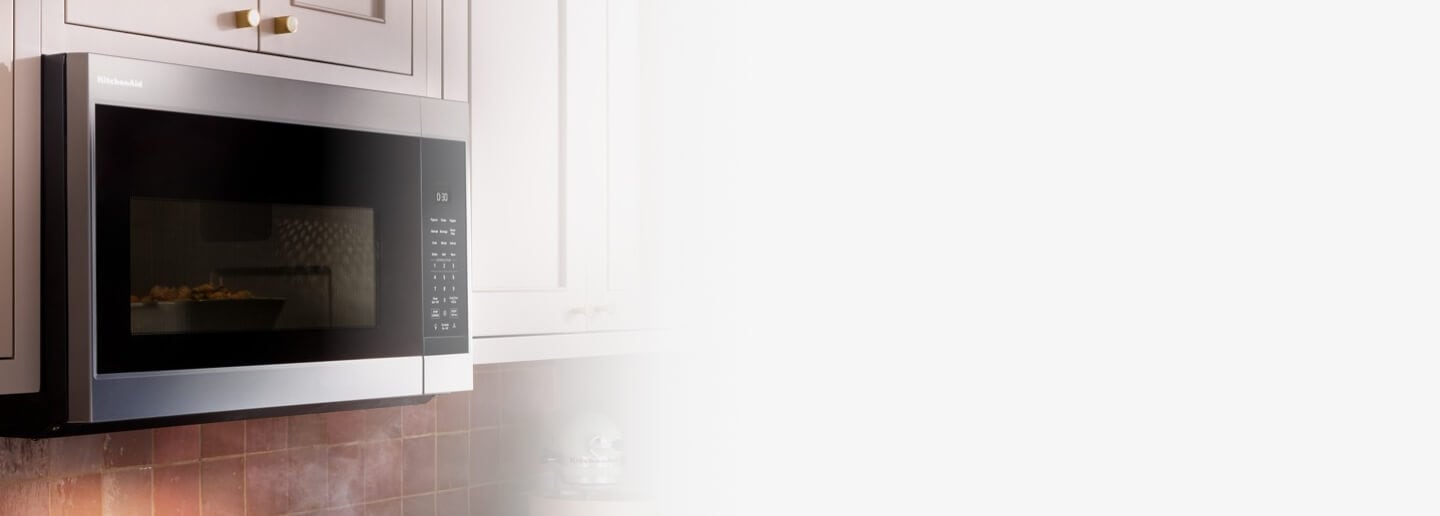
KitchenAid® microwaves
Maximize your cooking options
From built-in and over-the-range to countertop microwaves, KitchenAid brand has microwaves that complement your kitchen and cooking style
Convection oven vs. microwave FAQs
Keep reading to get answers to frequently asked questions about convection ovens and microwaves.
While convection ovens are ideal for fast and even cooking across multiple racks, convection microwaves can typically cook faster than convection ovens due to their smaller size. The cooking speed of a microwave depends on its wattage; a higher wattage will result in a faster cooking time.
Convection ovens can help supplement microwaves for a variety of cooking tasks, but they can’t replace a microwave completely. Microwaves are often much better at quickly reheating dishes as well as defrosting items.
Microwaves can often be more energy-efficient than convection ovens. While ovens use even heat distribution across the entire cooking compartment, microwaves use electromagnetic waves to heat food directly, in a much smaller space than an oven compartment.
Explore all KitchenAid® ovens
Whether you're baking artisan breads, roasting succulent meats or broiling mouthwatering dishes, KitchenAid® convection ovens and countertop ovens deliver delicious results with advanced features and intuitive controls on select models. Explore KitchenAid® wall ovens to discover a world of culinary inspiration at your fingertips.
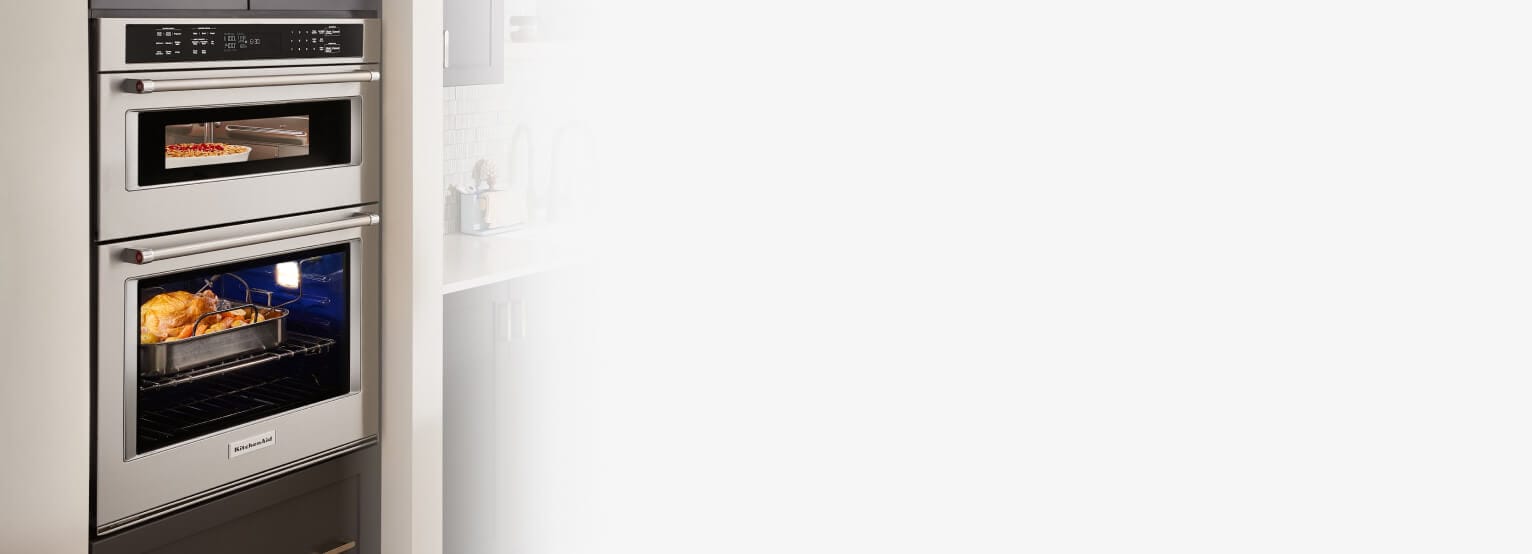
KitchenAid® wall ovens
Oven designs that inspire
Shop single and double built-in wall ovens to find the option that inspires your creativity and matches the way you make


Your subscription was successful
Thank you for signing up. Keep an eye on your inbox for our next newsletter.
Stay Connected – Join the List
Enjoy articles like this? Get helpful guides and appliance care tips sent straight to your inbox.

