

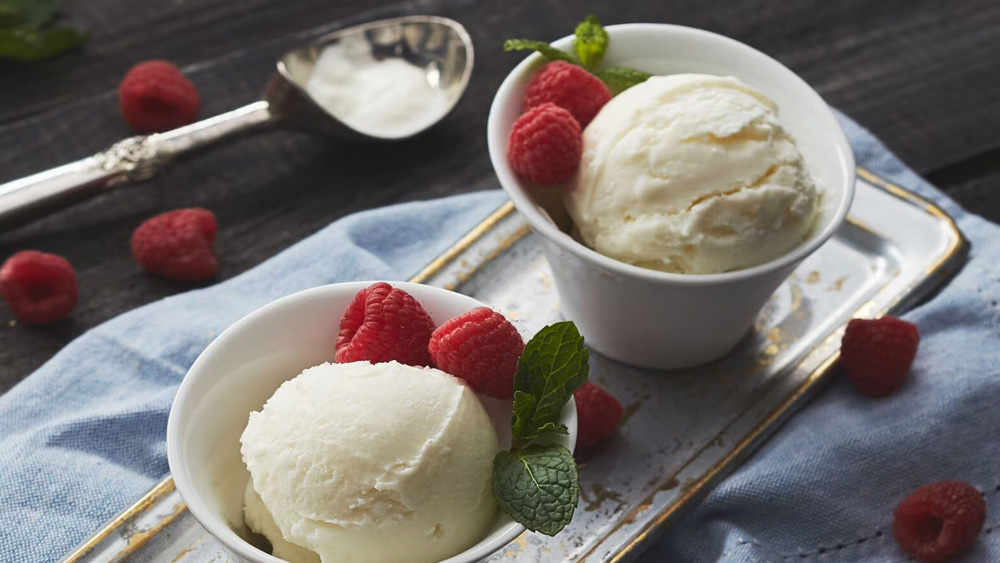
Homemade vanilla ice cream starts with a simple dairy-and-egg custard base that churns into a cold, creamy dessert with help from your KitchenAid® stand mixer and compatible Ice Cream Maker Attachment, sold separately. Your stand mixer can support prep and churning, while the attachment helps transform a chilled base into a soft-serve texture before the ice cream firms in the freezer.
This guide walks through how to make vanilla ice cream with a stand mixer, when to use the Ice Cream Maker Attachment and what to expect during chilling, churning and freezing. You’ll also find tips for adding mix-ins, troubleshooting texture and customizing a classic vanilla base.
How to make vanilla ice cream: recipe and tips
How to make vanilla ice cream: recipe and tips
What is the KitchenAid® Ice Cream Maker Attachment?
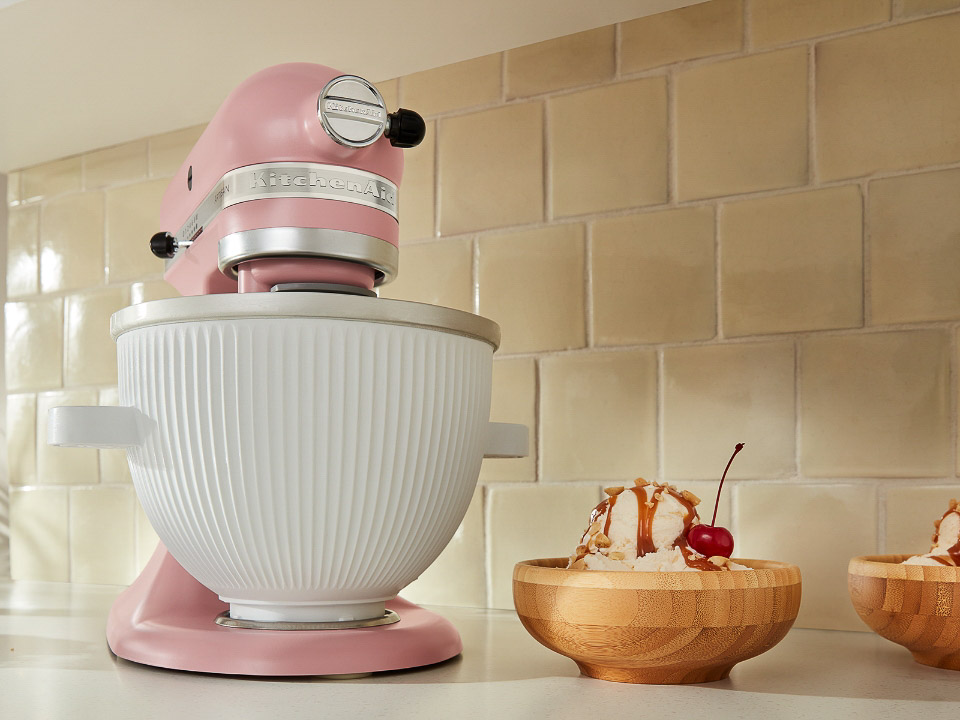
The KitchenAid® Ice Cream Maker Attachment connects to select KitchenAid® stand mixers and helps churn ice cream, gelato and sorbet. A pre-frozen bowl and rotating dasher work together to mix and freeze the base while incorporating air for a smooth, creamy texture.
You can simply attach the bowl to the base of a compatible KitchenAid® stand mixer to quickly and easily make up to 2 quarts of your favorite frozen treats at home.
How do you make vanilla ice cream with a stand mixer?
There are two main ways to make vanilla ice cream with a stand mixer. The easiest may be using the KitchenAid® Ice Cream Maker Attachment[1], which is specially designed for this task. You can also use a stand mixer alone to mix and aerate your ice cream mixture before freezing it.
With an ice cream maker attachment: Prepare and chill your ice cream base, then add the KitchenAid® Ice Cream Maker Attachment to your stand mixer. The attachment handles the churning process by keeping the base moving in the frozen bowl, helping create a smooth, creamy texture. Churn until the mixture reaches a soft-serve consistency, then freeze it for a firmer scoop.
Without an ice cream maker attachment: If you’re using a stand mixer without an ice cream maker attachment, you can whip together the cream until stiff peaks form, add the remaining ingredients and pour the mixture into a freezer-safe container to freeze. This method can be simple, but the texture is often denser because the base isn’t actively churned as it freezes.
Get even more recipe ideas from our list of KitchenAid® mixer uses.
[1] Attachment sold separately.
Homemade vanilla ice cream recipe
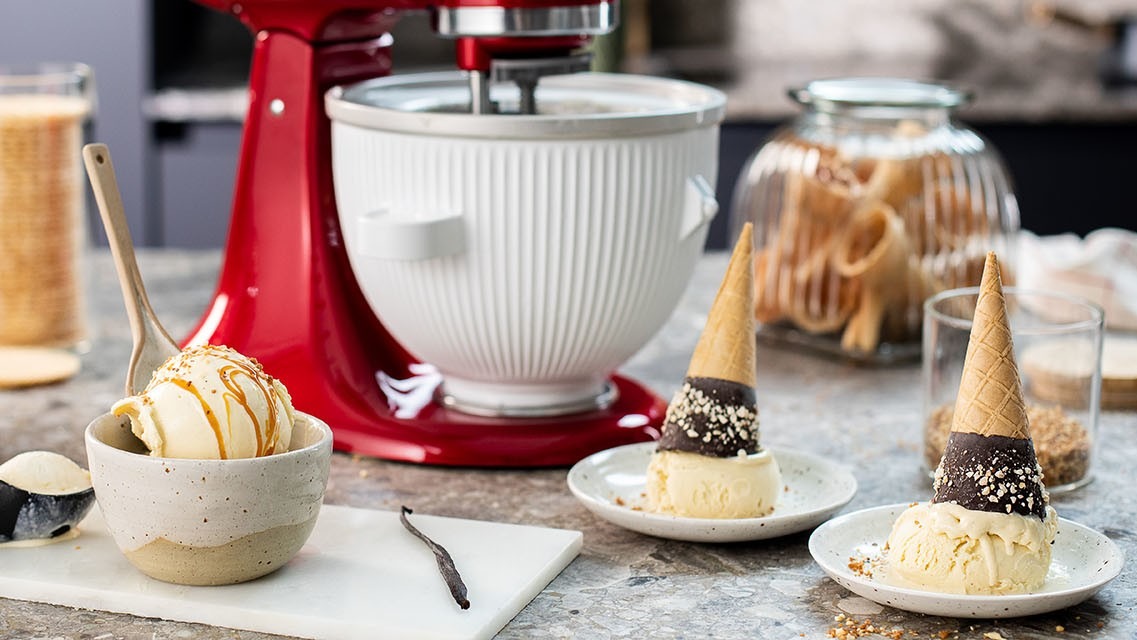
This homemade vanilla ice cream recipe uses a custard-style base made with egg yolks, sugar, half-and-half, whipping cream, vanilla and a pinch of salt. After the base is cooked and chilled, the KitchenAid® Ice Cream Maker Attachment churns it into a soft-serve consistency that can be enjoyed right away or frozen for a firmer scoop.
Yields
1 quart (about 4 to 5 large scoops)
Ingredients
1¼ cups half-and-half
4 egg yolks
½ cup (100 grams) sugar
1¼ cups whipping cream
2 teaspoons vanilla extract
Pinch of salt
Tools
KitchenAid® Ice Cream Maker attachment, sold separately
Flat beater
Saucepan
Large bowl
Spatula
Freezer-safe airtight container
Prep Time
10 minutes, not including the 24 hours needed to freeze the KitchenAid® Ice Cream Maker Attachment before starting.
Cook Time
10 minutes
Total Time
5 hours 40 minutes, including cooking, chilling, churning and freezing for 3 hours. Freeze longer if you prefer a firmer scoop.

1. Prepare your freeze bowl
Before you begin, place the KitchenAid® Ice Cream Maker Attachment freeze bowl in the freezer for 24 hours before use. You can also store the freeze bowl in your freezer so it’s always ready when the craving strikes. Leave the freeze bowl in the freezer until your ice cream base is fully chilled and ready to churn.

2. Make the custard base
In a medium saucepan over medium heat, heat the half-and-half until very hot but not boiling, stirring often. Remove from heat and set aside.
3. Combine egg yolks and sugar
Attach the flat beater to your KitchenAid® stand mixer. Add the egg yolks and sugar to the stand mixer bowl and beat on low for about 1 minute, or until the mixture looks well blended and slightly thickened.
4. Add the warm half-and-half gradually
With the mixer on low, slowly add the warm half-and-half to the egg yolk mixture and mix until blended. Adding the warm dairy gradually helps temper the eggs so the base stays smooth.
5. Cook until lightly thickened
Return the mixture to the saucepan. Cook over medium heat, stirring or whisking constantly, until the mixture is steamy, slightly thickened and small bubbles form around the edge. Do not boil.
6. Finish the base
Transfer the mixture to a large bowl. Gently stir in the whipping cream, vanilla extract and salt until combined.

7. Cool and chill mixture
Let the custard cool briefly, then cover and refrigerate for about 2 hours, or until fully chilled.

8. Churn into ice cream
When the custard base is fully chilled and the freeze bowl is frozen, attach the KitchenAid® Ice Cream Maker Attachment[1] to your stand mixer. Remove the freeze bowl from the freezer only when you’re ready to churn, since it begins warming as soon as it’s out of the freezer.
Set up the attachment: Place the frozen freeze bowl and dasher on your stand mixer according to the attachment instructions. For more guidance on setup, use and cleaning, explore how to use the KitchenAid® Ice Cream Maker Attachment.
Begin mixing before you pour: Turn the stand mixer to Stir or speed 1 before adding the chilled ice cream base.
Add the base with the mixer running: Slowly pour the cold custard into the freeze bowl only after the attachment is fully assembled and the dasher is moving. Adding the base too early can cause it to freeze against the bowl too quickly and prevent the dasher from turning properly.
Churn to soft-serve consistency: Let the mixer stir the mixture for 15 to 20 minutes, or until it thickens into a soft-serve consistency. When the ice cream looks thick, smooth and spoonable, stop churning. Serve it right away or transfer it to a freezer-safe container to firm up and enjoy later.
[1] Attachment sold separately

9. Freeze for hard-packed ice cream
Freshly churned ice cream will have a soft-serve consistency. For firmer, scoopable ice cream, transfer it to an airtight, freezer-safe container and freeze for 2–4 hours.
Choose a shallow container: A wider, shallower container helps the ice cream firm up more evenly than a deep container.
Cover the surface before sealing: Press wax paper or parchment directly against the ice cream before adding the lid to help protect the texture in the freezer.
Freeze to your preferred texture: Check the ice cream around the 2-hour mark for a softer scoop, or let it freeze longer for a firmer consistency.
Let it soften before serving: If the ice cream becomes too firm, rest it at room temperature for a few minutes before scooping.
Vanilla ice cream toppings, mix-ins and flavor ideas
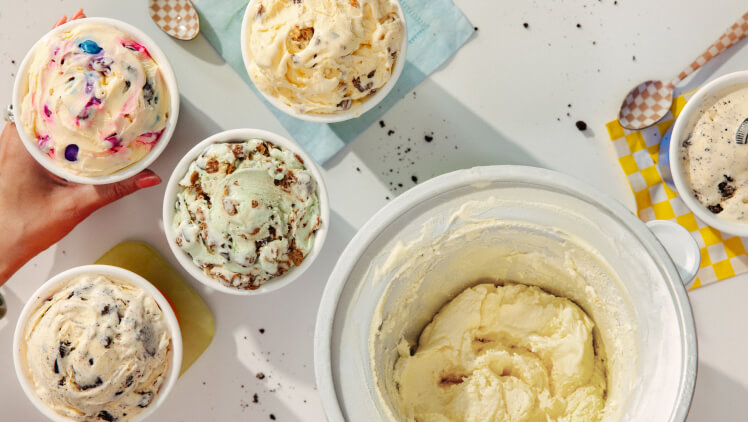
Vanilla ice cream is a classic starting point for sundaes, layered desserts and custom flavor combinations. Keep it simple by adding toppings just before serving, or fold solid mix-ins into the ice cream near the end of churning once the base has thickened.
For swirls, sauces and ribbons, wait until after churning. Layer them into the ice cream as you transfer it to a freezer-safe container so the flavors stay distinct instead of blending completely into the base.
Classic vanilla ice cream toppings
Turn homemade vanilla ice cream into a sundae with a few simple finishing touches. Hot fudge, caramel sauce, sprinkles, chopped nuts, whipped topping and maraschino cherries are timeless options, while crushed pretzels, toasted coconut or shaved chocolate can add a more elevated twist.
Crunchy ice cream mix-ins
Crunchy mix-ins add texture throughout each scoop. Try crushed cookies, brownie pieces, brittle, toasted almonds, chocolate chunks, graham cracker pieces or chopped candy bars. Add them near the end of churning so they distribute evenly without breaking down too much.
Fruit-forward flavor ideas
Fruit can bring color, brightness and a seasonal feel to a vanilla ice cream base. Spoon strawberry sauce, blueberry compote, peach pieces, roasted cherries or raspberry preserves over each serving, or layer fruit sauces into the container after churning for a rippled effect.
Swirls, sauces and ribbons
For caramel swirl, fudge ripple, peanut butter ribbon or jam-swirled vanilla ice cream, add the swirl after churning. Spoon a layer of churned ice cream into your container, drizzle in the sauce, then repeat the layers before freezing. This helps create ribbons of flavor instead of blending the sauce fully into the ice cream.
Vanilla ice cream flavor combinations to try
Cookies and cream: Fold in crushed chocolate sandwich cookies near the end of churning.
Brownie fudge: Layer brownie pieces and fudge sauce into the container after churning.
Strawberry shortcake: Add strawberry sauce and pieces of shortbread or pound cake before freezing.
Salted caramel pretzel: Swirl in caramel and add crushed pretzels for a sweet-salty scoop.
Peanut butter chocolate: Layer peanut butter ribbons with chocolate chunks or fudge sauce.
Cherry almond: Add roasted cherries or cherry compote with toasted almonds.
S’mores-inspired: Layer graham cracker pieces, chocolate chunks and marshmallow topping.
Coffee crunch: Add chocolate-covered espresso beans or toffee pieces for a bold finish.

Making vanilla ice cream FAQs
Homemade vanilla ice cream is simple once you understand how the base, fat content, chilling time and freeze bowl work together. These quick answers cover common ingredient swaps, texture questions and storage tips.
Can I make vanilla ice cream without cream?
Yes, you can make vanilla ice cream without cream. Evaporated milk, sweetened condensed milk or full-fat coconut milk can work in some recipes, depending on the method.
For churned stand mixer ice cream, higher-fat substitutes generally perform better because they help support a creamier texture. For freezer-only or no-churn methods, sweetened condensed milk or whipped coconut cream may be easier to work with because they help create body without a cooked custard.
For dairy-free inspiration, explore this guide to making vegan ice cream. You can also use your stand mixer’s shave ice attachment, sold separately, to make frozen desserts like Italian ice, snow cones and more.
Do you need eggs to make vanilla ice cream?
No, you don’t need eggs to make vanilla ice cream, but egg yolks can help create a custard-style base with a richer body and smoother texture. This style is a good fit when you want classic French vanilla-style ice cream and don’t mind cooking, chilling and churning the base.
Egg-free vanilla ice cream is often simpler to prepare and can have a lighter dairy flavor. This style is sometimes called Philadelphia-style or American-style ice cream when it skips eggs and relies on cream, milk, sugar and vanilla instead of a cooked custard.
Other egg-free recipes may use ingredients like cornstarch, cream cheese, sweetened condensed milk or pudding mix to add body, but texture and flavor will vary by recipe. For best results, follow a recipe designed for the style of ice cream you want rather than swapping eggs in or out one-for-one. You can also learn more about egg substitutes for baking, including how different substitutes affect moisture, structure and texture.
How long does homemade vanilla ice cream last in the freezer?
Homemade vanilla ice cream is usually best within 1–2 weeks when stored in an airtight, freezer-safe container. It may remain frozen longer, but texture and flavor can decline as ice crystals form.
For best quality, press plastic wrap or parchment directly onto the surface before adding the lid. Store the container toward the back of the freezer where the temperature stays more consistent, and avoid repeated thawing and refreezing.
Why is my homemade ice cream not freezing properly?
Homemade ice cream may not freeze properly if the KitchenAid® Ice Cream Maker Attachment freeze bowl wasn’t fully frozen, the base wasn’t thoroughly chilled or the mixture was poured into the bowl before the dasher started moving. The freeze bowl should be used immediately after it comes out of the freezer, and the chilled base should be added only after the attachment is assembled and the mixer is running.
Keep in mind that freshly churned ice cream from an ice cream maker attachment is usually soft at first. For a firmer, scoopable texture, transfer it to a shallow airtight container and freeze it for 2–4 hours. Texture can also vary by recipe: bases with a higher water content, lower fat content or too much added alcohol may stay softer than expected. For more guidance on the full process, explore this guide to how to make ice cream.