









 New Code Sent!
Parts of an oven guide: understanding essential components
Whether it’s oven racks, baking elements or convection fans, your oven is composed of many parts that work in unison to facilitate your creativity. In this oven parts guide, you will learn about the most important components of your oven, as well as how to care for your appliance and obtain replacement parts.
What are the parts of an oven called?
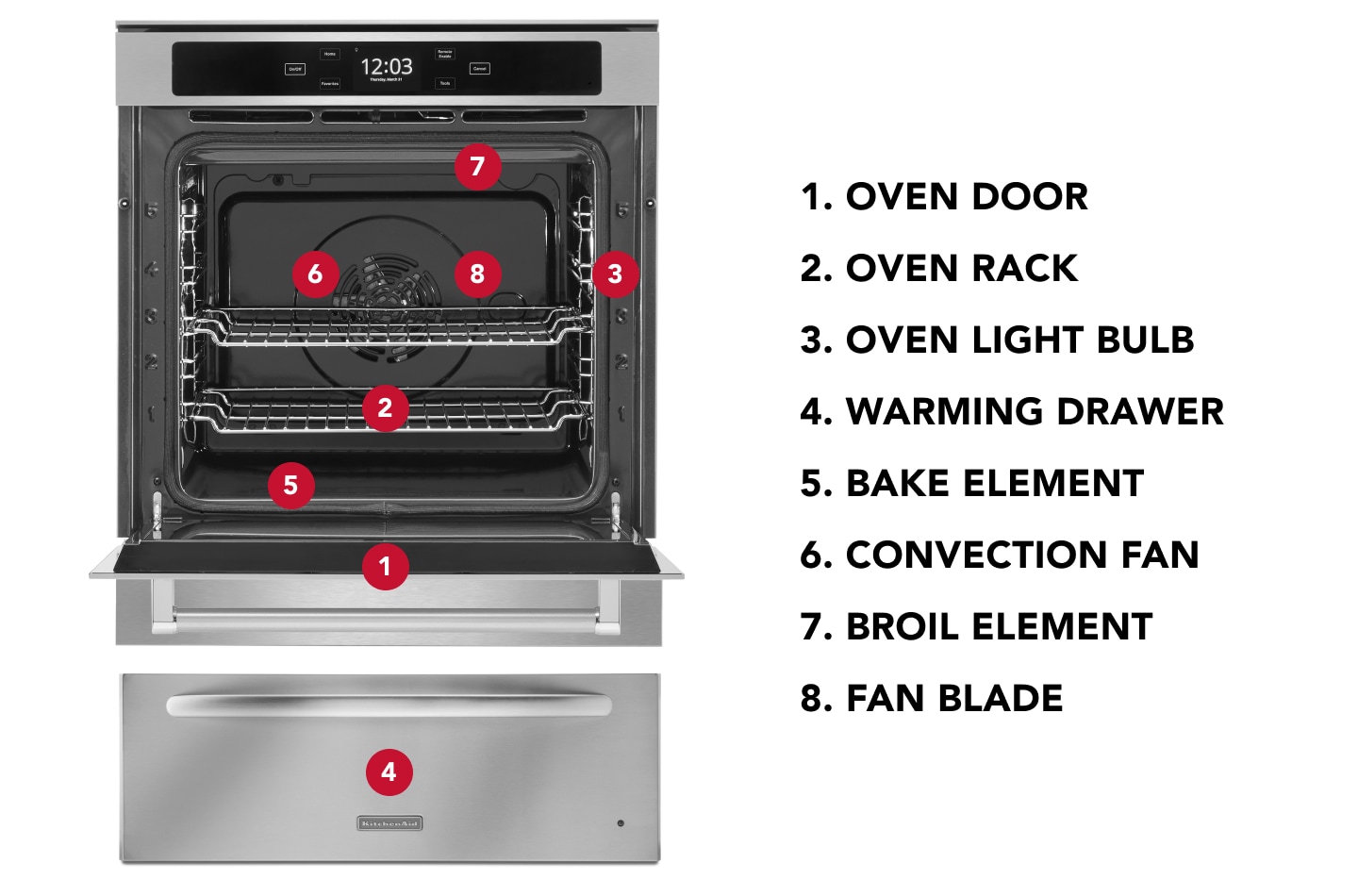
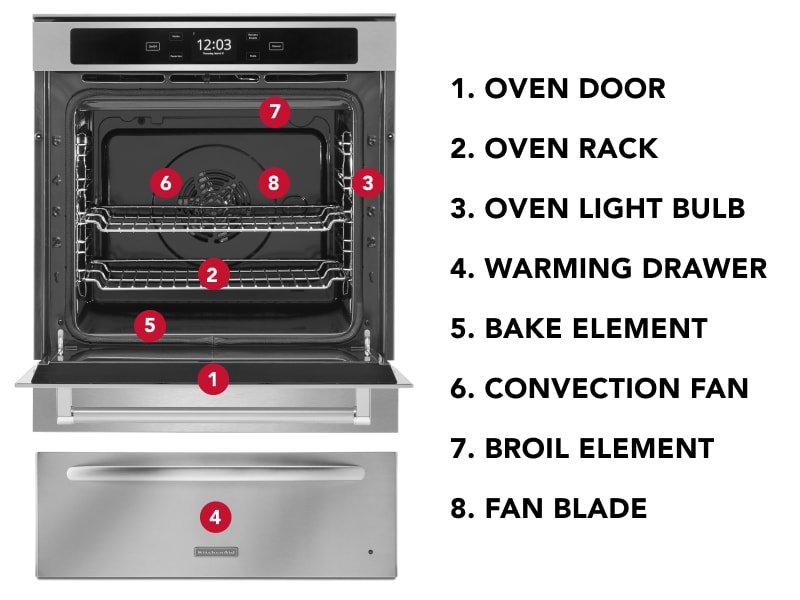
Understanding the names and parts of your oven is useful knowledge for every home cook. Consult the diagram above when identifying the parts of your oven and use the guide below to broaden your knowledge of your oven.
1. Oven door
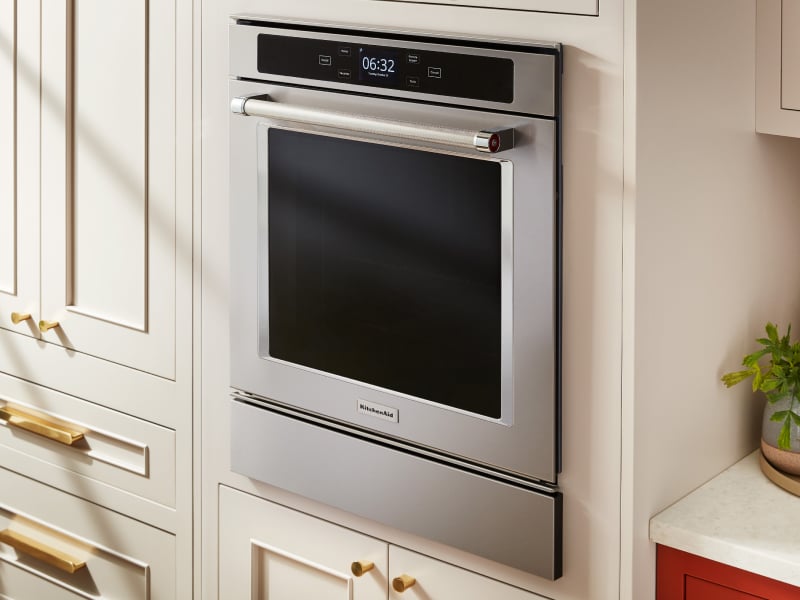
The oven door is the gateway to the cooking process. No matter what type of oven you own, using your model will begin and end the same way: by opening the oven door. Many oven doors also contain windows, so you can keep an eye on your food as it cooks.
2. Oven rack
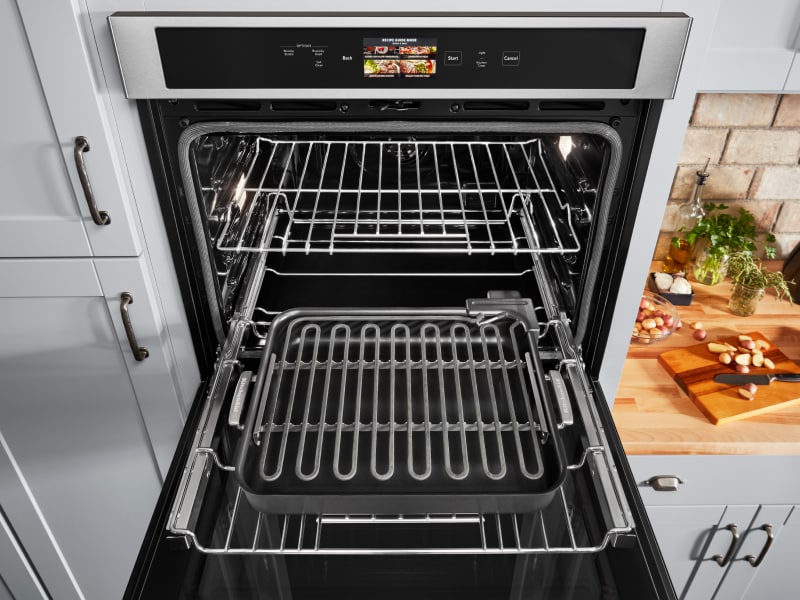
Oven racks are essential for placing your food to be baked, broiled or roasted. With the ability to shift or readjust prior to heating, the positioning of oven racks can affect the way your foods cook. Select ovens from KitchenAid brand offer a SatinGlide™ Roll-Out Extension Rack that features a roll-out extension rack and ball-bearing rollers with an easy-grip handle for effortless loading and unloading of large or heavy dishes.
3. Oven light bulb
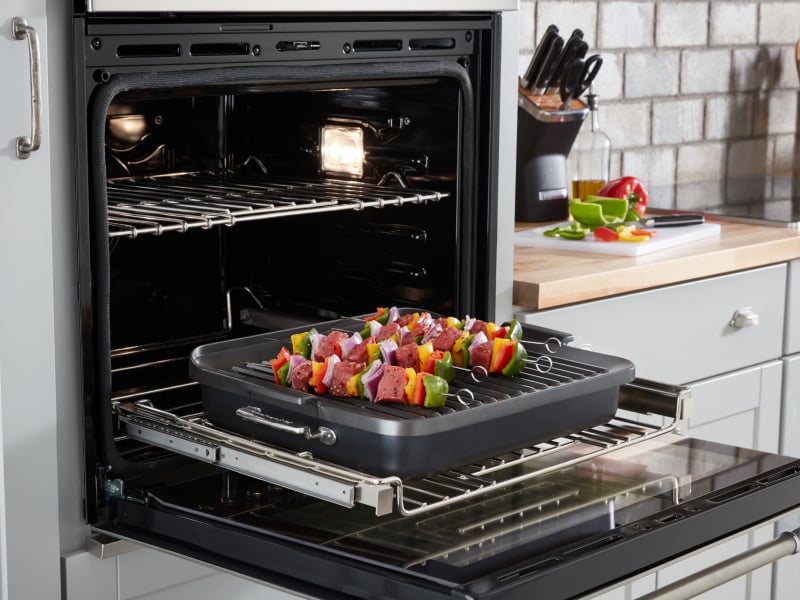
Oven light bulbs are often located near the top of your model and provide light inside your oven, allowing you to track the cooking process. Refer to your owner’s manual for specific instructions for changing your oven’s light bulb and the necessary wattage.

4. Warming drawer
Available in select models, warming drawers are helpful when you are cooking multiple recipes at once and want to keep completed dishes warm until serving. Some KitchenAid® warming drawers come with a Slow Cook Function that can be used in place of a countertop slow cooker.

5. Bake element
One of the essential components of your oven, the baking element, provides heating for most of your oven processes. The heating element, typically located at the bottom or near the back of your oven, generates energy that brings your oven to temperature for roasting and baking. If you suspect that your baking element might have an issue, contact a professional for inspection.
6. Convection fan
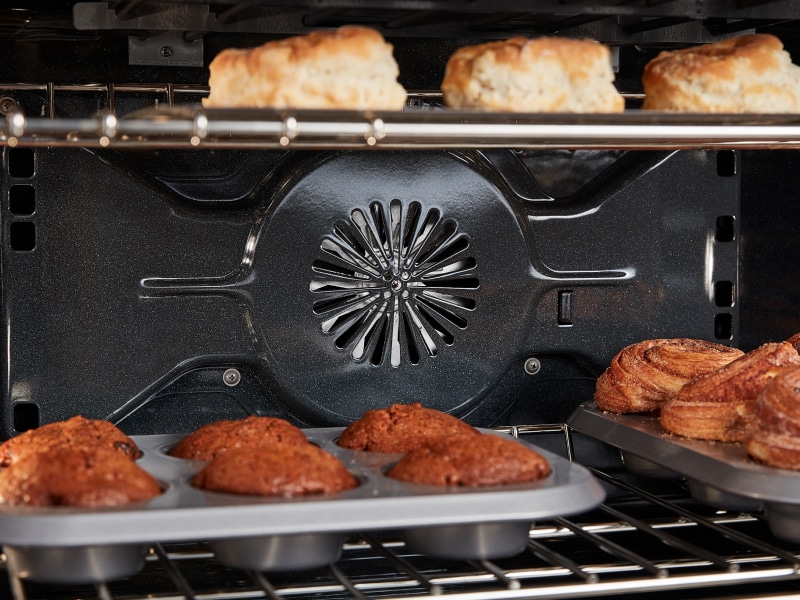
If your oven model can cook with convection, it will likely carry a fan that circulates hot air throughout the appliance. The circulating air combined with a third heating element helps reduce moisture on the outside of food to promote browning, caramelization and crispiness.
The fan blade is part of the convection system and helps push warm air to more evenly distribute air across multiple racks. If the fan blade is not spinning, you may not be able to heat via convection.
7. Broil element
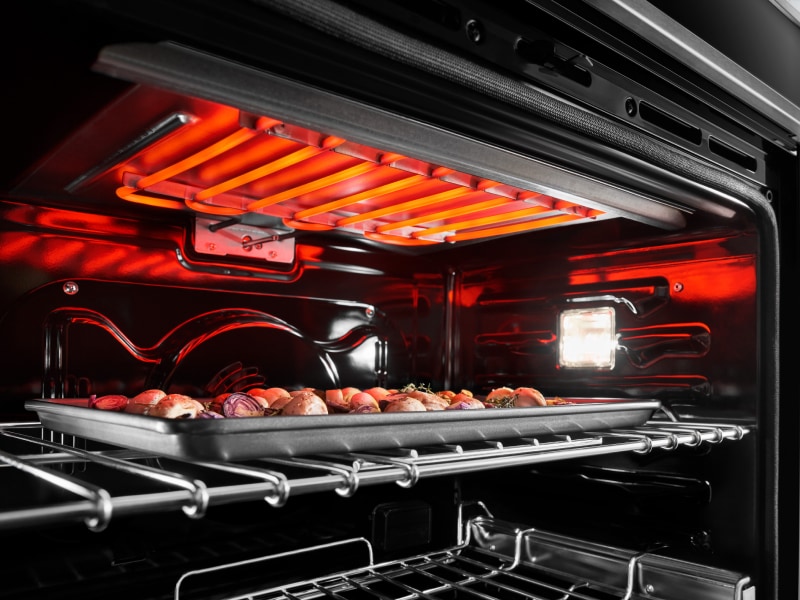
Situated at the top of your oven, the broil element generates high temperatures to broil the top of your food. This element is useful when cooking thin meats like fish or chicken, and is located on the top of the oven to give your recipes a nicely browned exterior.

8. Element cover
The element cover, available on select ovens, covers up the baking element, often making it easier to clean your oven. This is typically located on the bottom of your oven, if your model includes one. Select KitchenAid® ranges feature Hidden Bake, which covers up the baking element, making it easier to wipe away spills.

9. Oven door handle
The oven door handle is located on the exterior of your appliance, and is the part that helps you easily open and close your oven without touching the hot surface of the appliance. Select ovens from KitchenAid brand offer Hardware Accessory Kits that let you mix and match your hardware to coordinate with your kitchen faucets and cabinet pulls.

10. Control panel
Your oven’s control panel sits on the exterior of the oven door and lets you control the temperature and cooking method when using the appliance.

KitchenAid® Hardware Accessory Kits
Curate the colors and textures that move you
From bold Black Ore to the inviting warmth of Bronze, mix and match handles and knobs to refresh your appliances and bring new energy to your kitchen
Shop KitchenAid® double wall ovens
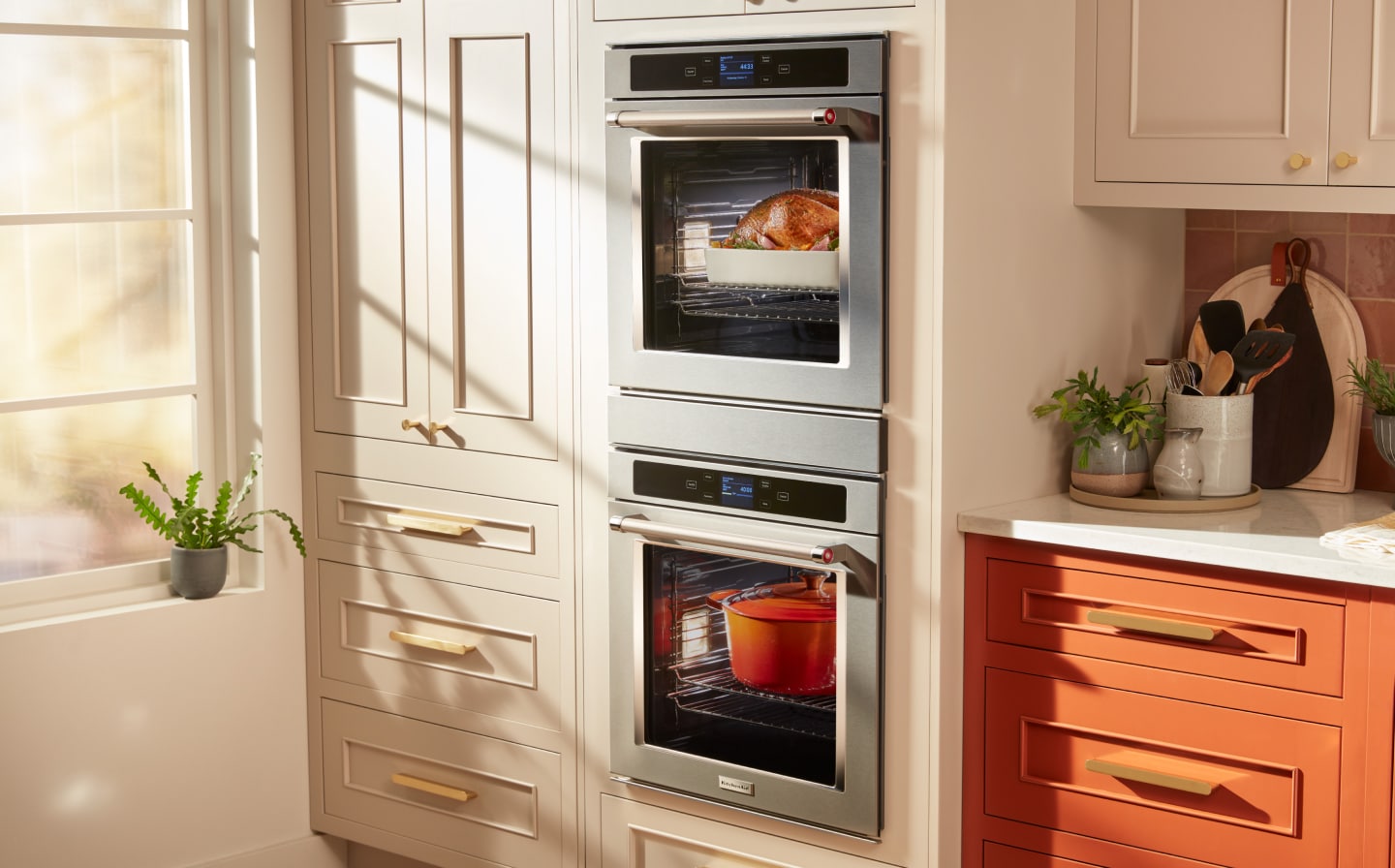
KitchenAid® double wall ovens offer you the power of possibility. Explore select KitchenAid® models with features like Assisted Cooking Modes that suggest cook times and temperatures on an easy-to-navigate touch screen so you can explore new recipes with confidence, and design options like premium finishes or personalized hardware to seamlessly integrate into your kitchen.
Oven part FAQs
Learning all the parts of your oven and each of their functions can help you better understand your appliance and help you troubleshoot in the event that an issue arises. Explore frequently asked questions about oven parts below to get to know your appliance a little better.
Electric oven parts vs. gas oven parts
The main difference between electric oven parts and gas oven parts lies in their heating elements. Gas ovens carry igniters that light their fuel source (either natural gas or propane) in order to heat the oven. Gas ovens also may release a bit of moisture into the air.
Electric ovens, on the other hand, come with heating elements that are powered by electricity. Additionally, because no moisture is released, electric ovens tend to produce a dryer heat.
What is the bottom element in an oven called?
The bottom element in your oven is called the baking element and is most responsible for heating your oven. Many of the cooking techniques you can achieve with your oven originate with the baking element.
What is the hottest part of the oven?
The hottest parts of your oven are typically located near the active heating elements on the top or bottom. If you’re using both, the top of your oven will usually be hotter than the bottom as heat rises. This is one reason why placing your food in the center of your oven is often ideal for all-over heat.
How can I maintain and care for my oven?
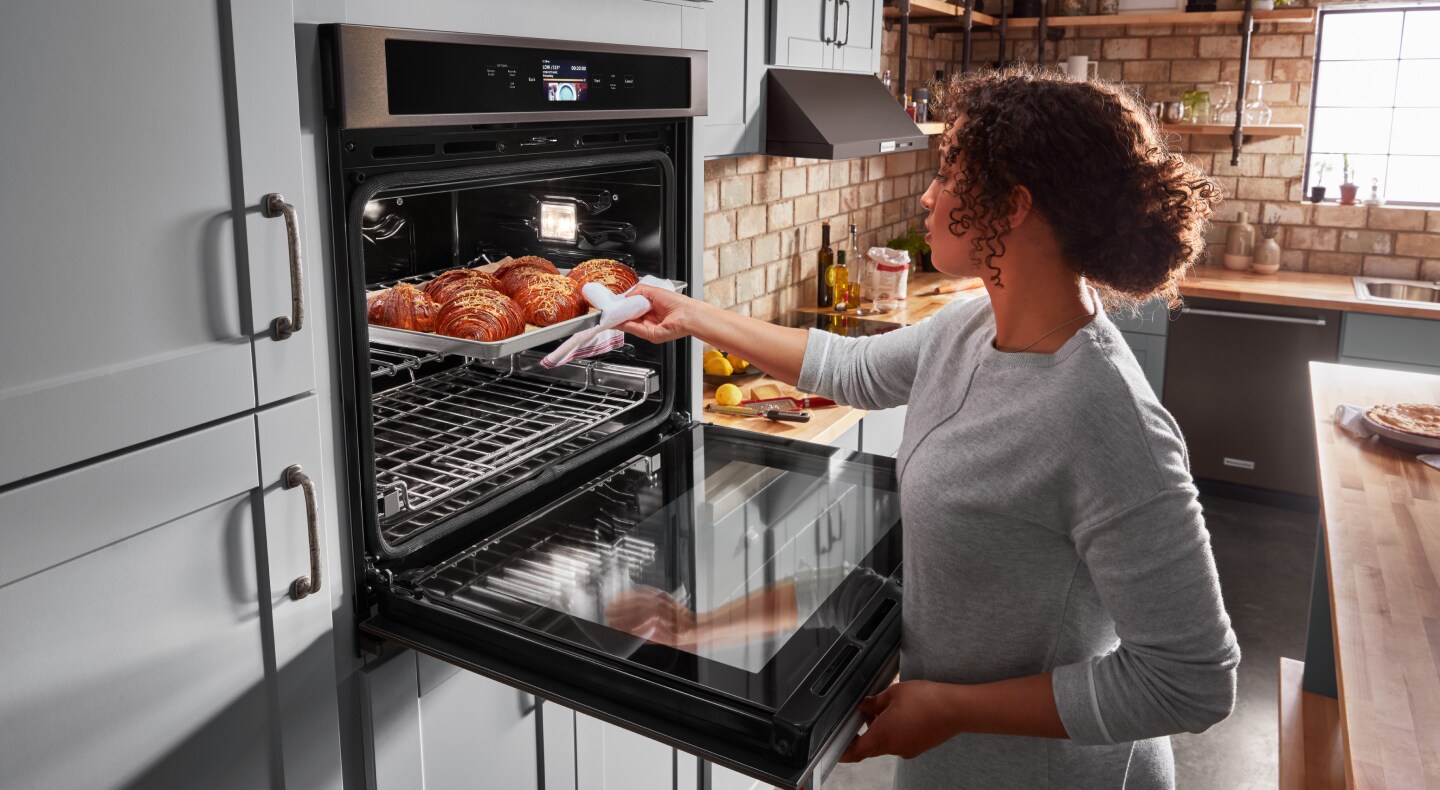
Maintaining and caring for your oven begins with proper cleaning. This means using mild solutions like dish soap or vinegar to clean the oven door, the inside of your oven cavity and the surface.
Additional options include utilizing self-cleaning and steam ovens. KitchenAid® self-cleaning ovens employ immense heat to help burn off built-up residue and grease. Steam clean ovens use heat and water to soften debris for cleaning as opposed to harsh chemicals or high temperatures.


Where to find oven replacement parts
If your oven is not heating properly or your model is displaying an error message, you may need to replace certain oven parts. It’s generally considered a good practice to get parts from the same brand/manufacturer as your appliance. For instance, if you own a KitchenAid® oven, you can acquire genuine oven part replacements through the KitchenAid® website. Always consult your owner's manual to see if you can first troubleshoot issues at home. If you do need a replacement part, consult with a professional to ensure you’re purchasing the right one. Some parts will also require professional installation.
Shop KitchenAid® wall ovens
Your culinary passions and recipe variations require powerful appliances to bring them to life. Whether you’re looking for a single, double or combination model, KitchenAid® wall ovens have unique and convenient capabilities like Fresh Pizza Mode, found on select models, so you can create homemade, restaurant-style pizzas from the comfort of your kitchen.


Your subscription was successful
Thank you for signing up. Keep an eye on your inbox for our next newsletter.
Stay Connected – Join the List
Enjoy articles like this? Get helpful guides and appliance care tips sent straight to your inbox.

