

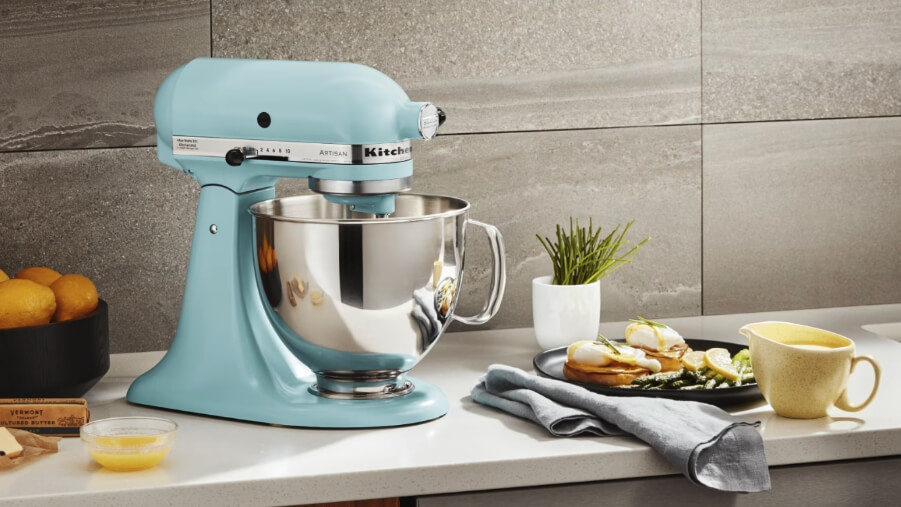
Stand mixers can earn a lasting place on your countertop through years of bread dough, birthday cakes and cookie batches. Newer models build on that legacy with updated features that help streamline prep, increase capacity and support the way you bake today.
This guide compares older and current KitchenAid® stand mixer models across the features that matter most for everyday use—bowl capacity, attachments, durability, design updates and added conveniences—so you can decide whether to keep your current mixer or upgrade to a newer model.
Old vs. new KitchenAid® stand mixers
Old vs. new KitchenAid® stand mixers
What defines an “old” vs. “new” KitchenAid® stand mixer?
An “old” KitchenAid® mixer typically refers to a legacy or vintage model from earlier design eras, while a “new” model reflects more recent styling, capacities and features. Differences often show up in the mixer’s design, capacity, speed controls and model-specific accessories designed for the bowl.
While the core mixing performance and iconic design remain consistent, newer KitchenAid® stand mixers may offer added conveniences such as improved ergonomics, larger capacity bowls, refined speed control, additional color options and accessories designed to support evolving cooking and baking needs.
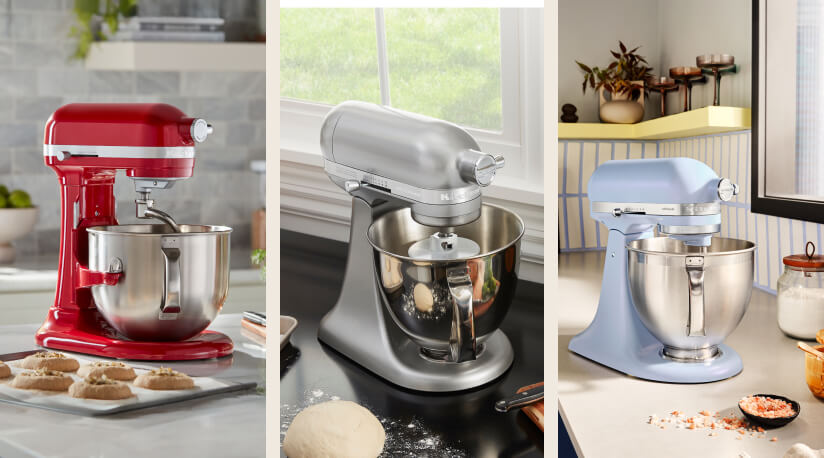
Vintage, legacy and current models
KitchenAid® stand mixers are often grouped by production era, which can help explain differences in design, features and overall construction.
Vintage: Typically refers to Hobart-era mixers produced before 1986. These models are often found secondhand or passed down. Key models include the original 1919 Model H-5, the iconic 1937 Model ‘K’ and the 1969 Model K-45, the most popular KitchenAid® mixer to date.
Legacy: Refers to older or discontinued household models produced from 1986 onward under Whirlpool ownership, generally spanning earlier consumer generations up to around 10–25 years old.
Current: Includes stand mixers sold today with updated design details and features.
Across these eras, you may notice differences in overall design, bowl capacity and motor power. Learn more about the history of the KitchenAid brand.

How to identify your stand mixer model and age
To identify your KitchenAid® stand mixer model and age, start with the identification label on the bottom of the base. This label contains the model and serial numbers, which can be used to determine the mixer’s production details.
Locate the identification label Unplug the mixer, then place it on a soft surface such as a towel to protect the finish. Carefully tilt or flip the mixer upside down to find the white or silver sticker on the bottom of the base.
Identify the model number The model number is printed on the same base label as the serial number and typically begins with “KSM” (such as KSM150) or “K” (such as K45). On newer models, it may also include letters at the end that indicate color or finish. You can enter your model number on the Owner’s Center page to access manuals, parts and support resources for your stand mixer.
Use the serial number to estimate age Your stand mixer’s serial number can help indicate when it was manufactured, though formats may vary by production era. For the most accurate estimate, contact KitchenAid customer service and support with your model and serial number.
Use visual cues if the label is missing or unreadable If the identification sticker is worn or missing, you can still narrow down your mixer model by examining key design details. Start by identifying whether it has a tilt-head or bowl-lift design, then look at the bowl style and capacity, the shape and placement of the speed control lever and the color and finish.

Why older stand mixers still appeal to home bakers
Older stand mixers appeal to many home bakers because they feel familiar, reliable and worth keeping in the family. KitchenAid® stand mixers have maintained many of the same core design principles over time, so a well-cared-for older model can continue to support everyday baking while current models build on that legacy with updated features, finishes and conveniences.
Some bakers also like the hands-on feel of older controls and the connection to recipes mixed across generations, from whipped cream with the wire whip to kneading bread dough with the dough hook. For many kitchens, that mix of repairability, memory and steady planetary mixing action keeps an older mixer in regular rotation.

Old vs. new stand mixer design differences
Older stand mixers often feel heavier and more mechanical in everyday use, while current models tend to add convenience through refined shapes, bowl options and updated controls. If you’re comparing an old KitchenAid® mixer with a current one, the biggest design differences usually show up in head style, bowl capacity, controls, finishes and how your workflow feels from one batch to the next.

Tilt-head and bowl-lift styles
Tilt-head mixers lift the head back for direct bowl access, while bowl-lift mixers keep the head fixed and raise the stainless steel bowl into position for mixing. In older and current designs, that difference shapes how adding ingredients and handling larger batches feels day to day.
A tilt-head stand mixer can feel simple when you’re adding sugar, scraping the bowl or swapping a flat beater for a wire whip. A bowl-lift stand mixer can be steadier when handling dense mixtures and larger batches, though you do lose some open-top access. Deciding between a tilt-head or bowl-lift mixer depends on your personal baking goals, style and frequency.
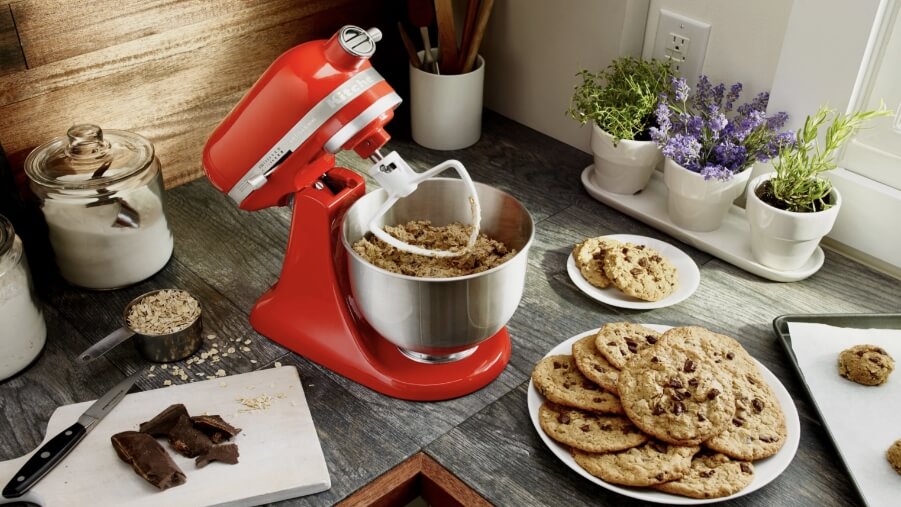
Power, batch size and dough handling
Older and current KitchenAid® stand mixers can suit different baking needs depending on motor power, bowl capacity and how often you bake. The best fit often comes down to your typical batch size and usage patterns.
If you bake bread regularly, a larger bowl and bowl-lift design may feel more stable and comfortable for repeated kneading or double batches. For cookie bakers or occasional use, a tilt-head model may be preferred. Compare sizes in this guide to Classic™ vs. Artisan® Series stand mixers.

Convenience updates in current models
Current KitchenAid® stand mixers build on the familiar die-cast metal construction with updates that support a smoother, more intuitive baking experience. Refined speed controls, expanded bowl options and a wider range of color choices add everyday flexibility, while maintaining the iconic planetary mixing action.
The KitchenAid® Artisan Plus enhances control with classic preset speeds and a precision control knob that glides smoothly through 11 settings and every speed in between. It also features Soft Start, which gradually brings ingredients up to speed to help reduce splatter.
Old vs. new KitchenAid® stand mixer comparison
Use this quick comparison to understand how older and newer KitchenAid® stand mixers differ across the features that impact everyday use.
Feature | Older KitchenAid® Stand Mixers | Newer KitchenAid® Stand Mixers |
Motor power | Designed for steady everyday mixing with lower-wattage motors that deliver reliable torque for common baking tasks. | Offer a wider range of power options with improved efficiency, high torque and more consistent performance across speeds, including tilt-head models ranging from 250–350 watts and select bowl-lift models offering 500 watts for larger batches and denser mixtures. |
Materials and construction | Built with durable metal construction and known for solid mechanical designs that have supported generations of everyday mixing and baking. | Continue to feature durable metal construction, while incorporating updated engineering and materials that help improve performance, usability and long-term reliability. |
Bowl capacity | Commonly available in 4.5- and 5-quart sizes that work well for everyday baking and smaller batches. | Available in a broader range of capacities, from compact 3.5-quart bowls to 7- and 8-quart options for larger batches and frequent baking. |
Attachment compatibility | KitchenAid® stand mixers have a universal power hub, which means that all attachments that go into the power hub will fit all stand mixers, regardless of age. | Designed for broad compatibility across a growing ecosystem of attachments for mixing, slicing, grinding, pasta making and more. |
Head style | Typically available in classic tilt-head or early bowl-lift configurations. | Feature refined tilt-head and bowl-lift designs with improved ergonomics, stability and usability. |
Controls and usability | Basic speed levers with fewer incremental controls. | Include more precise speed options, smoother transitions and features like Soft Start and 1/2 speed on select models for gentler mixing and folding. |

When to keep an old stand mixer and when to upgrade
Deciding whether to replace an older KitchenAid® stand mixer starts with how you use it today. Consider your typical batch size, how often you bake and whether your mixer still supports the attachments and accessories you use most. If your recipes, habits or need for convenience have evolved, the signs below can help you decide whether to keep a classic model or upgrade to something more current.
Signs an older stand mixer still fits your kitchen
An older stand mixer may still be the right fit if it handles your go-to recipes with ease, supports the attachments you like to use and feels intuitive in your daily routine. If your baking habits haven’t changed, there’s often no need to replace a mixer that continues to perform well.
If your tilt-head or bowl-lift mixer can still mix cookie dough, cake batter or knead bread dough without strain, it likely meets your needs. Familiar controls and reliable performance can make an older model a practical and dependable part of your kitchen.
Signs it may be time to upgrade
It may be time to upgrade your stand mixer if it no longer keeps up with how you bake. If your mixer struggles with heavier doughs, feels undersized for your usual batch sizes or doesn’t support the attachments you want to use, it can start to slow you down in the kitchen.
You may also find yourself wanting features that better match your routine today, such as more precise speeds or added convenience. If your recipes or frequency of use have changed, a newer model can help make mixing more efficient, flexible and easier to manage day to day.
Preloved and ready to mix
Keeping a stand mixer in use for years can be a practical, sustainable choice, especially when it becomes part of your everyday baking routine. But if you’re ready for a different size or style, refurbished options offer another way to keep a mixer in use while finding a model that better fits your needs.
Certified refurbished KitchenAid® stand mixers are either unused returns or gently used models that have been carefully inspected, tested and restored to meet performance standards. It’s a way to get the mixing power you expect, often at a better value.
Shop refurbished KitchenAid® stand mixers
Refurbished KitchenAid® stand mixers can be a smart match when you want trusted mixing performance and a thoughtful second life for a countertop staple. Explore refurbished stand mixers and attachments to compare options and find a bowl size, format and finish that suits your kitchen.

Stand mixer compatibility and versatility
Accessories, attachments and bowl style shape how a mixer fits into your personal baking routine. An old KitchenAid® mixer may still handle cakes, cookies and whipped cream beautifully, but bowl connection, included tools and attachment compatibility can impact what you can do from one batch to the next.
Bowl, accessory and attachment compatibility
Bowl size, how it locks in place and the beaters you use affect the overall fit and performance. An older mixer may use a different bowl connection style than a current tilt-head or bowl-lift mixer, so not every stainless steel bowl or accessory will swap seamlessly across models.
A flat beater, wire whip and dough hook also vary by bowl depth and mixer design. These accessories support everyday tasks like mixing batters, whipping toppings, kneading dough or shredding cooked chicken, but fit can vary by model. Before you add any new accessories or attachments, make sure you know your mixer model to ensure the right fit.
Dough tools and bread-making goals
Dough hook shape and bowl capacity influence how a mixer handles bread routines. If you regularly knead bread dough, an older model may still suit smaller batches, while a current mixer with a larger bowl capacity can help support heavier or more frequent mixing.
Hook design also changes the feel of prep, especially when you mix enriched doughs or weekly sandwich loaves. Learn more about dough hooks to find the right fit for your bread making needs.
Personal style and countertop presence
Color and design can matter when your stand mixer lives on the counter every day. Some older mixers bring a nostalgic look, while current models open up more ways to match your kitchen style or add a finish that feels polished and personal. If your mixer is part tool, part display piece, personal customization options can help shape your baking experience just as much as function.

Old vs. new stand mixer FAQs
Learn more about old and new KitchenAid® stand mixers to help you choose the right fit for how you mix, knead and create.
Are old KitchenAid® stand mixers better than new models?
Old and new KitchenAid® stand mixers are both engineered for durability and long-lasting performance. Newer models build on that foundation with improved efficiency, expanded capacity options and added features that make it easier to handle a wider range of recipes.
Are older KitchenAid® mixers better for heavy doughs?
Older KitchenAid® stand mixers can be a strong match for heavy doughs, especially if you prefer a solid, weighty machine for kneading. Current bowl-lift models, including KitchenAid® Commercial Series stand mixers, are designed for demanding mixing tasks and larger batches. Tilt-head models like the Artisan® Plus are also well-equipped for bread dough and can handle kneading effectively for everyday baking.
For best results, knead dough on speed setting 2 using the dough hook.
Do KitchenAid® stand mixers use plastic gears or metal gears?
All current KitchenAid® stand mixers use metal gears for durable, consistent performance across a wide range of mixing tasks. Select tilt-head models also include a sacrificial gear made of durable nylon, designed to protect the motor and internal drive system by absorbing excess strain if the mixer is overworked. This intentional design helps safeguard the appliance and support long-term reliability.
What changed in KitchenAid® stand mixer manufacturing over time?
KitchenAid® stand mixer manufacturing has evolved in motor efficiency, speed control and overall usability while maintaining durable design. Earlier models featured simpler motors and fewer speed options, while current models like the Artisan Plus introduce precision speed control and a 1/2 speed setting for gentler mixing. Today’s mixers also offer expanded color and finish options.
Are KitchenAid® stand mixers easy to repair?
Yes, KitchenAid® stand mixers are serviceable through troubleshooting, factory repair or authorized service centers that use genuine KitchenAid® stand mixer parts to help ensure proper fit, performance and long-term reliability.
Start with the owner’s manual, as many issues can be resolved through simple cleaning or adjustments. If further support is needed, you can call the KitchenAid factory service in Greenville, Ohio at 1-855-845-9684 to discuss repairs and request a shipping kit. This allows you to send in your mixer for inspection, receive a repair estimate and have it returned once service is complete.
Is it worth repairing an older KitchenAid® mixer or buying new?
It depends on the condition of your mixer, how you use it and whether you prefer to keep a trusted classic or upgrade to current features. If your mixer is still performing well, repair can be a practical option to extend its life. If you’re looking for updated bowl sizes or features designed for more frequent or heavier mixing, exploring the current KitchenAid® stand mixer collection can help you compare options and find the right fit for your kitchen.