


The right stand mixer to tackle regular bread dough depends on how much dough you mix, what styles of bread you bake and how often you bake them. For frequent bread baking, larger bowl-lift stand mixers are often the best fit because they offer more capacity and stability for dense doughs, multiple loaves and longer kneading sessions, while tilt-head stand mixers work well for occasional bread bakers making single loaves, pizza dough, focaccia and other lighter bread routines.
Read on to compare stand mixer styles, features and baking needs so you can find the right fit for your recipes and kitchen.
Best stand mixer for bread dough
Best stand mixer for bread dough
How to choose the best mixer for bread dough
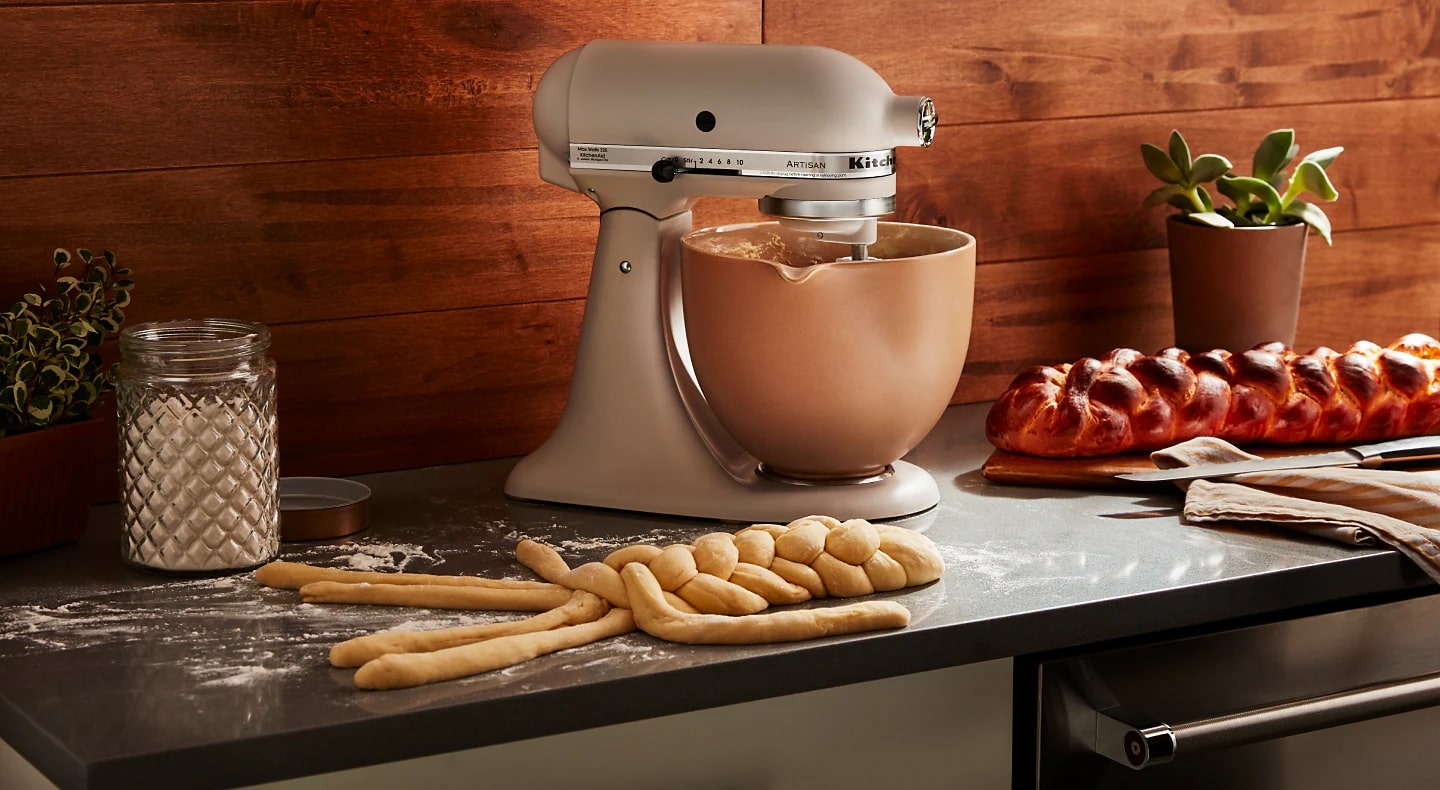
Regular bread making asks more from a mixer than occasional cookie dough. Focus on the doughs you make most, how many loaves you mix at once and how often you knead each week. You’ll also want to compare mixer style, bowl capacity and how much countertop space you’ll need for a dedicated bread setup.
Consider dough type and batch size
Start by thinking about the doughs you make most often and how much you typically prepare at once. For single loaves, dinner rolls or sourdough sandwich bread, a KitchenAid® tilt-head stand mixer, available in 3.5- to 5-quart capacities, offers enough room for many everyday bread recipes while giving you easy access to the bowl as you add ingredients or check dough texture.
If your routine includes dense whole wheat dough, stiff bagel dough, enriched doughs or frequent double batches, a 5.5-quart or larger KitchenAid® bowl-lift stand mixer offers additional capacity, power and stability for larger recipes and heavier dough weights.

Bowl-lift vs tilt-head for bread dough
Bowl-lift and tilt-head mixers suit different bread-baking routines. Bowl-lift models are a better fit for heavier doughs, frequent kneading and larger batch sizes, while tilt-head models work well for lighter bread routines and easy bowl access.
A bowl-lift stand mixer offers added steadiness when kneading dense doughs that need several minutes of consistent mixing, such as pretzel dough, high-hydration artisan bread dough, brioche or multiple-loaf batches. That steady kneading helps develop gluten, making the dough smoother, more elastic and better able to hold its shape as it rises and bakes.
A tilt-head stand mixer is a strong fit for smaller-batch bread recipes, including double loaves, dinner rolls, focaccia and pizza dough. The tilt-head design gives you quick access to the bowl throughout the bread-making process. Being able to lift the mixer head makes it easy to add flour, water, salt or other ingredients. A compatible pouring shield, when used, can help guide ingredients into the bowl on either mixer style.
Think about kitchen space and versatility
Dough mixing performance matters, but so does where the mixer lives. If you’ll keep it on the counter, a larger model brings more presence, while a lighter all-around mixer may feel simpler to move, store and use for everyday baking.
Think about the full range of recipes you want to make, from bread dough to cakes, cookies, mashed potatoes and other prep tasks. If bread is one part of a broader baking and cooking routine, a flexible stand mixer style may fit better than a bread-first setup.
Before choosing a larger machine, think about cabinet clearance, carrying weight and how you plan to store your stand mixer so it fits smoothly into your overall routine.

Features that matter most for kneading
Bread dough asks for steady force, not just speed. The mixers that handle it with the most control usually combine strong torque, a stable base, the right dough hook and controlled low-speed kneading that gives the dough time to stretch, fold and develop without moving too aggressively in the bowl.
Those details matter even more when you move from pizza dough to whole wheat dough, enriched dough or larger sandwich bread batches. They shape how the dough feels in the bowl and how smoothly gluten development builds.
Overall power delivery
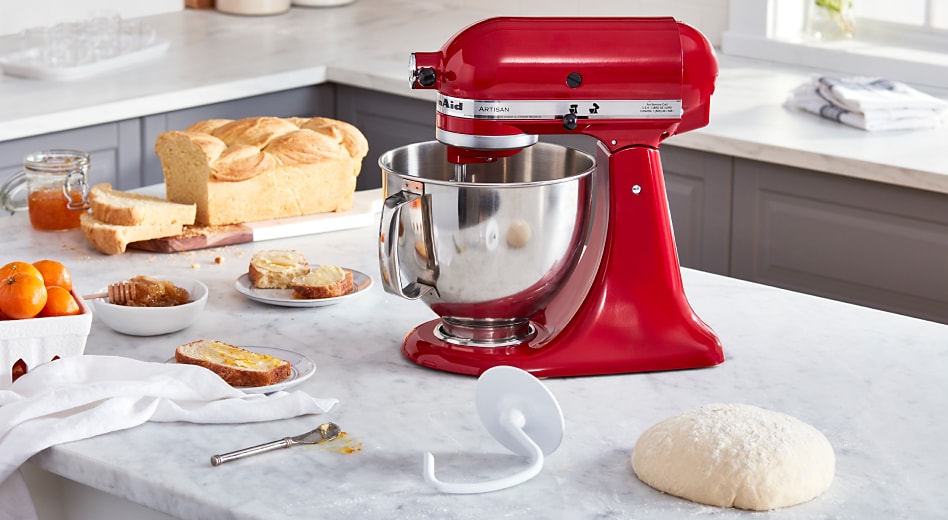
When it comes to the best stand mixer for bread dough, focus on torque and sustained kneading strength. Dense dough needs steady power over time, especially with whole wheat, enriched or high-hydration dough that can pull hard against the hook.
A mixer can list higher wattage and still feel strained under a heavy load. Look for power delivery that stays even through several minutes of kneading and thicker doughs, especially if you regularly mix larger recipes like multiple sandwich loaves, a double batch of cinnamon roll dough or stiff bagel dough.

Bowl size and stability under load
Bowl capacity helps determine how much bread dough a stand mixer can manage in one batch. KitchenAid® tilt-head stand mixers offer 3.5-, 4.5- and 5-quart bowls, with a maximum recipe size of 4.5 lbs of bread dough, or about 4.5 standard 1-lb loaves. That capacity works well for many everyday bread recipes, including double loaves, flatbread dough and smaller batch baking.
For larger bread routines, KitchenAid® bowl-lift stand mixers offer expanded capacities, including 5.5-, 7- and 8-quart options. A 7-quart bowl-lift stand mixer can knead over 8.5 lbs of bread dough, or about 8.5 standard 1-lb loaves, giving frequent bread bakers more room for larger recipes, multiple loaves or heavier doughs.
Bowl size is only part of the equation. Bowl-lift mixers provide additional stability for heavy loads by securing the bowl to the base with two arms that lift it into place, helping support smoother kneading for large batches of dense dough.

Dough hook style and mixing action
Dough hook shape changes how dough folds, stretches and moves around the bowl. A C-shaped dough hook kneads by pushing dough against the sides of the bowl and comes with KitchenAid® tilt-head stand mixers. A spiral dough hook, sometimes called a PowerKnead™ dough hook, kneads by pushing dough off the bottom of the bowl and comes with bowl-lift models.
Spiral hooks are useful for larger-capacity bread routines because they help keep dough moving efficiently in the bowl-lift mixer with less climbing. Always use the dough hook made for your specific mixer and bowl, since C-shaped and spiral hooks are not universally interchangeable. To better understand each design, explore this guide to C-shaped dough hooks vs. spiral dough hooks.

Speed control and durability for frequent kneading
Low-speed control helps flour incorporate cleanly and keeps dough from overheating. For regular bread routines, steady operation and durable construction matter because kneading puts longer, repeated strain on the mixer than lighter batters.
Bread dough mixing should stay slow and controlled. When kneading bread dough with a KitchenAid® stand mixer, use Speed 2 and avoid higher speeds. Staying at the recommended kneading speed helps keep the mixer moving steadily through enriched doughs, lean loaves and other bread recipes. Learn more about KitchenAid® stand mixer speeds and how to use them for different mixing tasks.

Top stand mixer picks by baking style
There's no single best mixer for every bread baker. The picks below are grouped by baking style—from frequent loaf-makers to occasional bakers in smaller kitchens—so you can match a model to how you actually bake.
Best overall for regular bread bakers
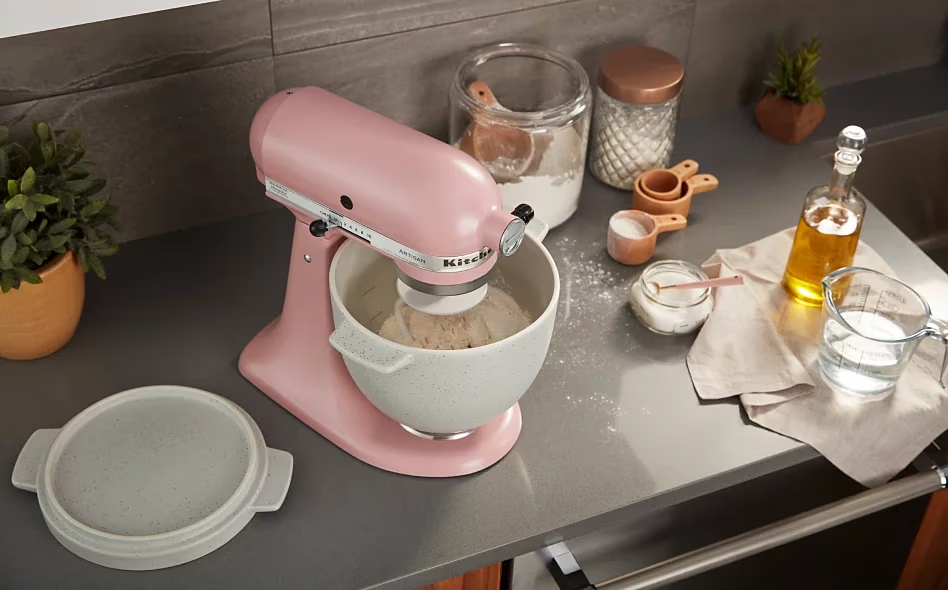
A 5-quart or larger stand mixer is the strongest all-around fit for home bakers who make bread often. The bowl comfortably handles sandwich bread and pizza dough, and the same machine still pulls double duty for cookies, cakes and everyday mixing.
This size range offers a practical balance for regular bread routines without locking you into a bread-first setup. It gives frequent bakers enough room for kneading and mixing while still feeling versatile for the rest of your baking and cooking projects.

Best for large batches and heavy dough
For frequent kneading and larger dough loads, step up to a bowl-lift stand mixer with a 6-quart or larger bowl. The extra capacity gives dense enriched dough, whole wheat dough or multiple loaves room to mix without crowding, and the lifted-bowl design stays put through longer kneads.
That steadiness pays off on recipes like cinnamon roll bread or challah bread, and on back-to-back batches of brioche-style doughs or holiday bakes when you don't want to slow down between loaves.

Best for smaller kitchens and lighter bread routines
A compact tilt-head stand mixer is a smart pick when you bake bread occasionally and want a smaller footprint. A 3.5 to 5-quart bowl handles single loaves, pizza dough and everyday baking projects, especially in smaller households.
While every KitchenAid® stand mixer is capable of kneading bread dough, bowl size and model capacity determine how much dough you can knead in a single batch. If a tilt-head fits your routine, Classic™ and Artisan® stand mixer models are a good place to start.

Best if bread is only part of your baking routine
If bread shares counter space with brownies, buttercream and occasional cookies, you want a mixer that handles dough well without giving up flexibility. A 5-quart tilt-head model is the sweet spot—enough capacity for up to 4.5 lbs of bread dough, but nimble enough to shift to whipped mixtures, cake batters and cookie dough. For bakers who make a little of everything, this size can offer enough room for homemade bread batches without taking up as much countertop space as larger models.
Explore KitchenAid® bowl-lift stand mixers
KitchenAid® bowl-lift stand mixers are a strong match for frequent bread baking, larger batch sizes and doughs that need longer kneading time for gluten development. Explore bowl-lift stand mixers if you want added capacity and a stable mixing setup for regular bread projects.
Tips for mixing bread dough successfully
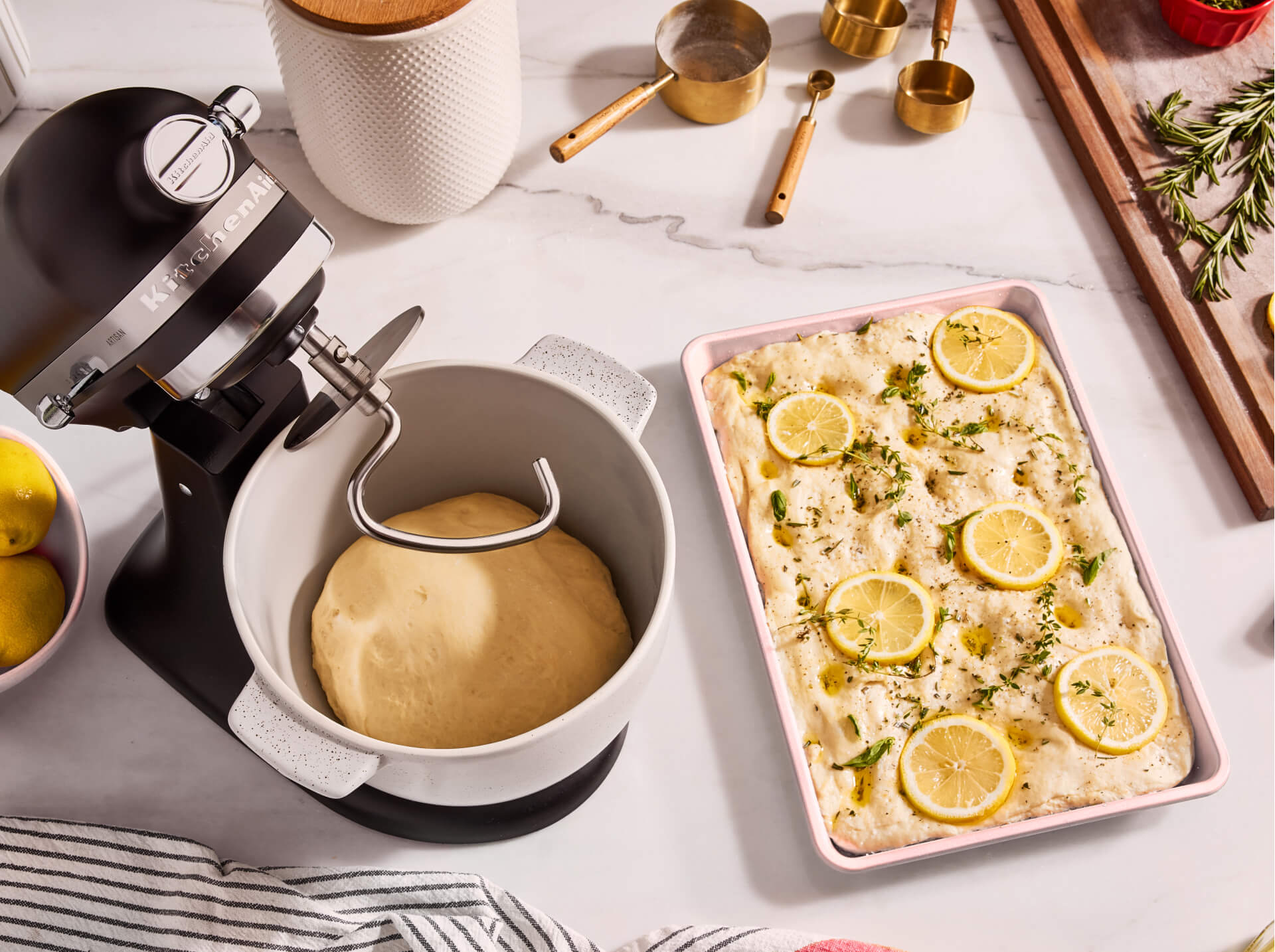
Your mixer matters, but your hands and timing shape the dough too. Even the best stand mixer for bread dough works best when you load ingredients thoughtfully, watch the dough closely and stop based on texture, not just the clock.
Get familiar with how to use your stand mixer before you start.
Use the right speed
Knead bread dough on speed 2. The slow, steady action gives the dough hook enough power to stretch and fold without overworking the motor or heating the dough—and gives gluten time to develop evenly. Higher speeds can make bread dough climb the hook, slap the bowl and tighten too fast.
Watch for visual cues
Watch the dough more than the timer. Well-mixed dough usually looks smoother, clears parts of the bowl and feels elastic, while undermixed dough stays shaggy and tears easily. A finished dough should stretch with some strength and spring back lightly when pressed. If it smears along the bowl or breaks apart quickly, it needs more kneading time.
Adjust technique for dough type
Different doughs behave differently in the bowl. Pizza dough often turns smooth and stretchy quickly, while high-hydration doughs can stay sticky and loose even after solid mixing. Whole wheat dough and enriched dough may need a little more time to fully hydrate, while wetter sourdoughs often benefit from mixer kneading followed by stretch-and-fold handling.
Bread dough stand mixer FAQs
Learn more about choosing a stand mixer for bread to help find the right fit for your kitchen.
Can a KitchenAid® mixer handle bread dough?
Yes, all KitchenAid® stand mixers can handle bread dough, especially when you match the mixer’s bowl capacity and design to your usual batch size. A bowl-lift stand mixer is a strong fit for frequent bread baking, multiple loaves and larger batches, while tilt-head models, including the Classic™ and Artisan® Series, work well for smaller batches of sandwich bread, pizza dough, high-hydration sourdough and enriched dough.
Is a refurbished stand mixer worth considering for bread baking?
A refurbished stand mixer can be worth considering if you want a dependable machine for regular kneading and mixing. Purchasing a certified refurbished KitchenAid® stand mixer can be an economical and sustainable way to enjoy the versatility, iconic design and powerful mixing settings that a KitchenAid® mixer offers.
How long should a stand mixer knead bread dough?
Kneading time in a stand mixer depends on the recipe, flour type, hydration level, added ingredients and batch size. Some doughs come together in just a few minutes, while softer or wetter doughs may take over 10 minutes to fully knead.
Follow the recipe’s timing when provided and knead yeast dough on Speed 2 with the dough hook. If no timing is listed, watch how the dough changes in the bowl. Finished dough should look smoother, feel supple and elastic, pull away from the sides of the bowl and stretch rather than tear when pulled. Softer or wetter doughs may stay slightly tacky, so use visual and texture cues instead of relying on the timer alone.