

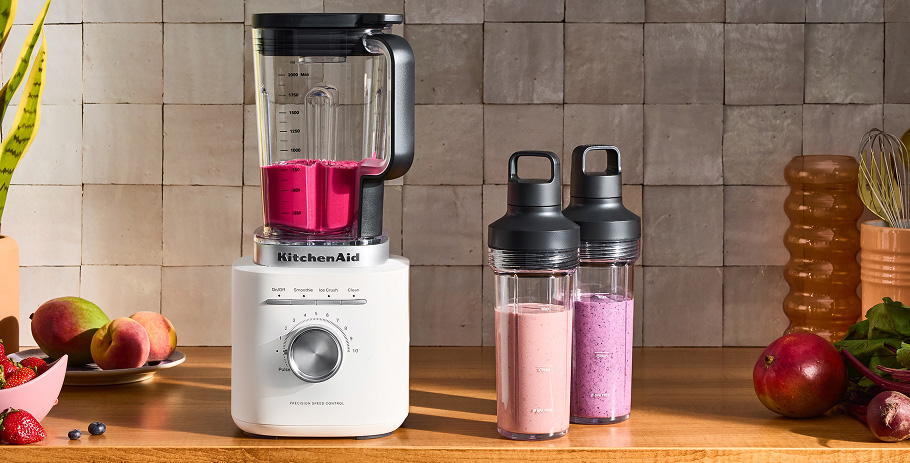
The best blender features for high performance include a strong motor, efficient blade and jar design, variable speed control, helpful presets, the right capacity and easy cleanup. Together, these features help a blender move ingredients smoothly through the jar and create consistent textures with ice, frozen fruit, fibrous greens, nuts, sauces and thick blends.
The best blender for your kitchen depends on what you make most often. A daily smoothie routine may call for strong ice-crushing ability and a personal blending jar, while thicker recipes like smoothie bowls, hummus or nut butter may benefit from a tamper, precise speed control and a jar shape that keeps ingredients moving.
Use this guide to compare the blender features that matter most and choose a model that fits the way you like to make.
Best blender features for high performance
Best blender features for high performance
What makes a blender high performance?
A high performance blender is designed to blend tougher ingredients more smoothly and consistently than a basic blender. The features that matter most are motor strength, torque, blade and jar design and speed control.
These features work together to determine how effectively a blender handles different ingredients and recipes. Motor power helps drive the blades, torque helps maintain movement through thick or frozen mixtures, and the jar shape helps pull ingredients back toward the blades instead of letting them spin around the sides. Flexible controls let you adjust the texture based on what you’re making, from crushed ice and smoothies to sauces, spreads and spoonable blends.
A few terms are helpful to understand before comparing models:
Motor wattage: This describes how much electrical power the motor draws. It can be useful for comparison, but wattage alone does not guarantee smoother results.
Peak wattage: This usually refers to the highest power a motor may draw during startup or under a heavy load.
Torque: This means turning force. In a blender, torque helps the blades keep moving when ingredients are thick, frozen or dense.
Vortex: This is the swirling motion that pulls ingredients down toward the blades so they continue blending instead of spinning around the jar.
Tamper: This tool helps guide thick mixtures toward the blades while the blender runs. It's useful for smoothie bowls, nut butters and dense frozen blends.
Pulse: This setting delivers short bursts of power, giving you more control when chopping, crushing or loosening ingredients.
Preset program: This is a timed blending cycle designed for a specific task, such as smoothies, ice crushing or cleaning, depending on the model.

1. Motor power and torque
Motor power helps a blender work through tough ingredients, while torque helps the blades keep turning when a mixture gets thick. For frozen fruit, ice, greens, nut-based blends and dense dips, texture is a better performance signal than wattage alone.
As a general reference, blenders used for smoothies with ice or frozen fruit often fall around 600–1,200 watts, while models used for denser blends like nut butters, thick dips and fibrous greens often fall around 1,000–1,500+ watts. These ranges can be helpful for comparison, but they shouldn’t be treated as strict minimums. Blade design, jar shape, torque and speed control all influence how well a blender processes ingredients.
When comparing blenders, look beyond wattage and consider how effectively the blender creates the textures you want most often. A well-designed blender should keep ingredients circulating, pull them toward the blades and process everything evenly.
Key factors to consider include:
Smooth blending: Look for the ability to process fibrous ingredients like kale, celery and fruit skins into a consistent texture.
Ice-crushing performance: Consider whether the blender has enough power and blade efficiency to break down ice and frozen ingredients evenly.
Support for thick blends: Strong performance with recipes like smoothie bowls, hummus and nut butters can depend on torque, circulation and speed control.
Variable speed control: Starting slowly and increasing speed as ingredients begin to circulate can help you fine-tune texture.
Wattage transparency: If wattage is listed, look for context around what the number means. Peak wattage may describe a short burst of power during startup or heavy blending, while rated wattage can give a clearer sense of the motor’s operating power during regular use.
KitchenAid® Pure Power Blenders combine 1,200-watt rated power, 1,700 peak power, strong torque, powerful asymmetrical blades and precision speed control to process ice, frozen fruit, leafy greens, nuts and thick mixtures while giving you control over textures for smoothies, shakes, frozen drinks, chunky salsas, sauces, dips, purées, nut butters, frozen desserts and more.
2. Blade and jar design
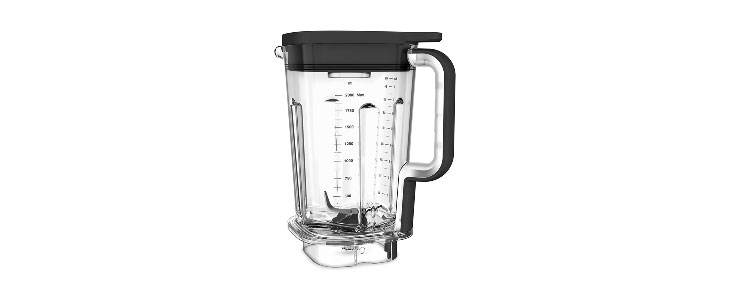
Blade and jar design affect how ingredients move while blending. Look for blades that reach ingredients from multiple angles, plus a jar shape with contours, ribs or corners that guide food back toward the blades.
This is where many blender differences show up in everyday use. Ingredients need to move down into the blade path, travel around the jar and return to the center so everything blends evenly. If the mixture spins around the sides without being pulled back down, you may end up with chunks, air pockets or uneven texture.
When comparing blade design, pay attention to:
Blade angle: Blades positioned at different angles can catch ingredients from more directions, which helps create smoother movement through the jar.
Blade edge: Sharp blades slice softer ingredients, while blunt or thicker blade surfaces can pulverize by impact. Blunt-style edges are often useful for breaking down ice, frozen fruit, seeds and nuts.
Blade placement: Blades should sit low enough to catch ingredients at the base of the jar while working with the jar shape to keep food circulating.
Blade material: Stainless steel is commonly used because it resists corrosion and holds up to repeated contact with hard ingredients.
Cleaning access: Some blenders have fixed blade assemblies, while others have removable parts. Check the owner’s manual to understand how the jar and blades should be cleaned.
Jar shape matters just as much. Look for:
Tapered shape: A jar that narrows toward the base can help guide ingredients down toward the blades.
Ribs or corners: Interior contours can disrupt smooth spinning and push ingredients back into the blade path.
Batch-size fit: A large jar is useful for family smoothies, frozen drinks and sauces, but very small batches may blend better in a smaller jar or personal cup.
Working capacity: Total jar capacity is not always the same as the amount you should blend at once. Check fill lines, especially for liquids, foamy blends and warm or hot ingredients.
Lid design: A secure lid helps reduce splatter. If hot ingredients are part of your routine, look for a vented lid or removable cap designed to release steam.
Jar material: Glass feels sturdy and resists staining, while plastic is usually lighter and easier to lift or pour from. If choosing plastic, check whether it is BPA-free and review the model’s hot-liquid guidance.
For more buying guidance, explore this KitchenAid® guide on how to choose a blender.

3. Speed range, pulse and presets
Speed range, pulse control and presets help you shape texture. Variable speeds give you hands-on control, pulse adds quick bursts of power and preset programs simplify repeat tasks like smoothies, ice crushing or cleaning.
Different recipes need different movement. A chunky salsa needs a lighter touch than a smoothie. Whipped cream or a thick dip may need a slow start before moving to a higher speed. A frozen drink may need strong, consistent ice-crushing power.
Here’s what each control feature does:
Variable speed control: This allows you to gradually adjust blending speed throughout the process, giving you more precision when creating specific textures or working with ingredients that need a slow start before increasing power.
Low speeds: These are useful for starting thick blends, gently moving ingredients and creating chunkier textures.
Midrange speeds: These work well for sauces, dressings, batters, creamy dessert bases like chocolate mousse and mixtures that need steady blending without too much aeration.
High speeds: These are best for smoother textures, such as smoothies, creamy purees and frozen fruit blends.
Pulse control: This gives short bursts of power, making it useful for chopping, crushing ice, breaking up frozen fruit or loosening ingredients that have stopped moving.
Preset programs: These are helpful for common routines because the blender automatically adjusts timing and speed for a specific task.
Manual control: This lets you stop early, blend longer or adjust speed based on how the ingredients are moving.
For more guidance on choosing the right setting for different textures and recipes, explore this guide to blender speed settings.
Shop KitchenAid® Pure Power Blenders
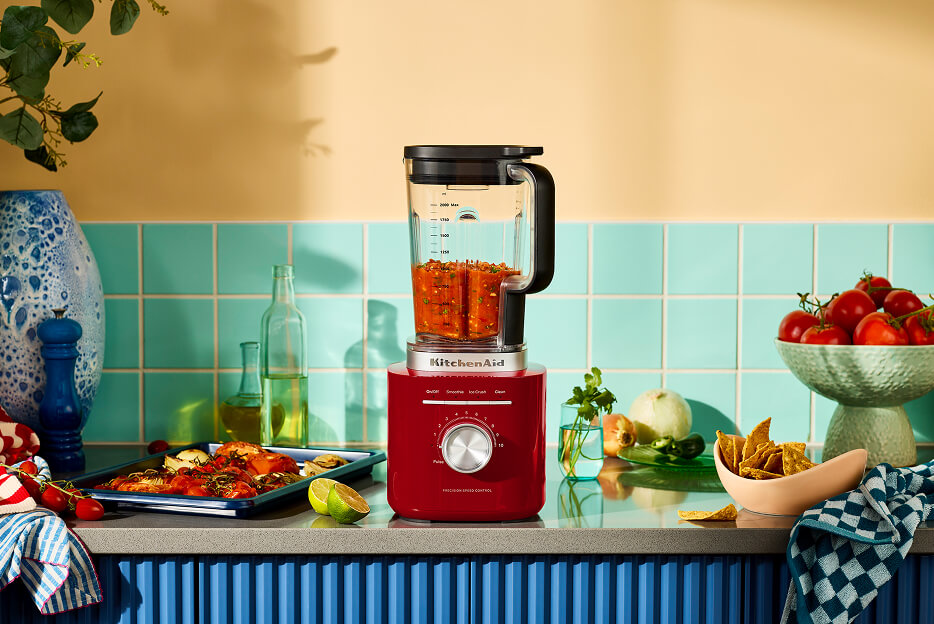
KitchenAid® Pure Power Blenders offer control and flexibility for a wide range of textures, from smoothies and frozen drinks to sauces, dips and thick blends. The Precision Speed Control Knob + Pulse lets you move between settings based on the recipe, while preset Smoothie, Ice Crushing and Clean Cycle programs add convenience for everyday routines.
The Pure Power Blender assortment includes options with a 68 oz BPA-free plastic jar, a 62 oz glass jar or both, each equipped with a Heat Release Vent that allows steam to escape when blending warm or hot ingredients*. Personal blending jars are also available for single-serve cold drinks on the go.
*For hot liquids do not exceed 40 oz (1.1 L).
How to match a blender to what you blend
Your favorite recipes are often the best place to start. Think about what you blend most often, how thick those recipes are and whether you usually make one serving, a family-size batch or enough to prep ahead.
A simple way to narrow your choice is to ask: What texture do I want, what ingredients do I use and how much do I usually make? A daily smoothie routine has different needs than thick nut butter, frozen drinks for guests or sauces for the week.
Smoothies, smoothie bowls and frozen drinks
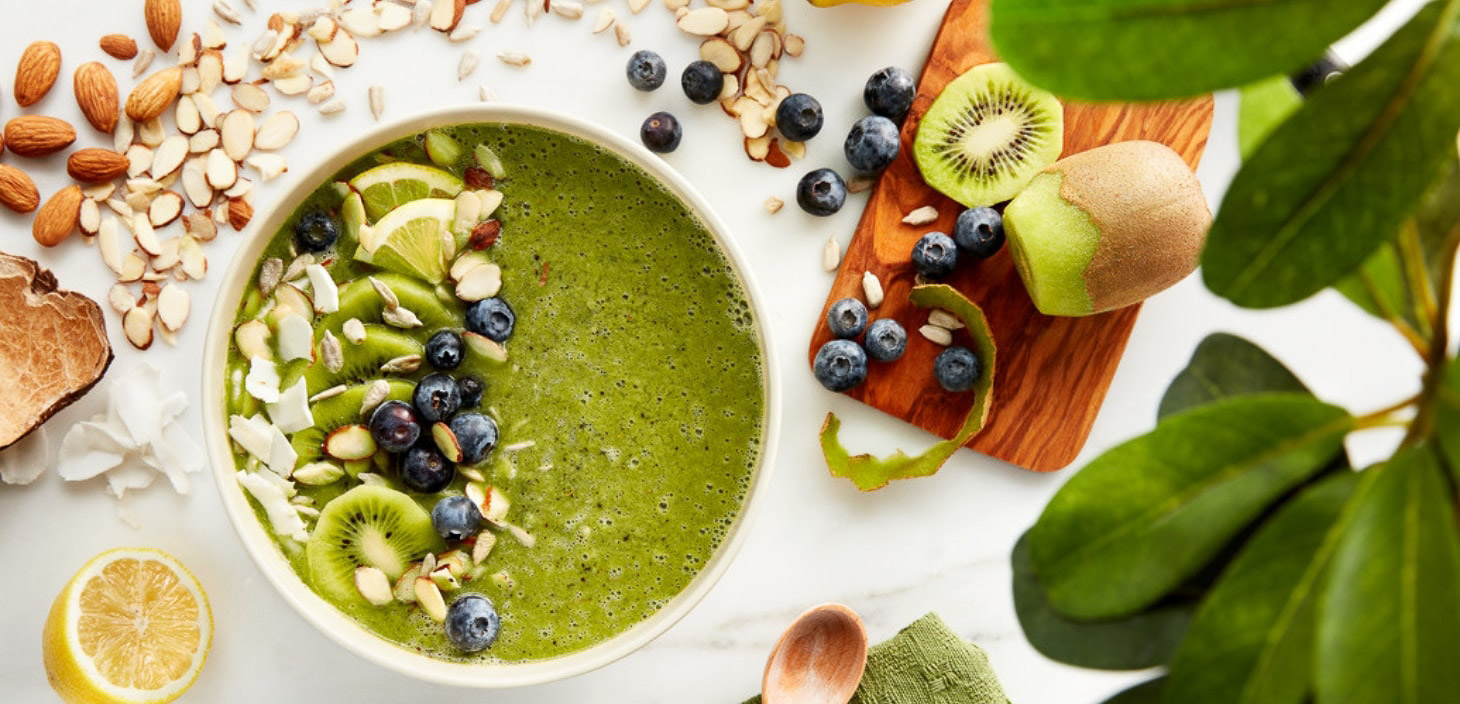
For smoothies, smoothie bowls and frozen drinks, look for strong ingredient circulation, ice-crushing ability, variable speeds and a jar size that matches your routine. The KitchenAid® Pure Power Blender with 2 Personal Blending Jars brings those features together with a 68 oz plastic jar for larger batches, two 16 oz Personal Blender Jars for single-serve cold drinks, variable speed settings for texture control and an Ice Crushing preset for frozen ingredients.
Smoothies can be simple, but the ingredients change the blending challenge. Fresh berries and yogurt blend more easily than frozen mango, leafy greens, chia seeds, protein powder and ice. If you want a smoother finish with fewer leafy flecks or frozen pieces—or a creamy milkshake with an even, pourable texture—look for features that keep ingredients moving through the jar.
Useful smoothie and frozen-drink features include:
Ice-crushing ability: This matters for frozen drinks, slushies, smoothies with ice, frappes and recipes that need a slushy or crushed texture.
Strong circulation: A steady vortex helps pull fruit, greens, liquid and ice down toward the blades for a more even blend, whether you’re making smoothies, frozen drinks or green juice-style blends.
Variable speeds: Starting low and increasing gradually can help powders, frozen fruit and liquids combine before blending at a higher speed.
Personal blending jars: These are useful for single-serve cold drinks, especially when you want to blend and take the drink with you.
Larger jars: A full-size jar works better for multiple smoothies, frozen drinks for entertaining or household batches.
Soups, sauces and nut butters
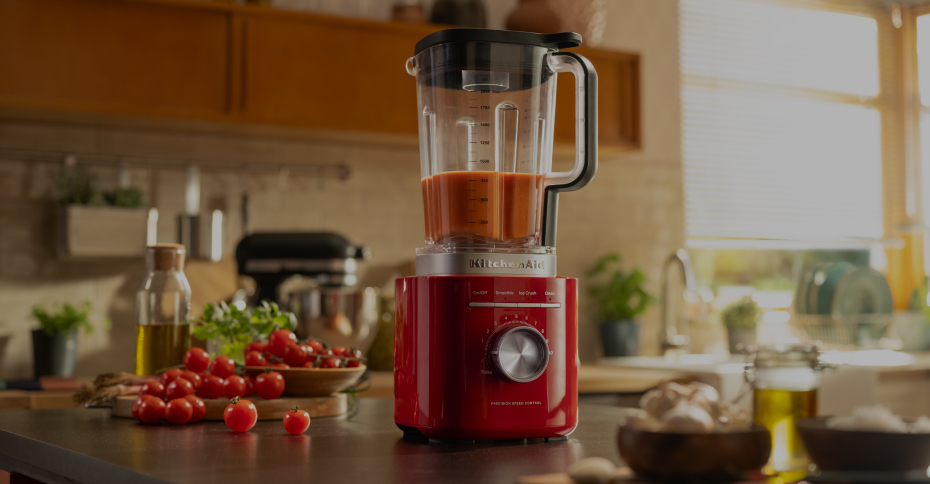
For soups, sauces, purees and nut butters, look for steady motor performance, efficient ingredient circulation, precise speed control and features that support dense or fibrous ingredients. If you want to blend warm ingredients, confirm hot-liquid compatibility first.
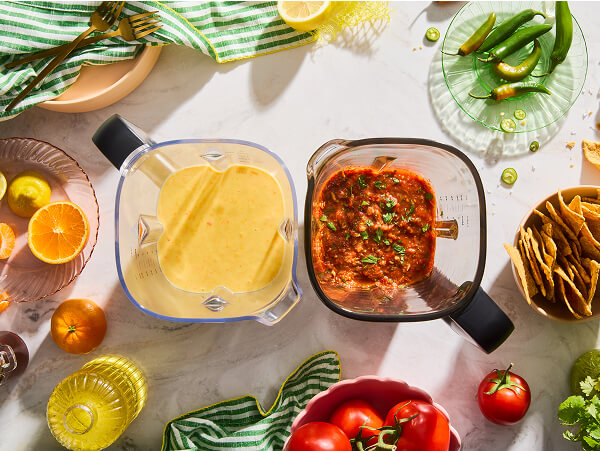
Sauces and purees show how well a blender refines texture. Ingredients like tomato skins, herb stems, roasted vegetables, seeds, soaked nuts and dates can turn out gritty if they do not move evenly through the jar.
Nut butters, hummus and thick spreads create a different challenge because they resist movement. These recipes often need a strong vortex, enough torque and the right jar shape to keep ingredients moving without extra oil or liquid.
Helpful features for sauces, purees and spreads include:
Low-to-high speed control: Starting slowly helps ingredients catch before you increase speed for a smoother finish.
Tamper support: Dense mixtures like nut butter and thick dips often need guidance toward the blades.
Jar ribs or contours: These help push ingredients back into the blade path instead of letting them spin around the sides.
Wide jar opening: A wider top can make it easier to scrape down thick mixtures and transfer finished sauces.
Easy cleanup: Thick blends can cling to the jar, lid and blade area, so a clean cycle or dishwasher-safe parts can make regular use more enjoyable.
Vented lid design: If blending hot ingredients is important to you, look for a blender specifically designed to release steam safely while blending.
For soup-specific tips, explore this guide to making soup in a blender.

Single servings, family batches and meal prep
Blender capacity should match the way you make. Personal jars suit single cold drinks, mid-size jars fit everyday recipes and larger jars are useful for family smoothies, frozen drinks, sauces and meal prep.
Capacity can be confusing because the listed jar size does not always mean you should fill it to the top. Liquids can foam, thick blends need room to move and warm ingredients may require lower fill limits. Always follow the fill guidance for your specific blender and recipe.
Use these examples to compare capacity:
Single servings: A personal blending jar works well for protein shakes, breakfast smoothies and portable cold drinks.
Everyday household recipes: A mid-size jar is useful for dips, dressings, smoothies and smaller blended recipes.
Family batches: A larger jar is helpful when blending multiple servings of smoothies, frozen drinks, purees or sauces.
Meal prep: A higher-capacity jar can make it easier to prepare marinades, blended dressings, hummus, smoothie bases or sauces for the week.
Entertaining: A larger jar supports frozen drinks, batch mocktails, dips and sauces for gatherings.
For a creative blended dessert idea, explore this guide to making ice cream in a blender.
Which blender features matter most?
Before buying a blender, focus on the features that affect both performance and everyday use: motor strength, blade and jar design, speed control, capacity, lid fit, cleanup, noise, durability and hot-ingredient compatibility.
Controls that fit your cooking style
Choose blender controls based on how much guidance or flexibility you want. Dials offer hands-on texture control, buttons keep things simple and presets streamline repeat tasks like smoothies, ice crushing or cleaning.
Control features to compare include:
Variable dial: This works well if you like to fine-tune texture while watching the blend change.
Numbered speeds: These make it easier to understand low, medium and high blending ranges.
One-touch presets: These are useful for repeat routines, especially smoothies, ice crushing and cleaning cycles.
Pulse control: This is helpful when you want quick bursts of power without fully pureeing ingredients.
Smooth speed transitions: Gradual changes can reduce splashing and help thick or frozen ingredients start moving more evenly.
For more detail, visit this KitchenAid® guide to blender speed settings.
Noise, cleanup and everyday usability
Noise, cleanup, jar weight, lid fit and pouring ease all shape how often you reach for a blender. A strong blender should handle your favorite recipes and still feel simple enough to use on an ordinary day.
Most high performance blenders make noticeable sound, especially when working through ice, frozen fruit or dense ingredients. If you blend early in the morning, read reviews for comments about sound level, vibration and how long typical blends take.
Cleanup is just as important. Smoothies can leave seeds around the lid, nut butters can cling to the jar and sauces can settle near the blade area. Dishwasher-safe parts vary by model, so check the product details and owner’s manual before assuming the entire jar or lid can go in the dishwasher.
Everyday-use details to compare include:
Lid fit: A secure lid helps reduce splatter, especially with liquids, sauces and larger batches.
Venting: If you plan to blend warm or hot ingredients, look for a vented lid or removable cap designed to release steam. Not every blender includes this feature.
Pouring design: A comfortable handle and clean pour spout make smoothies, sauces and purees easier to transfer.
Jar weight: Glass feels sturdy but heavier, while plastic is usually lighter for lifting and pouring.
Cleaning cycle: A preset clean cycle can help loosen residue after smoothies, sauces and dips before handwashing or dishwasher cleaning.
Blade area cleanup: Consider how easy it is to rinse or clean around the blades, especially if you make sticky or oily recipes.
Storage height: Measure the space beneath upper cabinets if you plan to leave the blender on the counter.
Cord placement: Make sure the cord can reach your preferred blending area without placing the blender too close to the sink or counter edge.
For more usage and care guidance, explore how to use a blender and how to clean a blender.
Build quality and long-term durability
For long-term use, look closely at the jar, base, blade assembly, lid, controls, warranty and replacement-part options. A well-built blender should feel stable, secure and suited to the way you blend most often.
Build quality often shows up in the small details: how firmly the jar sits on the base, whether the lid seals cleanly, how responsive the controls feel and whether the blender stays steady with frozen or dense ingredients.
Details worth reviewing include:
Jar material: Glass, plastic and specialty jars each offer different benefits for weight, stain resistance, heat handling and everyday ease.
Base stability: A sturdy base helps the blender feel secure when processing ice, frozen fruit or thick mixtures.
Coupling design: The coupling transfers power from the motor to the blade assembly, so it should feel well-fitted and built for repeated use.
Lid construction: A good lid should seal securely, remove easily and include venting if the model is designed for warm or hot ingredients.
Control feel: Dials and buttons should feel responsive, easy to read and comfortable to operate.
Warranty coverage: Review the warranty length, what it covers and how service is handled.
Replacement parts: Availability of jars, lids, tampers or other accessories can extend the usefulness of the blender over time.

Blender FAQs
These quick answers cover a few common questions that come up while comparing high performance blenders.
Is a glass jar or plastic jar better for a blender?
Both glass and plastic blender jars can deliver excellent blending performance, but each offers different advantages depending on how you use your blender. Glass jars are often chosen for their sturdy feel and resistance to stains and odors, while plastic jars are popular for their lighter weight and everyday convenience. The better choice depends on your recipes, storage needs, comfort with lifting heavier containers and whether the specific jar is approved for warm or hot ingredients.
Glass jar considerations:
Resists staining and odor transfer from strongly flavored ingredients
Often maintains a clean, like-new appearance over time
Feels sturdy and substantial during use
Commonly dishwasher safe, depending on the model
Typically heavier to lift and pour when full
Plastic jar considerations:
Generally more resistant to shattering from accidental drops
Convenient for frequent everyday blending
May be more prone to scratches over time
Some materials can be more susceptible to staining or retaining odors
The KitchenAid® Pure Power Blender collection offers models with a 68 oz BPA-free plastic jar, a 62 oz glass jar or both. The 68 oz plastic jar provides larger-capacity blending with a lighter feel, while the 62 oz glass jar offers a sturdy option for sweet and savory blends.
Are personal blenders strong enough for frozen fruit and protein shakes?
Some personal blenders can handle frozen fruit and protein shakes well, especially when used with enough liquid and properly sized ingredients. For thicker blends, ice-heavy recipes or frozen fruit straight from the freezer, a full-size blender often delivers smoother results.
Personal blending jars are especially useful for portable cold drinks, post-workout shakes and single-serve smoothies. If you often make smoothie bowls, nut butters or frozen drinks for more than one person, compare full-size models with stronger motors, larger jars, tamper support and more texture control.
KitchenAid® offers personal blending jar options that let you blend and take your drink on the go. The KitchenAid® Pure Power Blender with Personal Blending Jar combines the versatility of a full-size blender with the convenience of a personal jar for cold drinks and individual servings.
Which blenders are quiet enough for early-morning use?
No high performance blender is completely silent, especially when crushing ice or frozen fruit. For early-morning use, look for models with stable jar seating, efficient blending cycles and reviews that mention lower vibration or shorter run times.
You can also reduce noise by blending softer ingredients first, adding enough liquid for circulation and avoiding overfilled jars. If sound is a major concern, think about where the blender will sit in relation to bedrooms or shared spaces.
Do preset programs actually improve blending results?
Preset programs can improve consistency by using timed speed changes for common tasks like smoothies and ice crushing. They are especially useful when you make the same recipes often or prefer one-touch convenience.
While preset programs add convenience, manual controls give you more flexibility when a recipe needs a lighter touch or a more customized texture. Variable speeds and pulse settings let you fine-tune blends that presets may not cover, such as chunky salsa, hummus, thick dips or herb-forward sauces. The most flexible blenders offer both: presets for everyday ease and manual control for adjusting as ingredients move and textures change.
Can one blender handle smoothies, ice and hot soups well?
One blender can handle smoothies, ice and hot ingredients well if it has the right motor strength, blade and jar design, controls and hot-ingredient compatibility. Not all high performance blenders are designed for hot blending.
If hot ingredients are a priority, look for a heat-safe jar, a vented lid or steam-release feature, clear fill limits and owner’s manual guidance for warm or hot liquids. For cold routines, focus more on ice-crushing performance, smoothie texture, jar capacity and personal blending options.
KitchenAid® Pure Power Blenders with full-size jars are designed to support both hot and cold recipes, with powerful ice-crushing blades for frozen ingredients and a Heat Release Vent that allows steam to escape when blending warm or hot ingredients.