









 New Code Sent!

What is flambé? Learn how to flambé at home
Few cooking techniques can match the fiery drama and irresistible allure of flambé.
This process of adding alcohol to a saucepan and then igniting it to create a burst of flame is often done tableside at restaurants, but it’s a technique that isn’t just for professional chefs.
While flambé may seem intimidating, many home cooks can learn to master the cooking method with the right guidance and precautions.
In this guide, learn step-by-step instructions on how to flambé, discover some popular sweet and savory dishes that feature the technique and get some guidance on how to flambé in your home kitchen.


What is flambé?
The word flambé comes from the French word flamber, which means “to flame.” The flambé technique is commonly used when making classic desserts such as cherries jubilee and bananas Foster and savory dishes like steak Diane and coq au vin. It involves pouring a small amount of a high-proof alcohol (such as brandy or rum) into a saucepan, and then carefully igniting the alcohol.
The purpose of flambéing isn’t just to create a culinary show. When the harsh taste of alcohol gets burned away, it allows the subtle flavors of the liquor to remain. The flambé process also caramelizes the sugars in the dish and intensifies the flavors of the other ingredients.
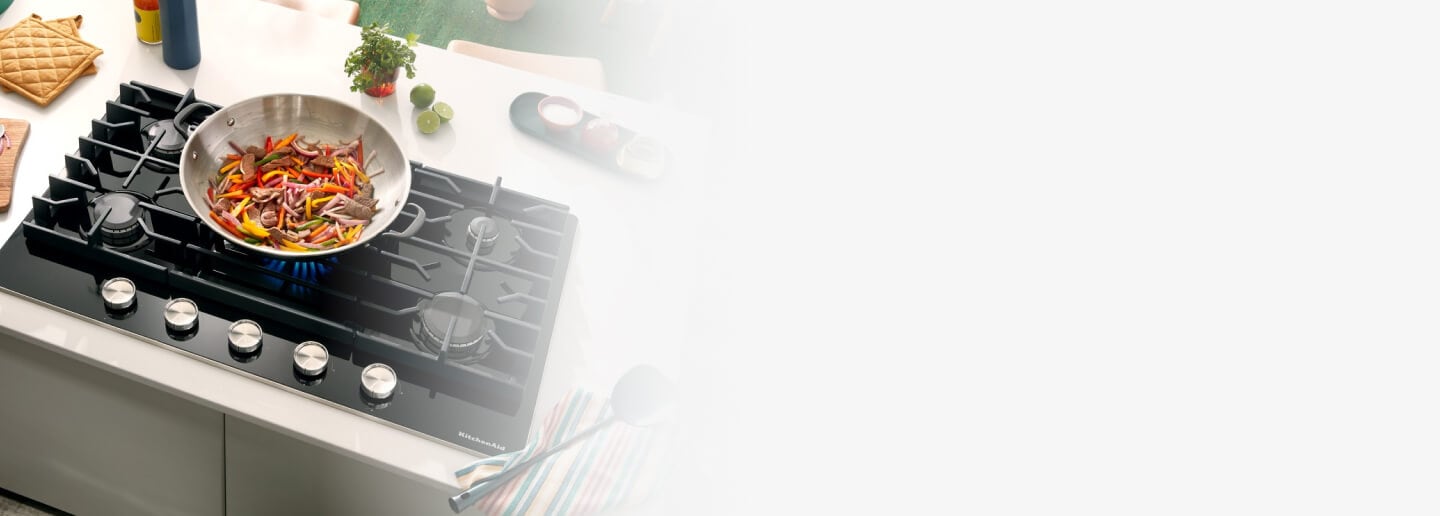
KitchenAid® cooktops
Cooktops made for every culinary adventure
KitchenAid® gas, electric and induction cooktops offer the versatility, performance and craftsmanship you need to create your favorite recipes
How to flambé: A step-by-step guide
When done with care and attention, flambéing on a kitchen range or cooktop can add rich flavor and quick, dramatic flair to your cooking in just a few minutes. It’s important to note that this is a somewhat advanced cooking technique, and you shouldn’t try it if it’s outside your comfort zone.
Supplies
Small saucepan for warming the alcohol first
Stainless steel skillet for flambéing, preferably with a long handle
Lid for the skillet
Tools
Range or cooktop like these KitchenAid® ranges
A stick lighter or long matches

1. Prepare your surroundings
Before you begin, make sure the exhaust fan is turned off (to avoid drawing the flambé flame upward), your hair is tied back and your sleeves are rolled up. You don’t want anything close to the pan when you’re flambéing. Keep the skillet lid nearby in case you need to smother the flames.

2. Heat the alcohol in the saucepan
As your food cooks in the skillet, measure out the amount of alcohol the recipe calls for and then warm it up in a small saucepan. Alcohol won’t ignite easily if it’s not at the right temperature. You want to heat the alcohol just until bubbles form. Don’t bring it to a boil, because that would boil away the alcohol required to ignite the food.

3. Add the alcohol to the skillet
Carefully remove the skillet containing the food you want to flambé from the heat, then pour in the alcohol from the saucepan.

4. Carefully ignite the dish
Tilt the skillet slightly and use a stick lighter or a long match to ignite the fumes at the edge of the skillet. Avoid any contact of the lighter or match directly with the alcohol. It's only the fumes that need to ignite for a successful flambé.
Make sure to light the fumes immediately after adding the alcohol to the pan; otherwise, the food will absorb too much of the alcohol flavor.

5. Rock the skillet
Gently rock the skillet back and forth to help evenly distribute the alcohol until the flames go out on their own, which usually happens in about 15 to 30 seconds. If needed, you can also use the lid to cover the skillet, which will smother the flames.
Your flambéed dish is now ready to serve.
Shop KitchenAid® ranges for flambéing
Ignite your passion for cooking with KitchenAid® ranges that can deliver reliable heating for advanced cooking techniques such as flambéing. Select KitchenAid® 5 burner gas ranges provide the perfect range of cooking power from 18,000 to 5,000 BTUs, so you can go from a rolling boil to a delicate simmer.


Flambé FAQs
From choosing the right spirit to selecting your cooktop, here’s what to know before you bring the art of flambéing into your kitchen.
What alcohol should you use for flambéing?
High proof spirits (at least 80 proof) are required for flambéing because they have enough alcohol to ignite properly. The types of alcohol that are commonly used to flambé include rum, brandy such as cognac, bourbon and whiskey.
Avoid beer, wine and champagne, which aren’t high enough in alcohol to ignite, as well as any alcohol that is above 120 proof, which is too flammable.
Can you flambé on an electric or induction cooktop?
While professional chefs typically use the open flame from a gas burner to flambé, home cooks can get similar results with an electric or induction cooktop using a stick lighter or a long match instead of an open flame.
Do you need special equipment to flambé?
While precautions are necessary, no special equipment is required to flambé. The tools and supplies that you need—a stainless steel skillet with a lid for flambéing, a small saucepan for heating the alcohol and either a stick lighter or long matches—are all things you probably have in your kitchen.
What are common flambé mistakes to avoid?
The flambé cooking method isn’t as complicated as you might think, but some common mistakes can make it more difficult to achieve your desired result.
Using too much alcohol: You only need a small amount of alcohol to flambé—or about 1 tbsp per serving. Adding too much to the pan could overpower the other flavors and produce massive flames.
Using alcohol that’s too cold or too hot: Liquor that’s too cold won’t easily ignite. On the other hand, if you bring the liquid to a boil, all the alcohol will evaporate before it can be ignited. It’s helpful to warm it up, just until bubbles form.
Not using the right type of alcohol: Spirits that are at least 80 proof are recommended. Beer, wine and champagne don’t have enough alcohol content to properly ignite, while anything over 120 proof is too flammable.
Pouring alcohol directly from the bottle into the skillet: Avoid this, as there’s a risk that the flame may travel to the bottle.
Using non-heatproof cookware: Stainless steel is ideal for the high heat involved with flambé cooking. Avoid using aluminum or nonstick pans.


Foods and dishes to flambé
Savory dishes with rich, complex flavors and desserts featuring sweet sauces lend themselves well to flambéing. Many popular flambé recipes are classics of old-school fine dining establishments.
Savory flambé dishes
Steak Diane: This pan-fried classic features beef tenderloin steak cooked with cognac or another type of brandy.
Coq au Vin: A French favorite, coq au vin stands for “chicken in wine” (usually red) with brandy added for flambéing.
Shrimp Flambé: Shrimp is cooked in a garlic and butter sauce and then flambéed with brandy or another liquor.
- Lobster Américaine: Lobster pieces are cooked with vegetables and herbs, white wine, a splash of brandy for flambéing, savory stock and a touch of cream.
Classic flambé desserts
Bananas Foster: In addition to cooked bananas, this decadent New Orleans favorite features cinnamon, brown sugar, banana liqueur and rum. After the dish is flambéed, it's typically topped with vanilla ice cream.
Crêpes Suzette: Delicate crêpes are cooked in an orange butter sauce and then flambéed with cognac for a toasty, complex flavor.
Cherries Jubilee: Bing or other dark sweet cherries are flambéed with brandy, which adds a depth of flavor to the dessert. The sauce is often served over vanilla ice cream.
Bombe Alaska: In this variation of Baked Alaska—the layered dessert of ice cream, cake and meringue—rum is poured over the top of the meringue, and then flambéed to toast the meringue.
- Fruit Flambé: In this simple dessert—which can be made with a variety of fruits including peaches, pears and grapes—the flambé process intensifies the flavors of the fruit.
Shop KitchenAid® cooktops
When it comes to trying out new cooking techniques in the kitchen like flambé, a KitchenAid® cooktop can help make the process even more enjoyable. With features on select models like the 10” Even-Heat™ Ultra Power™ Element with Simmer Setting that provides greater versatility for high and low temperature cooking techniques, a KitchenAid® cooktop can help inspire your culinary creativity.


Your subscription was successful
Thank you for signing up. Keep an eye on your inbox for our next newsletter.
Stay Connected – Join the List
Enjoy articles like this? Get helpful guides and appliance care tips sent straight to your inbox.

