









 New Code Sent!
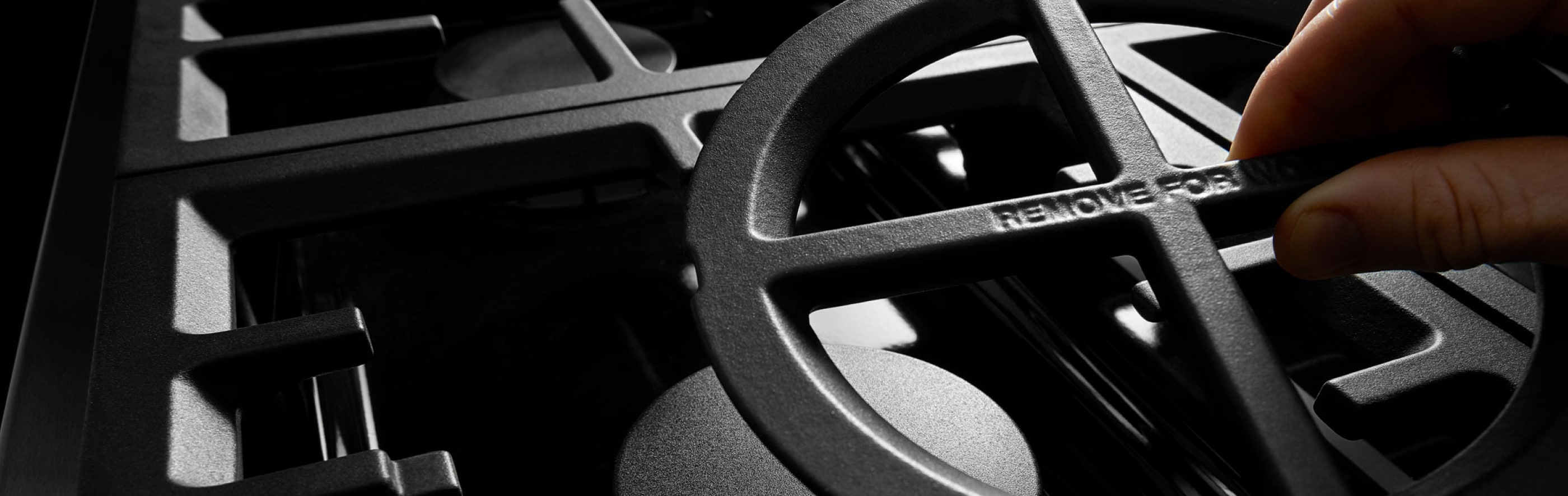
How to clean gas stove burners in 7 steps
You clean your gas cooktop regularly, but what about your burners? These components can get dirty over time, which could affect their performance. Learn how to deep clean your gas stove top burners, including your burner heads and caps.
For spills that overflow uncontrollably and cause leftover food and grease to build up under your burners, this step-by-step guide from KitchenAid brand can help you clean your gas stove burners.
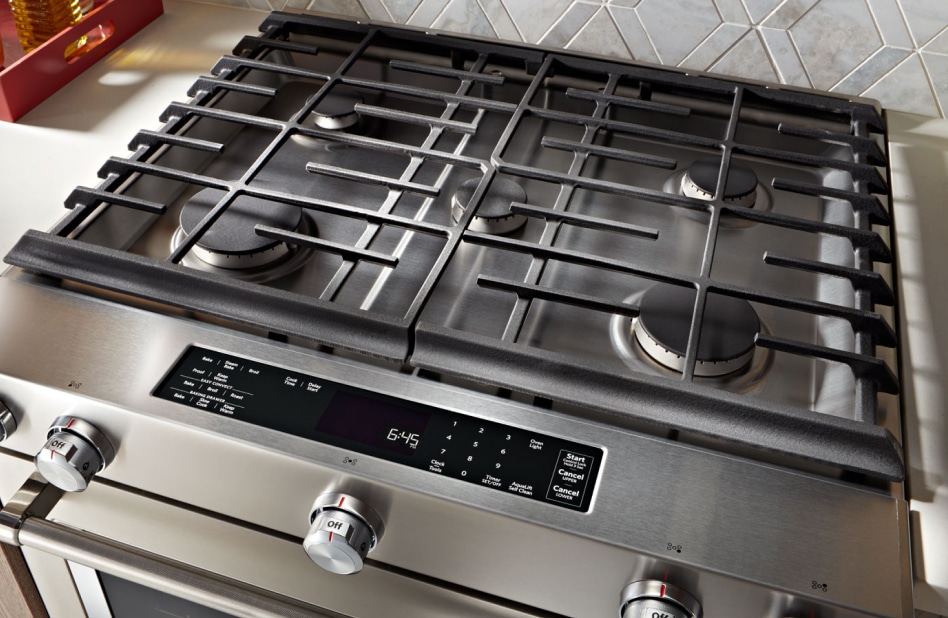
How to clean gas stovetop burners: a guide
It’s important to clean your gas cooktop burners and ports properly. Failure to do so may result in flames that will not cook properly. Before you get started, make sure all of the controls are off and the cooktop is cool. Next, gather the materials you’ll need for cleaning the burners and ports.
Supplies:
A mildly abrasive cleaner
Soap and water
Cleaning solution
Tools:
A nonabrasive, plastic scrubbing pad
A straight pin, needle or small gauge wire
A damp, soft cloth
A cooktop scraper
Flathead or Phillips screwdriver, if necessary
IMPORTANT:
Do not use oven cleaners, bleach or rust removers when cleaning your gas burners. Also, don’t use a wooden toothpick in place of a pin, needle or wire to clean the burner ports. The toothpick can break off in the burner, preventing proper gas flow.

1. Remove the burner cap and burner base
Before removing the burner cap or burner base, make sure the gas stovetop is cool to the touch and the appliance is unplugged. Then, simply remove the grates and lift the cap off the burner.
For some burner bases, you may need a screwdriver to remove the screws. If necessary, remove the screws, then gently lift the base and disconnect the wires.
If you have a model with a standing pilot light, make sure to turn off the gas valve prior to removing any parts.

2. Clean the burner caps and bases
It's best to use a nonabrasive, plastic scrubbing pad and a mildly abrasive cleaner when cleaning the burner caps and bases.
Use the following tips to help you clean these parts of your gas stovetop:
The cooktop is often easiest to clean as soon as the top, grates and caps are cool following cooking.
Do not clean burner caps in the oven during a Self-Cleaning cycle.
Do not wash burner caps in the dishwasher.
Wipe all sides of the burner caps with a nonabrasive scrubbing pad or cloth and a mild cleaner or soap.
For extra-dirty caps, soak them in hot, soapy water for at least 20 minutes.
If grease or food remains, make a paste of three parts baking soda to one part water.
Coat the caps with the paste, let sit for 20 minutes, then rinse and wipe with a soft cloth.
Wipe down the burner base with a non-abrasive scrubbing pad or cloth and mildly abrasive cleaner or soap.

3. Clean the gas tube opening under the base
You may need to remove your cooktop surface to access the gas tubes. These tubes are located underneath the burner base and serve as the connection to the gas valve.
Once located, unscrew the tube from the base and carefully clear any debris in the tube opening with a straight pin, needle or small gauge wire. Be mindful not to damage the tube in the process.
After cleaning, reattach the tube to the base and replace the cooktop surface.

4. Gently clean the igniter with a damp cloth
The igniter is a small port located underneath the burner base. Gently remove any debris from the igniter with a damp cloth.

5. Clean clogged burner ports
Use a straight pin, needle or small-gauge wire to clean clogged burner ports. To clean the ports correctly, avoid doing the following:
Do not attempt to clean the burner ports in the dishwasher.
Do not enlarge or distort the port.

6. Reinstall the burner base and cap
If your burner base was attached with screws, tightly reattach the base. After the burner base is secure, place the cap on top of the base. Caps must be seated upon the base for the burner to ignite properly.
Make sure the alignment pins (if present) are properly adjusted with the burner cap and the correct burner cap is on the correct burner base.
The burner cap should fit flush with the burner base and have minimal side-to-side movement.

7. Turn on the gas stove burners
After securely attaching and aligning the base and cap, turn the stove knob on to activate the igniter. If the burner does not light, check the cap alignment and make sure the correct burner cap is on the correct burner base.
Shop KitchenAid® gas cooktops
KitchenAid® gas cooktops come in a variety of designs. Some models feature 4 burners while others have 5 or even 6 burners. KitchenAid brand also offers downdraft gas cooktops that offer Downdraft Ventilation, which integrates the ventilation system into the cooking surface so that a separate hood is not needed. Smoke and odors can be removed and taken outside or filtered and recirculated inside. A duct-free kit is available for purchase separately.
Tips for cleaning gas stove burner caps
If your stovetop caps are looking dirty or dingy, try to follow these tips to help clean them:
IMPORTANT: Before cleaning, make sure all controls are off and the cooktop is cool. Soap, water and a soft cloth or sponge are suggested first unless otherwise noted.
- Use a nonabrasive, plastic scrubbing pad and a mildly abrasive cleaner. Clean as soon as the cooktop, grates and caps are cool.
- Do not clean burner caps in the oven during a Self-Cleaning cycle.
- Do not wash burner caps in the dishwasher unless noted in your Use and Care Guide.
- Food spills containing acids, such as vinegar and tomato, should be cleaned as soon as the cooktop, grates and caps are cool. These spills may affect the finish.
- To avoid chipping, do not bang caps against each other or against hard surfaces, such as cast iron cookware.
For stubborn grime, a paste of baking soda and water can be applied.
Rinse burner caps after cleaning to remove any soap or cleaning solution.
Caps should be completely dry before reassembling.


Shop KitchenAid® gas ranges
KitchenAid® gas ranges come in various widths, including 30 and 36 inches, to fit most kitchens. Double oven ranges by KitchenAid brand are also available. Some models offer Even-HeatTM True Convection, which features a unique bow-tie design with a heating element and fan that circulates hot air throughout the entire oven, providing optimal temperatures combined with airflow for crisp, flaky baked goods, juicy, well-browned roasts and caramelized vegetables. Others have a professionally-inspired Design, which combines a bold blend of professionally-inspired styling with sleek touches for the home. This double oven range features satin textured handles and the KitchenAid® Badge, a symbol of uncompromised quality.
How to reinstall gas stove burner caps after cleaning
Proper burner cap placement and regular cleaning help ensure effective ignition and steady flames on your gas stove. Read on to learn more.
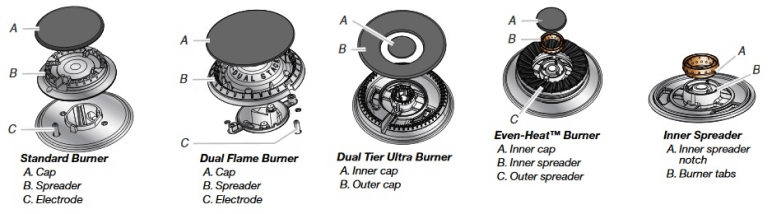
Be sure the correct burner cap is on the correct burner base. The burner base and underside of the burner cap may have a mark indicating which burner cap and burner base match.
When reinstalling the burner cap, make sure the alignment pins are properly aligned with the burner cap. The burner cap should fit flush with the burner base and have very little side-to-side movement.
Do not reinstall caps on burners while wet.
The cap must be seated on the burner base to light and perform properly.
Since gas burners come in a number of configurations, it’s important to become familiar with your appliance’s design by reviewing your Use and Care Guide.
Always keep the burner cap in place when using a surface burner.
A clean burner cap will help avoid poor ignition and uneven flames.
Always clean the burner cap after a spillover and routinely remove and clean the caps.
If you would like to download or view product literature for your appliance, please visit KitchenAid brand’s Manuals and Literature page.


How to get baked-on grease off stove burners
One of the best methods to help remove baked-on grease from your stovetop burners is with a cleaning solution and a damp cloth. Follow these simple steps to learn how:
Make sure the stovetop is cool to the touch.
Remove the grates and cover the ports on your stovetop.
Generously spray the affected areas with a cleaning solution. For stubborn messes, let it soak for 10 minutes.
Thoroughly wipe the surface with a damp cloth until clean.

KitchenAid® Hardware Accessory Kits
Curate the colors and textures that move you
From bold Black Ore to the inviting warmth of Bronze, mix and match handles and knobs to refresh your appliances and bring new energy to your kitchen
How to get melted plastic off stove burners and grates
Using a soft cloth and a cooktop scraper to help loosen the melted plastic is an effective method for cleaning your stovetop burners and grates. Learn how with the following best practices for cleaning your cooktop:
Make sure the stovetop is cool to the touch, and turn on the overhead vent, if possible.
Gently loosen the debris with the scraper.
Wipe away the remaining residue with a soft cloth.
Shop popular KitchenAid® cooktops and ranges
KitchenAid® cooktops and ranges help make mealtime manageable. You can choose from KitchenAid® gas, electric, induction and downdraft models to suit your cooking preferences. Commercial-style ranges are also available in a variety of colors. Some KitchenAid® cooktops feature the Power Boost Function, which allows you to exceed the maximum heat-level setting for 5 minutes, to help you get to a rapid boil. Others offer Sensor Induction Technology, which generates heat directly within cookware, reaching high temperatures quickly and cooling down rapidly for precise control that enables a full range of cooking techniques.

