


 New Code Sent!

Ducted vs. ductless range hoods: Which one to choose?
Range hoods are an essential kitchen appliance, helping to clear smoke, odors and grease from the air while you cook. However, not all range hoods work the same way. Ducted range hoods vent air outside your home through ductwork, while ductless models filter and recirculate air back into your kitchen without any ductwork required.
Each comes with its own performance capabilities, installation requirements and maintenance considerations. Keep reading to compare both options and find out which one may be a good fit for your kitchen.


What are range hoods?
Range hoods are appliances that help reduce smoke, odor and grease in the air when you’re cooking on your range or cooktop. Ducted range hoods use a fan and an external vent to suck up smoke and fumes from your kitchen, before pushing that captured air through ductwork and out of your home, while ductless models filter the air before recirculating it back into your kitchen.
The most important benefit of range hoods is that they help create proper ventilation so you can fry, sear or sauté without worrying about smoke interfering with your process.

What are the differences between ducted and ductless range hoods?
There are two major kinds of range hoods: Ducted vs. ductless. Ducted range hoods, which are sometimes called external venting hoods, rely on external venting that pushes smoke through ductwork and out of your home. Ductless range hoods filter and recirculate air back into your kitchen without any ductwork required. See the chart below for additional comparisons between ducted and ductless range hoods.
| Ducted | Ductless | |
|---|---|---|
| Ventilation | Vents air outside | Filters and recirculates air |
| Smoke ventilation | Removes smoke from home | Filters smoke |
| Odor ventilation | Vents odors outside | Filters odors |
| Grease capture | Helps reduce grease in air | Filters grease |
| Heat and moisture removal | Helps to push heat and moisture out of the home | Is filtered, but may return to the room |
| Installation complexity | Requires ductwork, so there are fewer placement options | No ductwork required (can be placed nearly anywhere) |
| Ductwork required | Yes | No |
| Ductwork maintenance | Inspect for blockages about every 6 months | No duct maintenance. Clean grease filters regularly, replace charcoal filters every 6 months |
| May be best for | Homes with existing functional ductwork; humid climates | Kitchens without ductwork; flexible layouts |
* Venting performance can vary by model. Reference your owner’s manual for more information.
In summary, ducted range hoods vent contaminants outside but require ductwork, while ductless hoods filter and recirculate air back into your kitchen and have few installation constraints.
What is a ducted range hood?
Ducted range hoods draw smoke and cooking fumes out of your kitchen via a fan and external vent, channeling the captured air through ductwork and expelling it outside your home. Below are some more characteristics of ducted range hoods.
- External ventilation
- Must be connected to a duct in your wall, ceiling or floor
- Limited in where it can be placed
- Helps reduce smoke, odors and grease from home
What is a ductless range hood?
Ductless range hoods, also known as recirculating venting hoods, operate via a recirculating venting system, which filters air and recirculates it in your kitchen. A few more key details about this type of range hood include:
- Recirculating ventilation
- Can be placed nearly anywhere
- Filters air instead of completely removing it
- Recirculates the air in the kitchen instead of venting out stale air
- Requires changing of charcoal filter
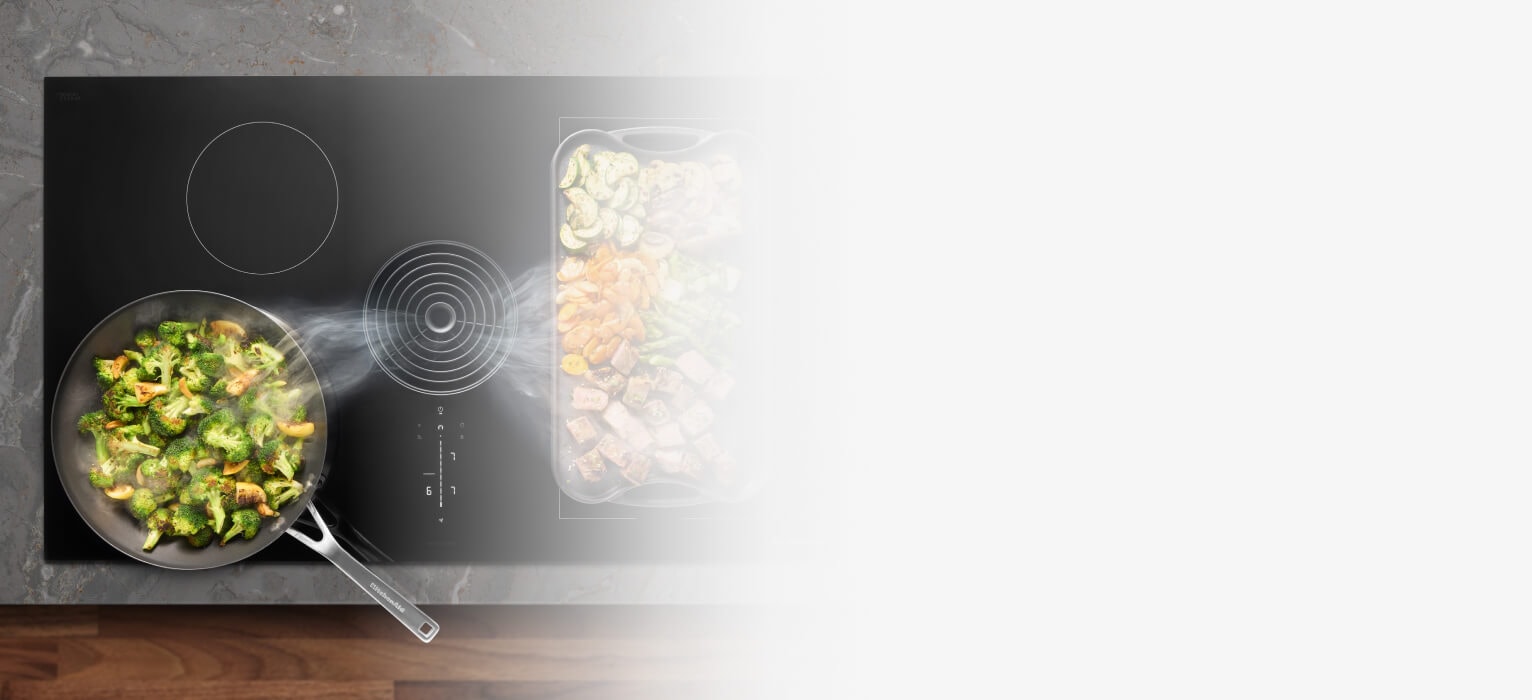
KitchenAid® Induction Downdraft Cooktops
Powerful extraction to help clear the air
Get downdraft ventilation that can adjust automatically to remove odors, steam and smoke 5x faster than steam can rise


What to look for when buying a range hood
When buying a range hood, there are several factors to consider to ensure that you choose the right one for your kitchen. Here are some key things to look for when buying a range hood:
1. Venting type: If exterior exhaust is already installed or reasonably feasible, a ducted range hood may be the ideal choice, as it often provides superior smoke, grease and odor removal.
2. Size and fit: The width of your range hood should be the same as the cooking surface that it's covering. This helps ensure complete coverage and efficiency when venting. Standard range and cooktop sizes are 30 or 36 inches wide, but there are also compact and extra-wide options available.
3. Venting strength: Venting power is measured in terms of cubic feet per minute (CFM). This number tells you how much air a vent can move in one minute. Generally, the higher the CFM rating, the stronger the venting power. When looking at product specs, remember that CFMs relate to the highest speed setting on a range hood, and canopy and downdraft hoods tend to have higher CFM ratings.
However, how much CFM you need depends on a number of factors including the size of your kitchen and the type of cooking you do. If you have a smaller kitchen and don’t create a lot of smoke or grease while cooking, a lower CFM rating may work well for you. Ducted range hoods tend to have higher CFMs, which are needed to push air outside through the air ducts.
4. Quietness: Decibels (dBAs) measure the noise level of a range hood. The lower the number, the quieter it is. When looking at product specs, pay attention to the different dBAs listed, as these represent the level of sound created at the different vent speed settings.
5. Style: Range hoods come in a variety of styles, from sleek and modern to more traditional designs. Consider the style of your kitchen and choose a range hood that fits your decor.
6. Heat tolerance: When you have a gas range or cooktop, it's important to make sure that your hood is compatible with the heat output. Electric cooktops are usually compatible with any type of hood. British Thermal Units (BTUs) measure the amount of heat a gas burner can produce, and the higher the number, the hotter the burner.
For optimal performance and safety, compare the BTU coverage vs. BTU output between your hood and cooktop—they should be similar or the hood should have a higher rating. Check product specifications or your owner's manual to get accurate numbers.
By considering these factors, you can choose a range hood that will effectively vent or recirculate the air in your kitchen while also fitting your style and budget.

Ducted vs. ductless FAQs
Learn more about ducted vs. ductless range hoods—including how to clean a ductless range hood and which type may be the best fit for you—by reading answers to the commonly asked questions below.
Depending on the model and setup, you can usually convert a ducted range hood to ductless with the help of a recirculating kit. This kit typically consists of a stainless steel vent and charcoal filters, which install on top of your range hood to vent or recirculate air back into your kitchen. Select KitchenAid brand recirculating kits, for example, include two charcoal filters, a vent cover and mounting screws. Not all models support conversion, so check your owner's manual to confirm compatibility before purchasing a kit.
Some range hoods have convertible venting systems so you can choose whether the hood vents externally or recirculates. When installing a convertible range hood, you won’t need to change your existing ductwork unless you choose to, making the installation relatively simple.
You can install a ductless range hood without venting. This type of hood can be placed in various locations around your kitchen and works by filtering the air instead of directing it outside. However, because the air is not vented outside like with a ducted range hood, a ductless range hood might not be as effective at removing smoke and fumes from your home.
Though they don’t require venting, ductless range hoods still have electrical, mounting and installation requirements you’ll need to pay attention to. Check the owner’s manual for more installation information.
Ductless range hoods help remove smoke from your cooking environment by taking smoke in, filtering it, then recirculating the filtered air throughout your kitchen. Because ductless range hoods are not connected to a duct, they cannot ventilate smoke out of your home.
Keeping your range hood filters clean and up to date can help your hood vent properly. Charcoal filters should be replaced, rather than cleaned, every six months. Grease filters need to be cleaned regularly.
Always check your owner’s manual before disassembling or cleaning any part of your hood, as disassembly and cleaning instructions may vary. Generally, you can clean the duct hood grease filter using the following process:
Remove the screw holding the grease filter retainer.
Next, release the retainer by turning it, pulling toward you and away from the fan.
Finally, wash your filter in the dishwasher or a hot detergent solution, dry it and then screw it back in place.
In general, avoid the following when cleaning the exterior surface of the filter:
Soap-filled scouring pads
Abrasive cleaners
Cooktop polishing creme
Steel wool
Gritty washcloths or paper towels
Additionally, so as to not damage the stainless steel, avoid cleaners that contain chlorine.
A ductless range hood may be able to handle high-heat cooking, depending on its CFM rating, but ducted hoods are generally best suited to the task. If you frequently stir-fry, sear, sauté or flambé, consider incorporating a ducted hood to help maximize venting power.
In the case that exterior ductwork isn’t permitted or possible for your apartment or condo, a ductless hood may be a practical choice that still helps clear the air. It filters grease and odors before recirculating air back into the kitchen and can be installed nearly anywhere.
A gas stovetop often requires a range hood with a higher CFM rating than an electric cooktop, which you may be more likely to find in a ducted range hood. Generally, you can plan on one CFM for every 100 BTUs put out by your stovetop.
Choosing between a ducted range hood vs. a ductless one will come down to your cooking style as well as your kitchen needs. If your kitchen is humid, you have a gas range or frequently use high-heat cooking techniques, a ducted range hood may be a better fit if ductwork is existing or feasible. However, if you are prioritizing the flexibility of your cooktop location, or proper ductwork isn’t accessible, ductless may be the appropriate choice.
Clearing the air so you can sear, simmer and flambé is a must for any adventurous cook. That’s why KitchenAid® Range Hoods are built to fit any kitchen space with five different styles of range hoods. Breathe new life into your kitchen with a range hood designed for your cooking needs.


Your subscription was successful
Thank you for signing up. Keep an eye on your inbox for our next newsletter.
Stay Connected – Join the List
Enjoy articles like this? Get helpful guides and appliance care tips sent straight to your inbox.

